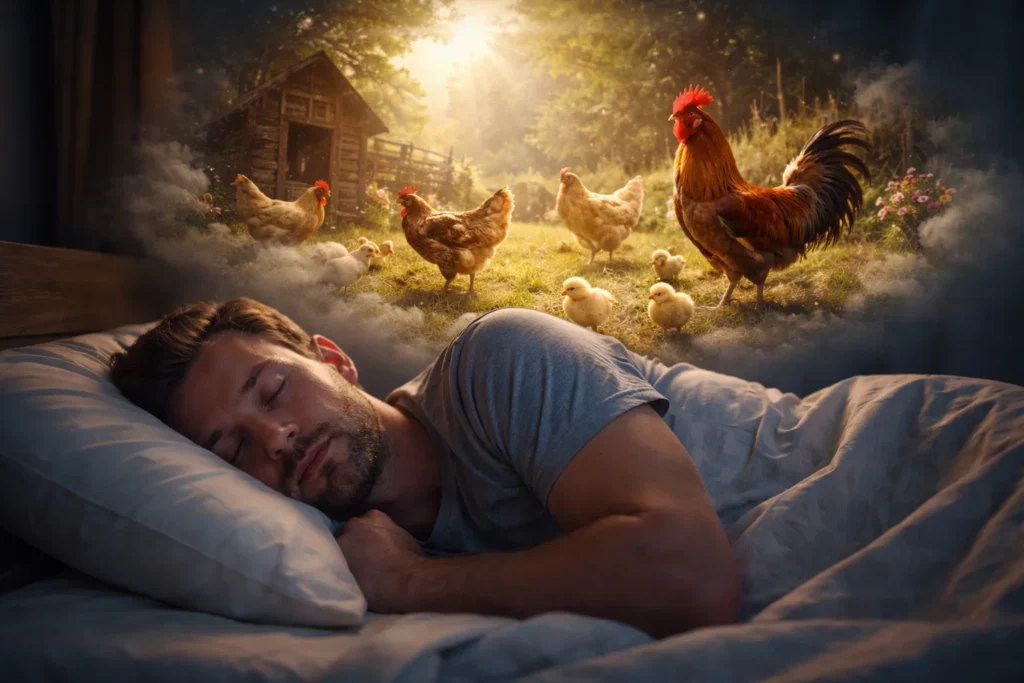
Dreams have a funny way of turning ordinary things into symbols that feel surprisingly meaningful. Chickens are a perfect example. They’re familiar, practical, even a little comedic in real life, yet in dreams they can carry messages about protection, productivity, vulnerability, and the rhythms of daily survival. A chicken dream can feel peaceful, strange, or chaotic depending on what the chickens are doing, how you feel in the dream, and whether the scene is nurturing or threatening.
If you’ve recently dreamed about chickens, your mind may be highlighting your relationship with routine, responsibility, and how you care for what you’re building. Chickens are domestic creatures that depend on steady care, and they also symbolize the simple, consistent work that creates stability over time. At the same time, they can represent nervous energy, gossip, or feeling easily startled. The meaning becomes clearer when you look at the context.
Quick Answer
Dream About Chickens meaning often reflects everyday stability, productivity, and the instinct to protect what matters, especially your home life, your finances, or something you’re nurturing slowly. Chickens can symbolize routine responsibilities, small but steady progress, and the value of practical effort over dramatic change. This dream may show up when you’re building security, caring for others, managing household or work tasks, or trying to stay grounded. Depending on the dream’s mood, chickens can also represent anxiety, social noise, or feeling vulnerable and easily “spooked.” Rather than predicting the future, the dream typically mirrors your current relationship with safety, consistency, and how you respond when life feels busy, messy, or demanding.
Core Symbolism of Chickens in Dreams
Chickens are deeply symbolic because they sit at the crossroads of nature and domestic life. They are animals we raise for food and eggs, but they are also living beings that require care. In dreams, that mix can represent your practical side and your emotional side working together.
Archetypal meaning
Archetypally, chickens connect to survival and provision. They symbolize the basics: food, shelter, daily labor, and the systems that keep life running. Dreaming about chickens can reflect your desire to feel safe and supported, or your awareness that stability comes from consistent attention.
From a light Jungian perspective, chickens can represent the “caretaker” part of the psyche, the part that values nurture and steady routines. They can also reflect the “instinctual” self, your natural impulses to protect, gather resources, and stay alert.
A Freudian lens might connect chicken imagery to anxiety, control, or domestic pressures, especially when the dream feels hectic or embarrassing. But in most cases, chicken dreams are less about hidden taboo and more about practical emotional themes: responsibility, worry, and the need for grounded support.
Cultural symbolism
Culturally, chickens often symbolize abundance, home, and livelihood. In many places, a healthy flock suggests prosperity and food security. Chickens can also represent community life, noise, and the social “chatter” of daily interactions.
In some folk beliefs, chickens and roosters have protective symbolism, especially the rooster’s role in signaling dawn. That can translate into dreams as a message about awareness, waking up to something, or beginning a new cycle.
Universal life themes
Common themes connected to chickens in dreams include:
- Building stability through routine
- Caring for family or responsibilities
- Financial security and practical planning
- Feeling exposed or vulnerable
- Social dynamics, gossip, or noise
- Growth through consistent effort
If your chicken dream includes other birds, you may also relate it to broader symbolism found in Dream About Birds, especially themes of freedom versus grounded responsibility.
Spiritual Meaning of Dreaming About Chickens
Spiritually, chickens often represent grounded energy. They are close to the earth, focused on pecking, gathering, and surviving day by day. A chicken dream can be a reminder that spiritual growth doesn’t always look dramatic. Sometimes it’s about staying steady, being patient, and honoring the small acts that sustain you.
Energy symbolism
Chickens can symbolize “root energy,” the part of you that needs safety, structure, and consistency. If your life has felt unpredictable, a chicken dream may represent your nervous system searching for stability.
Because chickens live in flocks, they can also represent collective energy: your family environment, your community, or your workplace. The dream may be highlighting how group dynamics affect your sense of calm.
Intuition and higher awareness
Dreams about chickens can reflect intuitive awareness of what needs tending. In waking life, you might sense that a responsibility is being overlooked, a budget is getting loose, or a relationship needs more care. The chicken’s presence can be your mind’s gentle reminder: maintain the basics.
Repeating dreams and spiritual signals
If you repeatedly dream about chickens, ask yourself:
- Where am I craving a simpler rhythm?
- What basic need am I skipping?
- What responsibility feels overwhelming?
- Where do I need protection or stronger boundaries?
Repeating chicken dreams often show up when your life is too busy and your inner self is asking you to return to steady routines.
Life lessons reflected through the symbol
A key lesson from chickens is that consistent effort creates real progress. Chickens lay eggs one at a time. They don’t rush. Spiritually, that can mirror the idea that patience and reliability are forms of strength.
A Related Bible Verse
“Who of you by worrying can add a single hour to your life?” (Luke 12:25)
This verse connects to chicken dreams because chickens often symbolize daily concerns, routine tasks, and the kinds of worries that can quietly drain you. If the dream carries anxious energy, it may be inviting you to focus on what you can do today, release what you can’t control, and trust that steady care is more powerful than constant worry.
Psychological Interpretation
Chicken dreams are psychologically rich because they touch both comfort and insecurity. Chickens can feel domestic and safe, but they can also feel fragile and easily startled.
Emotional triggers
A dream about chickens may be triggered by:
- household stress or family responsibility
- financial planning or money worries
- work tasks piling up
- social dynamics, gossip, or feeling judged
- longing for a simpler lifestyle
The dream often reflects how you’re managing everyday pressure.
Anxiety, repression, unresolved conflict
When chicken dreams feel chaotic, they can symbolize “nervous energy.” Chickens dart, peck, flap, and scatter quickly. If your mind feels scattered, the dream may mirror that.
If someone in your life creates a lot of noise or drama, chickens can represent the emotional clutter of constant chatter. Alternatively, if you’ve been repressing your own needs, the dream can suggest that your inner self is trying to get your attention through busy imagery.
Life transitions
Chicken dreams can appear during transitions that affect your home base: moving, changing jobs, starting a new relationship, becoming a parent, or caring for elders. When your foundation shifts, the mind often returns to symbols of domestic stability.
Desire vs fear dynamics
Sometimes you desire freedom, but you also fear instability. Chickens represent that tension: they are living beings, but they stay close to the home. If you’re torn between taking a risk and staying safe, a chicken dream may be reflecting the push and pull.
What the dream emotions reveal
Pay attention to how you felt:
- Calm and content: you may be building stability successfully
- Overwhelmed: too many responsibilities or mental clutter
- Embarrassed: fear of being judged or feeling “silly” about a concern
- Protective: you are guarding something valuable, like family, a project, or your peace
- Sad or anxious: you may feel vulnerable or unsupported
Common Dream Scenarios About Chickens
Below are common chicken dream scenarios. Not all will apply; the most meaningful interpretation comes from the one that matches your experience.
Dream of feeding chickens
Feeding chickens often symbolizes nurturing your responsibilities. You are investing energy into something that will repay you with steady returns. This can relate to work projects, family care, or personal habits like health routines.
If the dream feels joyful, it suggests satisfaction in providing and building. If it feels draining, it may suggest you’re giving too much without replenishing yourself.
Dream of chickens laying eggs
This is one of the clearest symbols of gradual productivity. Eggs represent potential, new ideas, and results that come from consistent effort. If you saw eggs, you may also enjoy exploring the symbolism in Dream About Eggs, which often connects to fertility of ideas, beginnings, and the protection of something fragile.
Dream of chasing chickens
Chasing chickens can symbolize trying to control messy tasks or keep up with responsibilities that scatter your attention. You may be trying to “catch up” with life. This dream often appears when you’re multitasking too much.
It can also reflect trying to force a result that needs patience. Chickens don’t respond well to being chased. Your dream may be suggesting you’ll get better results with calm structure rather than urgency.
Dream of chickens running away
When chickens run away, it can symbolize fear of losing stability, money, or control. It may reflect worry that what you’ve built could slip away. It can also represent avoidance: you might be avoiding a task, a conversation, or a responsibility that feels uncomfortable.
Dream of a chicken attacking you
This scenario can feel strange but is more common than people think. It often symbolizes irritation, petty conflict, or small stressors that have become surprisingly intense. You might feel “pecked at” by criticism, nagging, or frequent minor problems.
The dream can be asking: what small thing has been bothering you more than you admit?
Dream of dead chickens
Dead chickens can symbolize loss of routine, worry about resources, or the end of a chapter connected to home or livelihood. It can also represent burnout: the feeling that your steady effort has drained you.
If this dream felt heavy, consider whether you need rest, support, or a simpler schedule.
Dream of many chickens in a flock
A flock often symbolizes community and group dynamics. It can represent family life, social circles, or workplace culture. If the dream felt noisy or stressful, you may be overwhelmed by other people’s opinions.
If it felt warm and lively, it may symbolize belonging and abundance.
Dream of a rooster with chickens
When a rooster appears, the symbolism can shift toward leadership, protection, and wake-up calls. If your dream included a rooster, you may find it meaningful to read Dream About Rooster, because roosters often symbolize confidence, boundaries, and the courage to announce what’s true.
Dream of a chicken coop
A coop often symbolizes boundaries and structure. It can represent your home environment, your personal rules, or the systems you use to stay organized. If the coop is secure, your foundation is strong. If it is broken, you may feel exposed.
How This Dream Connects to Your Real Life
To connect the dream to your waking life, notice what feels most “chicken-like” right now: routine, home, money, responsibilities, or social noise.
Love & Relationships
In relationships, chickens can symbolize comfort, domestic life, and shared routines. This dream may appear when you’re building a home-like connection with someone, or when you’re craving more stability.
If the dream felt anxious, it may reflect relationship worry: fear of conflict, fear of judgment, or feeling like you have to manage everything. A chicken dream can invite honest communication about needs, responsibilities, and emotional safety.
Career & Money
Chickens are often linked to livelihood. In career terms, they can symbolize steady work that creates security. This dream may appear when you:
- are focused on consistent income
- are building a small business step by step
- feel pressure to manage expenses
- worry about financial stability
If your dream focused on farming or chores, it may connect to building long-term success through practical actions.
Personal Growth
For personal growth, chickens can symbolize becoming more grounded. You may be learning to:
- set healthier routines
- care for your needs consistently
- create structure around your goals
- stop relying on sudden motivation
If you’ve been trying to reinvent yourself overnight, a chicken dream may remind you that growth is often slow and steady.
Health & Emotional State
Chickens can reflect the state of your nervous system. If the dream was frantic, it may mirror anxiety or overstimulation. If it was peaceful, it may reflect emotional stability.
If you’re feeling run down, this dream can encourage simpler self-care: sleep, nutritious food, fewer commitments, and supportive boundaries.
Is Dreaming About Chickens a Positive or Warning Sign?
Chicken dreams can be both positive and cautionary. Their meaning depends on the dream’s mood and the condition of the chickens.
When it is positive
It is often positive when:
- the chickens are healthy
- you are feeding them or caring for them
- the coop is secure
- eggs appear
- you feel calm
These symbols suggest grounded progress, stability, and practical abundance.
When it acts as a warning
It may act as a warning when:
- chickens are sick, injured, or dead
- you feel overwhelmed by a noisy flock
- the coop is broken
- predators appear
- you feel panicked or helpless
In these cases, the dream may be highlighting stress, burnout, or vulnerability in your “foundation” areas: home, health, money, or emotional stability.
When it reflects stress or subconscious processing
Sometimes the dream simply reflects daily life. If you recently watched farm content, visited a rural area, or dealt with household responsibilities, chickens may appear because your mind is processing normal experiences. Even then, the dream can still reveal your emotional tone about those responsibilities.
Case Studies
Here are five realistic examples of chicken dreams and what they can reflect.
Case study one
A person dreams of feeding chickens in a calm yard. In waking life, they’ve been building healthier routines and paying off debt slowly. The dream reflects satisfaction in steady progress and the comfort of stability.
Case study two
Someone dreams of chasing runaway chickens around a neighborhood. They are juggling too many tasks at work and feel like their schedule is scattered. The dream mirrors the feeling of trying to “catch up” to responsibilities that keep escaping.
Case study three
A new parent dreams of a chicken coop with baby chicks inside, feeling very protective. In waking life, they’re adjusting to responsibility and worry. The dream reflects nurturing instincts and the desire to keep their new life safe.
Case study four
A person dreams of a noisy flock pecking at each other while neighbors watch. In waking life, they feel caught in social drama or workplace gossip. The dream symbolizes emotional noise, judgment, and the fatigue of constant chatter.
Case study five
Someone dreams of dead chickens after a stressful month. They’ve been overworking and skipping rest. The dream reflects burnout and the need to restore energy, simplify responsibilities, and ask for help.
Dream Numbers
In folklore and dream traditions, chickens and farm symbols are sometimes associated with numbers linked to abundance, routine, and protection. If you enjoy noting dream numbers as cultural symbolism, you might associate chickens with:
- 3 for growth and family cycles
- 5 for daily activity and change
- 7 for reflection and inner wisdom
- 12 for seasonal rhythms and long-term planning
Treat these as symbolic associations rather than certainty.
Lucky Lottery Meaning
In folk culture, dreaming of chickens is sometimes seen as a sign of everyday luck or small gains, especially if the chickens look healthy or eggs appear. If the dream feels chaotic, folk interpretations may say it warns against scattered decisions. Keep this in the realm of cultural storytelling. The healthiest approach is to use the dream as encouragement to strengthen your routines, protect your energy, and make practical choices.
FAQ
What does it mean spiritually to dream about chickens?
Spiritually, chickens often symbolize grounded energy, protection, and the need to care for the basics. The dream may be reminding you that steady routines and simple self-care can restore your balance.
Why do I keep dreaming about chickens?
Repeating chicken dreams often show up when you’re focused on home life, responsibilities, or financial stability, or when you feel overwhelmed by daily demands. The dream may repeat until you create more structure or emotional calm.
Is dreaming about chickens a bad omen?
Usually not. Chicken dreams are often practical rather than ominous. They commonly reflect daily stress, domestic themes, or the desire for stability. The emotional tone of the dream matters more than the symbol itself.
Does dreaming about chickens predict the future?
Dreams typically do not predict the future in a literal way. They reflect your subconscious processing, your worries, and what you need emotionally. Chickens often highlight routine, safety, and practical needs.
What should I do after dreaming about chickens?
Reflect on your current foundation: home, money, health habits, and daily responsibilities. Ask what needs more structure, what needs less pressure, and where you can simplify. If the dream felt protective, consider strengthening boundaries and asking for support.
Conclusion
Dreaming about chickens can feel simple, even funny, but it often carries a grounded message about stability, responsibility, and the routines that keep your life supported. Dream About Chickens meaning commonly reflects practical progress, nurturing instincts, and the desire to protect what you’re building, while also revealing where daily stress or social noise may be draining you. Instead of reading this dream as a prediction, treat it as a mirror: it shows how you’re relating to your foundation right now. With small adjustments, more rest, and steady care, the symbolism of chickens can become a reassuring reminder that your life can grow stronger through consistent, gentle effort.