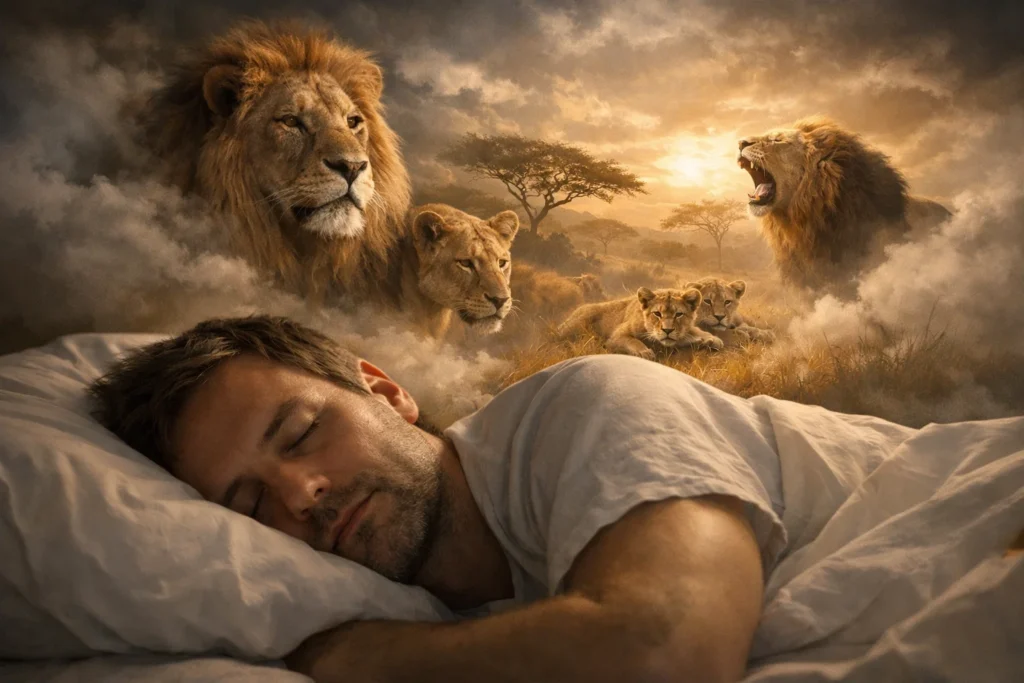
Dreaming about apes can feel strangely intense because apes are both familiar and unsettling at the same time. They resemble human beings enough to feel emotionally close, yet they also carry obvious power, instinct, unpredictability, and raw wildness. That combination makes ape dreams especially meaningful. They often do not feel like ordinary animal dreams. Instead, they can feel like encounters with a more primal layer of the self, one that is social, emotional, reactive, territorial, intelligent, and not always easy to control. Whether the ape in your dream is calm, aggressive, curious, protective, or simply watching you, the symbol often points to the tension between instinct and restraint, civilization and wildness, or conscious behavior and deeper drives moving underneath the surface.
Quick Answer
Dream About Apes meaning usually relates to instinctive power, raw emotion, social dynamics, strength, territorial behavior, hidden impulses, and the more primitive or untamed parts of your personality. Depending on the dream’s tone, apes may symbolize intelligence, loyalty, protection, resilience, and natural authority, or they may reflect anger, dominance struggles, emotional volatility, loss of control, and discomfort with your own deeper instincts. In many cases, this dream appears when you are dealing with strong emotions, power dynamics, self-control, or situations that bring out behavior that feels more primal than rational. Rather than predicting a literal event, the dream often reveals how you are relating to power, instinct, and the wild side of human nature.
Core Symbolism of Apes in Dreams
Apes are powerful symbols because they stand at the border between human and animal in the imagination. They are not just wild creatures. They are emotionally expressive, socially aware, strong, watchful, and eerily recognizable. In dream language, this often makes them symbols of the instinctive side of human life: the part of you that is driven by power, group belonging, emotional reaction, territoriality, and physical presence rather than abstract ideals.
At the subconscious level, apes often represent untamed emotional force. This can include anger, dominance, jealousy, fear, protectiveness, sexual energy, competition, and bodily instinct. The dream may be bringing attention to a part of your inner life that feels less refined, less socially polished, or less controlled than the image you present to the world. This does not automatically mean something negative. Sometimes the dream is restoring contact with strength and instinct that have been suppressed for too long.
Apes also symbolize social intelligence. They live in groups, respond to hierarchy, read emotional cues, and often reflect complex interpersonal dynamics. Because of that, an ape dream can point to issues around status, belonging, leadership, rivalry, family structure, and the tension between cooperation and control. The dream may be asking you to notice what is happening beneath the surface in a social environment, especially where power and emotion are closely tied.
Archetypally, apes often represent the shadow of civilization. They embody the aspects of life that are older than rules, etiquette, and social performance. In dream terms, this can point to primitive truth. You may be seeing something in yourself or others that feels stripped of politeness and therefore more honest, even if it is uncomfortable. The ape can symbolize the part of the psyche that does not care about appearing refined. It cares about territory, emotion, safety, dominance, or survival.
Jungian interpretation would likely see apes as strong shadow figures. They may emerge when instinctive material is surfacing from the unconscious and demanding recognition. If your waking personality is highly controlled, intellectual, agreeable, or image-conscious, an ape may appear when rawer parts of your nature need expression or at least acknowledgment. The dream is not necessarily telling you to act on every impulse. It may simply be insisting that instinct exists and has power.
Freudian approaches might emphasize drives, aggression, sexuality, repression, and the tension between social control and instinctive desire. In that framework, ape dreams may dramatize the pressure created when emotional or bodily energy has been pushed down but not truly resolved.
Culturally, apes can symbolize wild intelligence, physical power, imitation, aggression, clan structure, and the uncomfortable closeness between human behavior and animal impulse. This makes the symbol especially rich in dreams about social conflict, emotional exposure, and identity. When the emphasis falls on smaller, quicker, more mischievous primate qualities, the symbolism may move closer to Dream About Monkeys, though ape dreams usually feel heavier, more forceful, and more psychologically charged.
At the deepest level, apes in dreams often ask whether you are in honest relationship with your instincts—or whether they are running your life from the shadows.
Spiritual Meaning of Dreaming About Apes
Spiritually, dreaming about apes often points to the challenge of integrating instinct with awareness. Many spiritual paths focus on transcendence, discipline, and inner clarity, but dreams about apes remind us that growth cannot come from denying our primal nature altogether. The spiritual task is not to become less human in the embodied sense. It is to become more conscious of what lives inside us, including force, fear, desire, protectiveness, and raw vitality.
An ape dream can appear during times when you are confronting the more unrefined parts of yourself. This may include anger, territoriality, envy, pride, or emotional reactivity. Spiritually, this is not always a sign of failure. It may simply mean that deeper truth is rising to the surface. What matters is whether you meet it with awareness or shame. The dream may be inviting you to stop pretending you are above instinct and instead learn how to guide it wisely.
Apes can also symbolize grounded power. In spiritual language, this means strength that is rooted in embodiment rather than abstraction. A calm powerful ape may reflect the lesson that true force does not always need display. It can remain still, centered, and self-possessed. The dream may therefore carry a message about aligning power with presence rather than letting it collapse into aggression.
There is often a lesson of humility here as well. Ape dreams can strip away self-idealization. They remind the dreamer that even a thoughtful or spiritual life still includes animal layers: hunger, fear, status sensitivity, bonding, imitation, and physical emotion. The point is not to be ruled by these layers, but not to lie about them either.
In some dreams, apes may also symbolize a return to a more instinctive relationship with life. If you have become disconnected from the body, from nature, or from direct feeling, the dream may be asking you to come back into contact with a more grounded intelligence. When the dream emphasizes the broader primal world rather than one specific ape, the symbolism can widen naturally through Dream About Wild Animals, especially when the emotional theme is respect for untamed life rather than fear alone.
A balanced spiritual reading stays grounded. The dream does not mean you are becoming “less evolved” or that something mystical is wrong. More often, it reflects an opportunity to bring instinct, power, and emotional truth into a more conscious form.
Psychological Interpretation
Psychologically, dreaming about apes often reflects strong instinctive emotion, social tension, power struggles, body-based reaction, and the parts of personality that emerge under pressure. Ape dreams tend to appear when self-control is being tested or when deeper drives are becoming difficult to ignore. Because apes are socially complex and physically imposing, they are excellent dream images for conflicts that involve both emotion and hierarchy.
One common psychological theme is aggression that has not been consciously integrated. A person may dream of apes during periods of anger, frustration, competition, or territorial defensiveness. This does not necessarily mean they are violent. It may mean they are carrying a lot of unexpressed force. The dream then stages that energy in symbolic form so it can be seen.
Another major theme is dominance and submission. Apes often bring up questions about who leads, who yields, who controls space, and who feels intimidated. These themes can appear in family systems, workplaces, friendships, and intimate relationships. The dream may be reflecting a social environment where instinctive power dynamics are stronger than people are openly admitting.
Apes can also symbolize imitation and learned behavior. Some ape dreams appear when a person is unconsciously copying the emotional patterns of family, peer groups, or social hierarchies. The dream may be asking whether the behavior you are living out is truly yours or simply inherited, mimicked, or adaptive. This can be especially relevant if the dream contains several apes interacting as a group.
The emotional tone matters greatly. Fear may suggest that instinct or conflict feels threatening. Fascination may indicate growing curiosity about parts of yourself that used to feel taboo or difficult. Calmness may suggest better integration of strength and emotion. Shame may reflect discomfort with the more primal side of human behavior. Anger may show that your own boundaries, competitiveness, or suppressed reaction are nearing the surface.
There is also a bodily dimension to ape dreams. They can appear when life has become too cerebral, and the psyche responds by producing images of muscularity, movement, and physical presence. In that sense, the dream may be reminding you that emotions do not live only in thought. They also live in posture, energy, voice, tension, and instinctive reaction.
The dream may become more specific depending on the type of ape energy present. A deeply imposing, protective, physically dominant ape may shift the symbolism toward Dream About Gorillas, where power, family protection, and silent authority tend to become more central. A more expressive, social, clever, or emotionally readable ape may move closer to the relational intelligence seen in Dream About Chimpanzees.
Modern psychology generally treats dreams as emotional processing rather than prediction. Through that lens, dreams about apes often reveal how you are handling raw emotion, group dynamics, control, vulnerability, and the truth that human behavior remains deeply connected to instinct.
Common Dream Scenarios About Apes
Dream of an ape watching you
This is one of the most important ape dream scenarios because it often symbolizes instinctive awareness. The ape may represent a force within you or around you that is studying the situation before acting. This dream can suggest that something powerful is present beneath the surface, even if it has not openly moved yet. It may also reflect your own sense that you are being emotionally measured in a tense environment.
Dream of being chased by an ape
Being chased by an ape often suggests that you are avoiding a strong emotion, conflict, or instinctive truth. The dream may involve anger, power struggle, sexual tension, or the fear of losing control. Because ape energy is so physically present, this kind of dream often feels more personal and psychologically direct than abstract anxiety dreams.
Dream of an aggressive or attacking ape
An attacking ape usually symbolizes open confrontation with instinctive force. This may reflect external conflict, a threatening social environment, or your own suppressed intensity becoming too strong to remain hidden. The dream asks whether something has been denied for too long and is now appearing in a more forceful way.
Dream of a calm ape near you
A calm ape often symbolizes integrated strength. The dream may suggest that you are becoming more comfortable with power, instinct, or emotional truth without needing to act it out destructively. A peaceful encounter can indicate respect between conscious self and instinctive self rather than fear of one by the other.
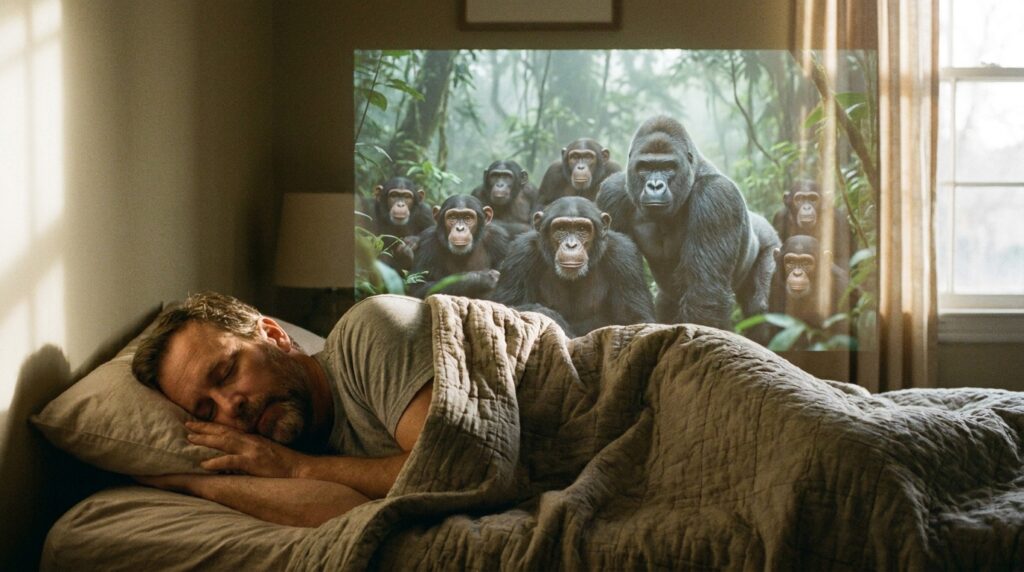
Dream of many apes
Many apes often symbolize intensified social pressure, collective instinct, family systems, or group behavior that feels primal and emotionally charged. This dream may arise when you feel surrounded by unspoken power dynamics, competition, or emotionally contagious behavior.
Dream of talking to an ape
If an ape speaks or communicates clearly, the dream often symbolizes instinct becoming conscious. Something that usually acts through body, emotion, or reaction is now becoming understandable enough to take into language. This can be a meaningful dream about self-awareness.
Dream of an ape in your house
An ape inside the home usually suggests that raw instinctive energy has entered your private emotional world. Since the house often symbolizes the self or inner life, this dream may reflect conflict, powerful emotion, sexuality, anger, or protection affecting a deeply personal area of experience.
Dream of escaping from apes
Escaping from apes can symbolize the wish to distance yourself from chaos, emotional intimidation, or a social environment that feels too primal or uncontrolled. It may also suggest avoidance of your own instinctive truth if you are uncomfortable with strong emotion. When the scene feels primarily animal and environment-driven, the wider symbolism may broaden through Dream About Forest, especially if the dream takes place in a dense, instinctive landscape.
Dream of a baby ape
A baby ape often symbolizes undeveloped instinct, early emotional learning, vulnerability within strength, or a part of you that is still learning how to handle power and belonging. This dream may be gentler than other ape dreams, but it can still be psychologically rich.
How This Dream Connects to Your Real Life
Love and Relationships
In relationships, ape dreams often reflect power, jealousy, possessiveness, emotional reactivity, and the instinctive side of attachment. You may be dealing with strong chemistry, territorial tension, unspoken competition, or emotional patterns that feel more bodily and immediate than rational. The dream can also highlight loyalty and protectiveness when the ape energy feels calm and grounded.
Career and Money
In work life, ape dreams may symbolize hierarchy, competition, territorial behavior, and status sensitivity. You may be navigating a workplace where people are acting from pride, dominance, fear, or instinctive self-protection more than they admit openly. The dream may be showing that the situation is less about logic and more about raw human dynamics.
Personal Growth
From a growth perspective, ape dreams often mark a stage where you are learning to relate more honestly to power. This may involve anger, sexual energy, assertiveness, self-protection, or the ability to recognize manipulative group behavior. The dream can indicate that maturity now requires integration, not denial, of instinctive truth. In that sense, the symbol may also resonate with Dream About Instinct, where deeper bodily knowing becomes central.
Health and Emotional State
Emotionally, ape dreams are often linked with stress, pressure, physical tension, aggression, overstimulation, and the body’s response to unsafe or competitive environments. They may appear when your nervous system is operating in a more primal mode, focused on dominance, threat, belonging, or defense rather than calm reflection. When the dream strongly emphasizes force and vitality rather than conflict, its message may partly echo Dream About Strength, especially if the ape seems to embody grounded power rather than volatility.
Is Dreaming About Apes a Positive or Warning Sign?
Dreams about apes can be positive when they symbolize intelligence, primal honesty, loyalty, embodied strength, and a healthier relationship with instinct. A calm, strong, or protective ape may indicate that you are learning how to hold power without fear, how to respect your instincts, and how to remain grounded in emotionally charged situations.
They can also act as warning signs when the dream feels aggressive, chaotic, intimidating, or socially tense. In those cases, ape dreams may reflect anger, control issues, power struggles, emotional volatility, or an environment that is bringing out survival behavior in you or those around you. The warning is usually psychological rather than prophetic. It asks whether raw emotion is beginning to override awareness.
The key question is whether the ape in the dream feels integrated or uncontained. Integrated ape energy often appears calm, watchful, dignified, or strong. Uncontained ape energy often appears attacking, noisy, domineering, or frightening. That difference usually tells you whether the dream is encouraging you to reclaim power or warning you to regulate it more consciously.
Ape dreams are especially valuable because they do not let you hide behind abstraction. They bring emotion, body, and social truth into the same image. When you reflect honestly on the dream, it can reveal where you need more self-command, where you need more respect for instinct, and where your environment may be awakening a more primal version of you than you usually acknowledge.
Case Studies
A man dealing with workplace dominance
A man dreamed that a large ape stood in the doorway of his office and refused to move. He felt both intimidated and challenged. In waking life, he was working under a supervisor whose presence made the entire team tense and territorial. The dream reflected not only external power, but the social-body pressure he felt every day.
A woman suppressing anger in family conflict
A woman dreamed that apes were pounding on the walls of her childhood home while she tried to stay calm inside. She had been avoiding open conflict with family members for months. The dream revealed how much raw emotion was building behind her controlled surface.
A student struggling with group belonging
A student dreamed of standing among apes who seemed to accept him only when he copied their behavior. In waking life, he felt pressure to conform socially even when it did not feel authentic. The dream reflected anxiety about belonging and the instinctive cost of imitation.
A person reconnecting with physical confidence
After a long period of emotional shutdown, a woman dreamed of sitting peacefully beside a large calm ape in the forest. She did not feel fear. In waking life, she had begun reconnecting with exercise, boundaries, and a stronger physical presence. The dream reflected growing comfort with her own grounded power.
A man afraid of losing control in a relationship
A man dreamed that an ape chased him through a crowded place whenever he felt jealous. He had recently noticed strong possessive feelings in a relationship and was disturbed by them. The dream did not predict disaster. It showed his fear of his own instinctive reactions and the need to understand them rather than deny them.
Dream Numbers
In some symbolic and folk traditions, apes may be loosely associated with numbers connected to strength, instinct, group hierarchy, and raw life force. People may mention numbers such as 3, 8, 14, or 28 in relation to power, bodily energy, and social tension. These associations are cultural and symbolic rather than fixed meanings, so they are best treated lightly.
Lucky Lottery Meaning
Some readers like to connect striking animal dreams with folk number traditions. If apes appear in a dream, certain numbers may be mentioned in that cultural spirit, but they should be understood only as folklore, not certainty or encouragement to gamble. The more important meaning of the dream usually lies in what it reveals about instinct, social power, emotional force, and self-control.
FAQ
What does it mean spiritually to dream about apes?
Spiritually, dreaming about apes often suggests the need to integrate instinct, power, and emotional truth more consciously. It may point to grounded strength, shadow work, or the challenge of guiding primal energy wisely.
Is dreaming about apes a bad omen?
Usually not. Ape dreams are more often reflections of instinct, power dynamics, anger, or social tension than predictions of future events. The emotional tone of the dream matters most.
What does it mean if an ape attacks me in a dream?
An attacking ape often symbolizes direct confrontation with powerful emotion, conflict, or survival-based behavior. It may reflect either external tension or strong inner reactions that have become difficult to avoid.
What does a calm ape mean in a dream?
A calm ape often suggests integrated strength, grounded instinct, and a healthier relationship with power. It may indicate that you are learning not to fear your own emotional force.
Why do I keep dreaming about apes?
Recurring ape dreams often happen when the same issue around power, anger, control, belonging, or instinct remains active in waking life. The dream may keep returning because that material still needs conscious understanding.
Conclusion
Dreaming about apes often brings you into direct contact with the more primal side of human experience. These dreams can symbolize raw emotion, embodied power, hierarchy, instinct, imitation, protection, and the uneasy closeness between civilization and wildness. Sometimes the ape appears as a threat. Sometimes it appears as a guide to strength you have not fully owned. In either case, the dream usually asks for honesty rather than fear. When you reflect on it carefully, it can help you understand where instinct is asking for acknowledgment, where power needs wiser direction, and where your life may be calling for a deeper integration of body, emotion, and conscious self-control.