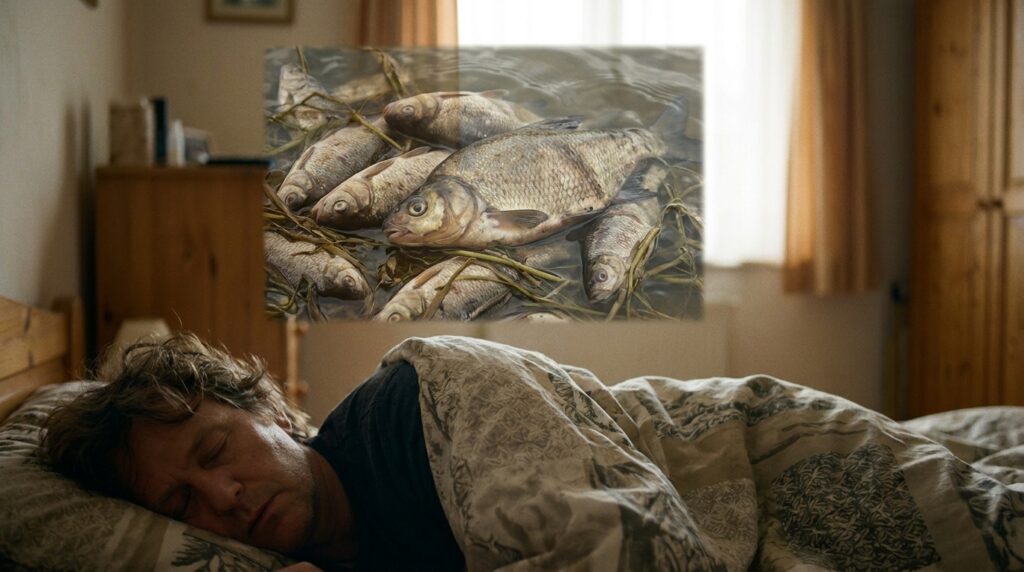
Dreaming about dead fish can feel uncomfortable in a quiet but lasting way. It may not always be as dramatic as dreams about attacks or disasters, yet the image often leaves behind a strange emotional weight. A dead fish in a dream can suggest something that once felt alive, flowing, promising, or emotionally meaningful has changed, weakened, or come to an end. Sometimes the dream reflects disappointment. Sometimes it points to exhaustion, emotional stagnation, missed opportunities, or the feeling that something in your life no longer has the life force it once carried. The exact meaning depends on where the dead fish appears, how many there are, and what emotions rise in the dream. In most cases, this is not a dream about literal death. It is about emotional truth, endings, depletion, and the need to pay attention to what no longer feels alive inside you.
Quick Answer
Dream About Dead Fish meaning often relates to disappointment, emotional exhaustion, blocked intuition, lost opportunities, inner stagnation, or a part of your life that no longer feels alive or flowing. A dead fish in a dream can symbolize the end of a hope, a relationship, a plan, an emotional phase, or a way of living that has lost energy and meaning. In some cases, the dream acts as a warning that you are disconnected from your feelings, creativity, or instincts. In other cases, it marks a necessary ending that clears the way for renewal, honesty, and emotional healing.
Core Symbolism of Dead Fish in Dreams
Fish are powerful dream symbols because they are tied to emotion, intuition, depth, flow, subconscious awareness, and what moves beneath the surface of ordinary life. When a fish is alive, it often symbolizes emotional movement, inner guidance, abundance, fertility, spiritual openness, or insight arising from the deeper self. When the fish is dead, that symbolism changes. The dream usually suggests interruption, depletion, loss of flow, or something instinctive that has been cut off.
At the most basic level, a dead fish represents life energy that has weakened or stopped moving. It may symbolize emotional numbness, fatigue, creative blockage, or a hope that has not survived the conditions around it. Something once fluid has become still. Something once intuitive has become harder to access. That is why dead fish dreams often appear during emotionally heavy periods when the dreamer feels disappointed, directionless, or disconnected from meaning.
The symbol becomes even clearer when compared with the broader meaning of Dream About Fish, where fish are often associated with inner life, spiritual sensitivity, and emotional flow. A dead fish usually points to interruption in one of those areas. The dream may be asking what in your life has lost vitality, what emotional truth you have stopped listening to, or what opportunity no longer feels alive.
From a Jungian perspective, fish are often linked to material emerging from the unconscious. Because fish live below the surface, they can represent contents of the psyche that are normally hidden but deeply important. A dead fish may suggest that something from the unconscious has been neglected, denied, or left without nourishment. This does not necessarily mean the symbol is negative in every sense. Sometimes the death of one inner pattern is part of necessary transformation. An old identity, belief, attachment, or emotional habit may be ending so that something more honest can begin.
Culturally and symbolically, fish can also carry meanings related to abundance, luck, fertility, and spiritual blessing. A dead fish can therefore bring up anxieties about loss, scarcity, or emotional disappointment. If you have been worried that something good is slipping away from you, this dream can reflect that fear very directly.
The dream may also point to disillusionment. Perhaps you believed in a possibility, a person, or a future that no longer feels real. The dead fish becomes the image of what once had promise but no longer carries the same life. This can be painful, but it can also be clarifying. A dead fish dream often urges honesty. It asks you to look at what has changed rather than pretending nothing has.
In some cases, the dead fish is not about loss alone. It can symbolize the end of illusion. The thing that has “died” may be an unhealthy fantasy, false expectation, or emotional dependency. When seen this way, the dream is not only sad. It is revealing.
Spiritual Meaning of Dreaming About Dead Fish
Spiritually, dreaming about dead fish often points to blocked flow, emotional disconnection, or the feeling that your inner life is no longer moving with the same vitality as before. Fish are frequently associated with spiritual depth, inner guidance, and symbolic nourishment. When that symbol appears lifeless, the dream may be asking whether you have become disconnected from your intuition, your sense of peace, or your deeper emotional truth.
This does not have to be interpreted in a dramatic or superstitious way. In a grounded spiritual sense, the dream may simply show that your soul feels tired. You may be going through the motions, doing what is expected, and functioning on the outside, while inwardly feeling less inspired, less open, or less emotionally alive. The dead fish then becomes a symbol of spiritual dryness rather than danger.
The dream can also carry a lesson about surrender. Some seasons of life require letting go of what can no longer be revived in its old form. This could be an expectation, a plan, a self-image, or a relationship dynamic. Spiritually, a dead fish may symbolize the need to stop trying to force life into what has already ended. That can be painful, but it can also make room for renewal.
If the dream repeats, it may suggest that a truth keeps trying to reach you. Perhaps you already know that something is over, unhealthy, or no longer meaningful, but part of you has resisted admitting it. The dream is then less about punishment and more about recognition. It asks whether you are willing to acknowledge what your inner life already understands.
At times, the symbol may also point to purification. Stagnant emotional patterns often need to surface before healing can begin. A dead fish dream can mark the moment when suppressed sadness, disappointment, or spiritual emptiness finally becomes visible enough to address.
A Related Bible Verse
A fitting verse for this dream is Ecclesiastes 3:1: “To every thing there is a season, and a time to every purpose under the heaven.”
This verse connects naturally to dreams about dead fish because the symbol often reflects endings, transitions, and the painful truth that not everything remains alive forever in the same form. In a reflective sense, the dream may be reminding you that loss, closure, and change are part of life’s deeper rhythm. The message is not that the dream predicts something fixed, but that it may be inviting you to accept a season that has already begun to shift.
Psychological Interpretation
Psychologically, dreaming about dead fish often reflects disappointment, emotional depletion, grief, frustration, or the sense that something important has lost its energy. The symbol can appear when hopes fade, when emotional connection weakens, or when the dreamer feels cut off from intuition, desire, or a sense of purpose.
One common interpretation is emotional stagnation. Fish belong to water, and in dreams water often reflects emotional life. When the fish is dead, it may suggest that your feelings are no longer flowing naturally. You may be suppressing sadness, carrying disappointment without expressing it, or staying in an environment that no longer supports emotional vitality. The dream becomes an image of what happens when emotional life loses oxygen.
This symbolism becomes even more meaningful when contrasted with the movement and possibility often associated with Dream About Catching Fish, where there is usually some sense of engaging with opportunity, instinct, or emotional reward. A dead fish dream can feel like the opposite: not the discovery of something meaningful, but the realization that something once desired has changed or become unavailable.
The dream may also point to burnout. If you have been working hard without feeling emotionally nourished, the dead fish can symbolize an inner state of depletion. You may still be functioning, but some part of you feels less responsive, less inspired, or less connected to joy. This is especially likely if the dream carries a flat, sad, or empty emotional tone rather than dramatic fear.
In other cases, the dream reflects disillusionment. You may have invested emotional energy into something that did not develop the way you hoped. A relationship may have gone cold. A plan may have failed. A version of the future you once believed in may no longer feel possible. The dead fish then becomes a symbol of confronting reality after expectation has faded.
Freud might have interpreted the image in relation to repressed desire, unfulfilled wishes, or frustration connected to instinctive life. Jung would likely focus on the dead fish as a sign that something from the unconscious has lost vitality because it has not been integrated. Modern psychology might describe the dream in terms of grief, emotional fatigue, chronic stress, numbness, or unresolved sadness. These interpretations differ in language, but all suggest that the dream points toward an emotional truth that needs attention.
The feeling inside the dream matters. If you feel sadness, the dream may reflect grief or emotional recognition. If you feel disgust, it may point to rejection, bitterness, or a situation that has become emotionally unhealthy. If you feel calm while looking at the dead fish, the dream may represent acceptance of an ending. If you feel urgency, some part of you may still be trying to save what is no longer working.
Common Dream Scenarios About Dead Fish
Dream of Seeing a Dead Fish in Clear Water
Seeing a dead fish in clear water often suggests emotional clarity about a loss or disappointment. The issue may be painful, but you are beginning to see it truthfully. Because the water is clear, the dream implies that confusion is lifting. You may already know what is ending, what is not working, or what no longer carries emotional life.
Dream of Dead Fish Floating in Dirty Water
This scenario usually adds emotional heaviness, unresolved tension, or inner toxicity to the meaning. Dirty water often points to confusion, emotional clutter, or stress that has not been processed cleanly. The dead fish here may symbolize disappointment mixed with emotional overwhelm. It can suggest that what has ended is not only painful, but entangled with lingering resentment, exhaustion, or chaos.
Dream of Many Dead Fish
Many dead fish often symbolize accumulated disappointment or a broader life season in which multiple things feel stagnant or emotionally depleted at once. This may involve work, relationships, health, motivation, and hope all feeling affected. The dream can reflect the sense that the problem is not isolated. Instead, vitality feels low across several areas of life.
Dream of a Dead Fish on the Shore
A dead fish on the shore often symbolizes something that has been removed from its natural emotional environment. Fish belong in water, so seeing one lifeless on land can suggest emotional displacement, disconnection, or a situation that can no longer survive under current conditions. The symbolism may overlap with the broader emotional landscapes found in Dream About Ocean and Dream About Sea, where depth, feeling, and the unknown play central roles. In this dream, what once belonged to emotional depth may now feel exposed, dried out, or unable to recover in the same form.
Dream of Holding a Dead Fish
Holding a dead fish makes the dream more personal. You may be carrying disappointment directly, or holding onto something that is already emotionally over. This scenario can reflect difficulty letting go. It may also symbolize your willingness to face reality with your own hands rather than keeping it at a distance. The emotional tone tells you whether the dream is about grief, acceptance, guilt, or reluctant honesty.
Dream of Smelling a Dead Fish
The smell of a dead fish usually intensifies the idea that something is wrong and can no longer be ignored. This dream may symbolize suspicion, emotional contamination, or the awareness that a situation has become unhealthy. Smell in dreams often suggests instinctive recognition. Even if your conscious mind has been trying to minimize an issue, the dream may be showing that your deeper self already knows something has gone bad.
Dream of Catching a Dead Fish
This scenario can be especially disappointing because it combines effort with emotional letdown. You reach for something, only to discover it is lifeless. The dream may reflect disappointment after effort, false promise, or the realization that what you hoped would nourish you no longer can. It may also suggest that you are finally acknowledging the true condition of something you kept trying to save.
Dream of a Giant Dead Fish
A giant dead fish often symbolizes a major emotional issue, significant disappointment, or the loss of something that once felt especially meaningful. The scale of the fish reflects the scale of the emotional impact. This kind of dream may resonate with the broader symbolic significance found in Dream About Big Fish, but here the emphasis shifts from magnitude and possibility to the ending of something substantial.
How This Dream Connects to Your Real Life
Love and Relationships
In love and relationships, a dead fish dream can reflect emotional distance, fading intimacy, disappointment, or the feeling that a connection has lost vitality. It may appear when communication has gone flat, when trust has weakened, or when you sense that something is ending emotionally even if the relationship still exists on the surface. In some cases, the dream invites grief. In others, it asks for honest conversation about what is no longer alive between two people.
Career and Money
In work and finances, the dead fish may symbolize stalled opportunities, burnout, low motivation, or disappointment with a path that once seemed promising. Perhaps a project no longer excites you. Perhaps a financial hope has not developed as expected. The dream can also appear when you keep investing effort into something that has already stopped growing. In this context, the symbol asks whether you are trying to revive what no longer has energy, instead of redirecting yourself toward something more alive.
Personal Growth
For personal growth, the dream may mark the end of a chapter. This can be uncomfortable, especially if you have built identity around a certain dream, role, or expectation. Yet endings are part of development. A dead fish can symbolize the death of illusion, the closing of an immature pattern, or the loss of a version of yourself that no longer fits. Even though the image feels sad, it can lead to maturity if you allow it to tell the truth.
Health and Emotional State
This dream strongly connects to emotional fatigue, low mood, disconnection, and stress-related depletion. If you feel numb, uninspired, or internally drained, the dead fish may reflect that state very directly. Because fish are so closely connected with the emotional world, the dream may also point to the need to reconnect with feeling, rest, reflection, and emotional care. The broader symbolic background of Dream About Water can be helpful here, since the health of the fish often reflects the health of the emotional environment around it.
Is Dreaming About Dead Fish a Positive or Warning Sign?
Dreaming about dead fish can certainly feel like a warning sign, especially if the dream leaves you with sadness, disgust, or a strong sense that something is wrong. In many cases, the warning is emotional rather than literal. The dream may be telling you that a relationship, a goal, a belief, or an inner state has lost vitality and needs honest attention. It may also warn that you are becoming disconnected from intuition, emotional flow, or a sense of deeper meaning.
At the same time, the dream is not always negative in a final sense. Sometimes it is positive because it tells the truth. Not every ending is a failure. Some endings expose what is no longer healthy, no longer real, or no longer sustainable. A dead fish dream may be painful, but it can also be clarifying. It can help you stop pretending something is alive when it is not.
The dream is more likely to feel constructive when it leads to acceptance, reflection, and change. If you respond by honoring your emotions, grieving honestly, and making room for renewal, the dream has done important work. It may not be pleasant, but it can still be healing.
In some cases, the contrast becomes even stronger when you consider emotionally intelligent and responsive water-creature symbolism such as Dream About Dolphins or the deeper vastness suggested by Dream About Whales. Compared with those living symbols, the dead fish highlights exactly what your psyche feels is no longer moving, breathing, or emotionally connected.
Case Studies
A Woman Realizing a Relationship Has Gone Emotionally Cold
A woman dreams of finding a dead fish in her kitchen sink. She feels sad but not shocked. In waking life, she has been noticing emotional distance in her relationship for months. The dream reflects quiet recognition. The dead fish symbolizes a connection that still exists externally but has lost warmth and flow internally.
A Student Feeling Burned Out and Uninspired
A college student dreams of many dead fish floating in shallow water. He has been studying constantly but feels emotionally flat and disconnected from why he started. In this case, the dream reflects burnout and inner depletion. The many fish symbolize how widespread the fatigue has become.
A Business Owner Facing a Failed Opportunity
A business owner dreams of catching a fish with great excitement, only to see that it is already dead. In waking life, a business opportunity that once looked promising has started to collapse. The dream captures disappointment after effort and the emotional difficulty of accepting that a hoped-for result no longer has life in it.
A Person Healing After Letting Go of an Old Identity
Someone dreams of calmly burying a dead fish near a riverbank. They recently ended a life chapter that had shaped them for years. Although the dream carries sadness, it also feels peaceful. Here, the dead fish symbolizes the honoring of an ending rather than panic about loss. The burial suggests acceptance and respectful closure.
A Man Ignoring Emotional Numbness
A man dreams that dead fish keep appearing around his house, and he becomes increasingly disturbed by the smell. He has been telling himself that he is fine, even though he feels emotionally detached and exhausted. The dream acts as a warning that numbness and internal depletion can no longer be ignored. The smell represents instinctive awareness breaking through denial.
Dream Numbers
Some dream traditions loosely associate fish symbolism with numbers such as 3, 7, 9, or 12 because of their links to cycles, intuition, and spiritual depth. When the fish is dead, some people also connect the symbol with numbers tied to endings or transitions, such as 4 or 10. These interpretations are not universal, so they are best treated lightly and symbolically rather than as fixed meanings.
Lucky Lottery Meaning
In some folk traditions, fish dreams are associated with luck, abundance, or specific numbers. A dream about dead fish may therefore be given a lottery meaning in certain cultural settings. Still, this should be understood as folklore rather than certainty. The emotional and psychological meaning of the dream is usually far more important than any supposed gambling message.
FAQ
What does it mean spiritually to dream about dead fish?
Spiritually, dreaming about dead fish often points to blocked emotional flow, inner dryness, lost inspiration, or the need to let go of something that no longer carries life. It may invite reflection on what feels disconnected from your deeper truth.
Is dreaming about dead fish a bad omen?
Usually, no. Although the dream can feel heavy, it is generally symbolic rather than predictive. It often reflects disappointment, emotional exhaustion, or the ending of a phase, not a literal bad event.
Why do I keep dreaming about dead fish?
Recurring dreams about dead fish often happen when loss, emotional stagnation, disappointment, or unresolved sadness has not been fully processed. Your subconscious may be repeating the symbol because the underlying truth still needs attention.
What does it mean if there are many dead fish in the dream?
Many dead fish often symbolize accumulated stress, repeated disappointment, or a broader sense that several areas of life feel depleted at once. The dream may suggest that the issue is not isolated but more widespread emotionally.
Can dreaming about dead fish ever mean something positive?
Yes. It can be positive when it brings honesty, closure, and emotional clarity. Sometimes the dream marks the end of an illusion or an unhealthy attachment, which can create space for healing and renewal.
Conclusion
Dreaming about dead fish usually points to emotional truth that has become hard to avoid. It may reflect disappointment, fatigue, blocked intuition, emotional numbness, or the ending of something that once felt alive and meaningful. Even though the symbol can feel sad or unsettling, it does not have to be understood as purely negative. Sometimes the dream is helping you recognize what has changed so that you can stop forcing life into what is already over. When you reflect honestly on where energy, hope, or emotional flow has faded, the message of the dream often becomes clearer. A dead fish dream asks for truth, acceptance, and the courage to make space for what can live again.