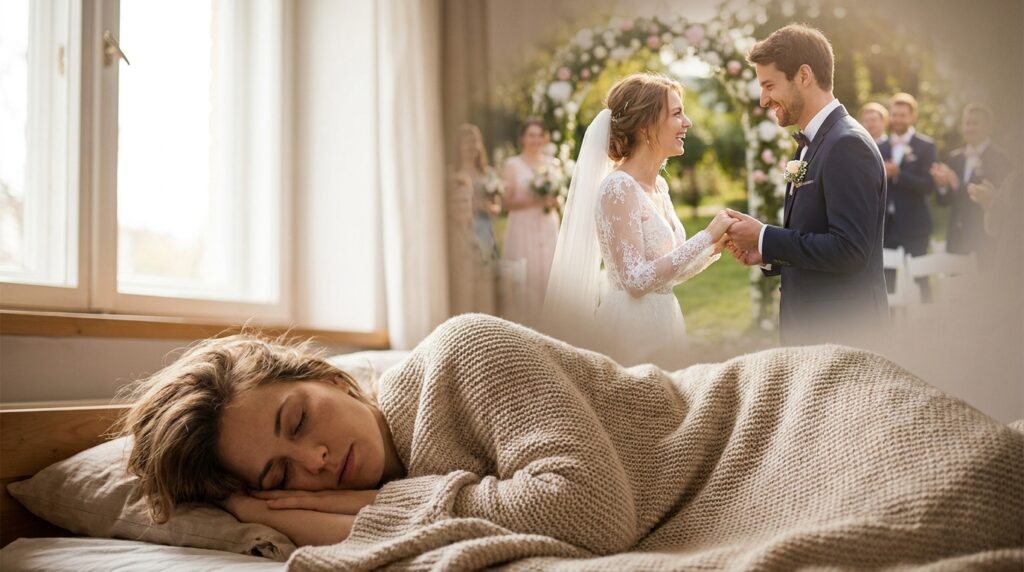
Dreaming about getting married can feel joyful, emotional, strange, or even stressful depending on how the dream unfolds. For some people, the dream feels beautiful and full of meaning. For others, it brings confusion, nervousness, or a sense of pressure. That range makes sense, because marriage is one of the strongest symbols of union, commitment, change, and identity shift in dream life. Even if you are not thinking about marriage in a literal sense, the dream may still be deeply meaningful. It can reflect emotional readiness, fear of commitment, the desire for lasting connection, the merging of two parts of yourself, or an important life transition that feels binding and significant. In most cases, this is not simply a dream about a wedding ceremony. It is a dream about what it means to commit, choose, join, and step into a new chapter with real emotional weight.
Quick Answer
Dream About Getting Married meaning often relates to commitment, emotional union, major life transition, inner integration, or the desire for something in your life to feel more secure, complete, and lasting. Dreaming of getting married can symbolize a romantic bond, but it can also reflect personal growth, identity change, responsibility, or the joining of different parts of yourself into a more mature whole. In some cases, the dream feels positive and points to readiness, love, and emotional alignment. In other cases, it reveals anxiety, fear of commitment, social pressure, or uncertainty about whether you are truly prepared for a major decision.
Core Symbolism of Getting Married in Dreams
Marriage is one of the clearest dream symbols for union. At the most basic symbolic level, getting married means bringing two things together and making that connection formal, visible, and emotionally significant. In dream language, that union may be about romantic love, but it may also be about inner harmony, long term decisions, or a life direction that now feels serious enough to claim.
A dream of getting married often appears during moments of transition. Something in your life may be moving from possibility into commitment. That could involve a real relationship, but it could just as easily involve work, identity, healing, or a personal choice you can no longer treat casually. Marriage in dreams suggests that an important threshold is being crossed.
Because marriage implies vows, structure, and continuity, the symbol is often connected with permanence. The dream may reflect a wish for stability, emotional safety, and something that endures beyond temporary feelings. This is one reason the meaning can naturally connect with Dream About Marriage, where commitment and long term union are often central. Still, getting married adds a specific layer: the active moment of stepping into that commitment.
From a Jungian point of view, a marriage dream can symbolize the integration of opposites within the psyche. It may reflect the joining of logic and emotion, independence and intimacy, strength and softness, or masculine and feminine qualities within the self. In that sense, the dream is not merely about another person. It can symbolize psychological wholeness. You may be becoming more internally aligned, more mature, or more ready to live from a coherent sense of self.
Marriage dreams can also reveal what you believe commitment costs. For some people, marriage symbolizes belonging and trust. For others, it evokes fear of losing freedom, identity, or emotional control. That is why the feeling in the dream matters so much. A peaceful marriage dream may symbolize readiness and alignment. A stressful one may point to doubt, pressure, or internal conflict about responsibility.
Culturally, marriage carries powerful expectations. It can symbolize adulthood, approval, family expectations, success in love, and social belonging. Because of that, a marriage dream may reflect not only personal feelings but also the pressure of what others expect from you. Sometimes the dream asks whether your desire for commitment is truly yours, or partly shaped by outside norms.
In many cases, getting married in a dream symbolizes the moment when something stops being theoretical and becomes real. It is about choosing, joining, and accepting the weight of what comes next.
Spiritual Meaning of Dreaming About Getting Married
Spiritually, dreaming about getting married often points to union, alignment, and sacred commitment. This does not have to be interpreted in a rigid religious way. In a grounded spiritual sense, marriage can symbolize the joining of inner and outer life, intention and action, heart and mind, or desire and responsibility. The dream may suggest that you are moving toward greater integrity, where what you feel, believe, and choose are becoming more united.
A marriage dream can also reflect a deeper longing for wholeness. Many people move through life feeling divided. One part wants closeness, while another wants safety. One part wants change, while another resists it. Dreaming of getting married may symbolize a spiritual movement toward inner agreement. You may be learning how to stop living in fragments and begin living from a more connected center.
In some cases, the dream reflects a sacred relationship with life itself. You may be entering a season where your commitments matter more, your choices feel more binding, and your values ask for embodiment rather than just reflection. Spiritually, getting married in a dream can mean that you are ready to take something seriously on the level of the soul.
The symbol may also raise questions about devotion. What are you truly devoted to right now? Love, peace, growth, truth, status, fear, security, duty? A marriage dream can reveal where your heart is making vows, consciously or unconsciously. Sometimes the dream is beautiful because your inner life is aligning with something deeply meaningful. Other times it is uneasy because you feel bound to something that does not fully fit who you are becoming.
This meaning can overlap naturally with the emotional promise and anticipation found in Dream About Proposal, but getting married goes beyond possibility. It suggests that the moment of decision has arrived, or at least that your inner world is seriously contemplating it.
If the dream repeats, it may indicate an ongoing spiritual lesson about commitment, maturity, trust, or emotional integration. The dream may be asking whether you are ready to live more fully in agreement with what you say matters most.
A Related Bible Verse
A fitting verse for this symbol is Genesis 2:24: “Therefore shall a man leave his father and his mother, and shall cleave unto his wife: and they shall be one flesh.”
This verse connects naturally to dreams about getting married because the dream often symbolizes union, transition, and the creation of a new bond or identity. In a reflective sense, the image of becoming one can also support the broader dream meaning of inner integration, shared purpose, and stepping into a more committed stage of life. It does not mean the dream is predicting literal marriage. Rather, it highlights the theme of joining and living with deeper unity.
Psychological Interpretation
Psychologically, dreaming about getting married often reflects commitment, identity development, attachment needs, and major life transitions. Marriage is a symbol that immediately raises questions about permanence, responsibility, belonging, and choice. Because of that, these dreams often appear when you are deciding who you are, what you value, and what kind of future you are willing to build.
For people in relationships, the dream may express hopes, fears, or uncertainty around commitment. You may desire security and long term love, or you may feel pressured by expectations. The dream can reveal emotional truth more clearly than waking thought because it shows how commitment feels in your body rather than how you rationalize it.
For people who are not thinking literally about marriage, the dream may symbolize a serious commitment in another area. This could be a career path, a move, a personal calling, or a healing process you are ready to embrace fully. Psychologically, the mind often uses marriage imagery when something moves from open possibility into irreversible decision.
Attachment style can also shape the dream. Someone with secure relational patterns may experience getting married as warmth, peace, and mutual joy. Someone with fear of abandonment may dream of marriage as reassurance. Someone with fear of engulfment may experience the dream as pressure, panic, or loss of self. The dream is often less about marriage itself than about what commitment awakens in you.
There is also a strong identity component here. Getting married means becoming someone in a new way. You are no longer standing in the same position as before. That symbolic change can trigger dreams when you are outgrowing an older version of yourself. In that sense, the dream may not be about romance alone. It may be about the psychological shift from one life chapter into another.
This meaning can carry symbolic echoes of Dream About Wedding, where public recognition, ritual, and life change often matter as much as intimacy itself. But getting married usually feels more personal and interior. It highlights the act of consent, union, and emotional commitment.
The emotional tone is especially important. If you feel joy, the dream may indicate alignment and readiness. If you feel fear, it may reveal ambivalence or pressure. If you feel numb, you may be disconnected from your own desires. If you feel relief, perhaps a part of you longs for belonging, certainty, or a more stable emotional future.
From a Jungian view, marriage dreams can symbolize individuation through inner union. Freud might emphasize desire, social aspiration, family dynamics, or unconscious wishes. Modern psychology might focus on developmental milestones, identity transitions, attachment, or anxiety about commitment. Different frameworks use different language, but all suggest that the dream is meaningful because it reveals how you relate to union and change.
Common Dream Scenarios About Getting Married
Dream of Getting Married to Your Current Partner
This dream often reflects thoughts and emotions about commitment, trust, and the future of the relationship. It does not automatically mean you will marry this person in real life, but it may reveal how stable, serious, or emotionally important the bond feels to you. If the dream feels joyful, it may show readiness and affection. If it feels tense, it may reflect pressure, doubts, or fear of losing independence.
Dream of Getting Married to a Stranger
Marrying a stranger in a dream often symbolizes unknown parts of yourself or a future you have not fully grown into yet. The stranger may represent qualities, responsibilities, or emotional possibilities that are entering your life but still feel unfamiliar. This kind of dream can be deeply symbolic and is often more about identity change than literal romance.
Dream of Getting Married to an Ex
This scenario rarely means you are meant to reunite. More often, it suggests unfinished emotional material connected to that chapter of your life. You may still be integrating lessons, patterns, wounds, or memories from that relationship. The marriage symbol suggests that the emotional significance of that bond is still being processed on a deeper level.
Dream of Getting Married but Feeling Fear or Panic
Fear during the ceremony often points to ambivalence, pressure, fear of commitment, or concern about losing freedom. It may also reflect anxiety about a major decision in waking life, even if that decision has nothing to do with romance. The dream may be asking whether you are saying yes to something that your deeper self is not fully ready for.
Dream of Getting Married in a Beautiful Ceremony
A beautiful ceremony often symbolizes harmony, readiness, emotional blessing, and the sense that an important transition feels right. This may reflect peace about love, gratitude for growth, or confidence in a choice that feels aligned. The imagery can carry obvious connections with Dream About Bride when beauty, openness, and new beginnings are prominent in the dream atmosphere.
Dream of Getting Married but Something Goes Wrong
If the ceremony is interrupted, someone is missing, or the event becomes chaotic, the dream may reflect underlying instability, doubt, or fear that something important is not fully in place. This does not need to be taken literally. More often, it shows anxiety about whether a decision, relationship, or transition is truly ready to hold.
Dream of Getting Married Without Wanting To
This scenario often reflects pressure, obligation, people pleasing, or feeling bound to expectations you did not freely choose. The dream may involve family pressure, social norms, or a waking-life situation where you feel pushed into a role, identity, or commitment that does not feel fully authentic.
Dream of Being Ready and Calm While Getting Married
A calm marriage dream often symbolizes maturity, acceptance, and inner agreement. You may be entering a stage of life where commitment feels less frightening and more natural. The dream may also reflect emotional healing, especially if you once feared closeness but now feel more secure. There can be a strong symbolic link here to Dream About Groom, especially when the dream emphasizes readiness, responsibility, and the willingness to show up fully.
Dream of Looking at the Wedding Ring During Marriage
If the ring becomes important in the dream, the symbol often shifts toward vows, permanence, and emotional responsibility. The dream may be asking how you feel about promises and whether what binds you also protects you. This makes a natural connection with Dream About Ring, where loyalty, cycles, and serious emotional bonds are often central.
How This Dream Connects to Your Real Life
Love and Relationships
In love, dreaming about getting married often reflects desire for security, deeper intimacy, emotional trust, and lasting partnership. It may arise when you are thinking about the future of a relationship, questioning your readiness, or wanting clearer signs of mutual commitment. Sometimes the dream shows joy and confirms emotional alignment. Other times, it reveals where fear, pressure, or unresolved attachment wounds are still active.
Career and Money
In career and finances, getting married in a dream may symbolize commitment to a path, acceptance of responsibility, or the feeling that your life is entering a more serious phase. You may be binding yourself to a long term project, a business, a role, or a life structure that requires consistency and maturity. This can be positive if it reflects purposeful direction, but stressful if it reflects obligation without full emotional buy in.
Personal Growth
For personal growth, this dream can be especially powerful. It may symbolize integration, maturity, and the willingness to stop living in halves. You may be reconciling different sides of yourself, stepping into adulthood more fully, or accepting a version of life that asks for depth rather than endless options. In many cases, the dream reflects psychological growth through commitment rather than through exploration alone.
Health and Emotional State
Emotionally, a marriage dream can reflect the state of your attachment system. If you feel safe in the dream, that may suggest growing emotional stability. If you feel stressed, trapped, or numb, the dream may highlight relational anxiety, decision fatigue, or tension around long term responsibility. The dream can also appear when you are craving comfort, belonging, or a stronger sense of emotional anchor in life.
Is Dreaming About Getting Married a Positive or Warning Sign?
Dreaming about getting married is often positive when the dream feels loving, calm, joyful, or deeply right. In that form, it can symbolize emotional maturity, readiness, inner union, healthy commitment, and trust in a path that feels meaningful. It may reflect a growing willingness to love more fully, choose more clearly, or live with more integrity.
At the same time, the dream can act as a warning sign when it feels pressured, chaotic, forced, or emotionally wrong. Then it may reveal fear of commitment, loss of identity, social pressure, people pleasing, or a life decision that feels too heavy or premature. The warning is not that marriage itself is bad. It is that something about commitment currently feels unresolved.
The dream can also be mixed, which is very common. You may deeply want love and stability while also fearing what commitment demands. You may long for closeness and still worry about losing freedom. A marriage dream often becomes meaningful because it reveals both desire and resistance at the same time.
This layered emotional meaning is one reason the symbol often overlaps with themes from Dream About Love and Dream About Romance. Love may be part of the dream, but marriage asks a more specific question: what are you ready to build, protect, and remain faithful to over time?
Case Studies
A Woman in a Stable Relationship Thinking About the Future
A woman dreams of getting married to her current partner in a peaceful ceremony. She wakes up feeling warm and calm. In waking life, she has not been obsessing over marriage, but she has been noticing how safe and seen she feels in the relationship. The dream reflects emotional readiness and trust rather than a literal prediction. It shows that the bond feels increasingly secure and meaningful.
A Man Feeling Pressured by Family Expectations
A man dreams that he is getting married, but he feels panicked and cannot find the words to say during the ceremony. His family has been pressuring him to settle down. In this case, the dream reflects conflict between external expectation and internal readiness. The marriage symbolizes obligation more than desire.
A Person Entering a Major Career Commitment
Someone dreams of getting married to a stranger and feeling both nervous and curious. In waking life, they are about to commit to a new career path that will change their lifestyle completely. The stranger symbolizes the unknown future, and the marriage represents a serious life commitment. The dream is not about romance at all. It is about stepping into a new identity.
A Woman Healing After Past Relationship Trauma
A woman dreams of getting married and feeling surprisingly calm, even though past relationships left her fearful of closeness. She has been doing deep emotional healing and learning to trust again. The dream reflects growing inner security. Rather than predicting marriage, it symbolizes that commitment no longer feels as threatening as it once did.
A Business Owner Feeling Bound to Responsibility
A business owner dreams of getting married in a rushed ceremony they never agreed to plan. In waking life, they feel trapped by obligations, staff expectations, and financial pressure. The dream symbolizes commitment without emotional consent. Marriage here represents responsibility that has become too heavy and no longer feels freely chosen.
Dream Numbers
Some dream traditions loosely connect marriage symbolism with numbers such as 2, 6, 8, or 11 because they are sometimes associated with partnership, harmony, union, and life transitions. These associations are not universal, so they are best treated lightly as symbolic details rather than fixed meanings.
Lucky Lottery Meaning
In some folk traditions, marriage dreams are linked to luck, timing, or symbolic numbers. If a dream about getting married is given a lottery meaning, it should be understood as folklore rather than certainty. The emotional and psychological meaning of the dream is usually much more important than any gambling interpretation.
FAQ
What does it mean spiritually to dream about getting married?
Spiritually, dreaming about getting married often symbolizes union, alignment, devotion, and a deeper commitment to what truly matters in your life. It can reflect inner wholeness or a sacred transition into greater emotional and spiritual maturity.
Does dreaming about getting married mean I will get married soon?
Usually, no. The dream is often symbolic rather than predictive. It may reflect commitment, life transition, emotional readiness, or the joining of different parts of yourself rather than a literal future event.
Why do I feel scared when I dream about getting married?
Fear in a marriage dream often points to pressure, ambivalence, fear of commitment, or anxiety about losing freedom or identity. It may reflect how a major decision feels emotionally, even if that decision is not about romance.
What does it mean if I marry a stranger in the dream?
Marrying a stranger usually symbolizes unknown aspects of yourself, a future you are growing into, or a major life commitment whose full shape is still unfamiliar. It often points more toward identity change than literal love.
Can dreaming about getting married be about personal growth instead of romance?
Yes. Very often, the dream symbolizes maturity, inner union, responsibility, and the willingness to commit to a new stage of life. In many cases, it is just as much about self-development as it is about romantic love.
Conclusion
Dreaming about getting married usually points to commitment, union, and meaningful change. It may reflect romantic hopes, emotional readiness, fear of responsibility, social pressure, or the deeper integration of different parts of yourself. The dream becomes especially important when you notice how it feels. Joy may suggest alignment. Panic may reveal pressure or ambivalence. Calm may reflect maturity and trust. More than anything, this dream asks what you are truly ready to join yourself to, whether in love, identity, purpose, or life direction. When you answer that honestly, the meaning of the dream often becomes much clearer and much more useful.