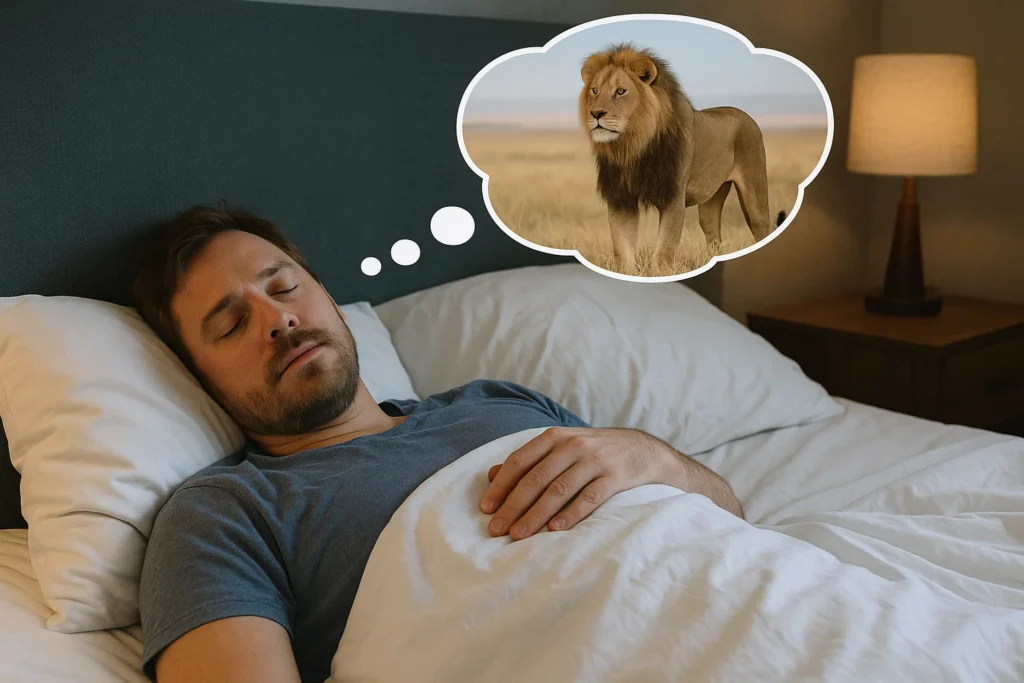
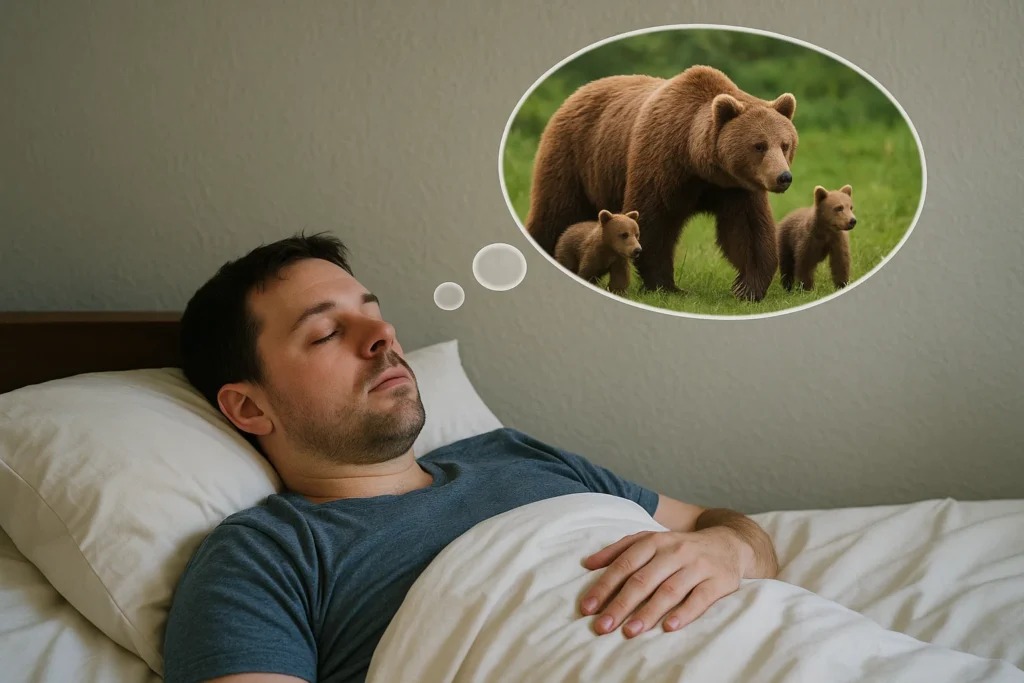
Dreaming about chimpanzees can feel playful on the surface—fast movements, curious faces, mischievous energy—yet the emotional undertone is often more complex. Chimpanzees are intensely social, intelligent, and expressive. In dream psychology, they frequently symbolize your relationship with belonging, status, loyalty, rivalry, and the parts of you that are instinctive, spontaneous, or unfiltered.
If you woke up laughing, anxious, embarrassed, or oddly stirred, that reaction is not accidental. Chimpanzee dreams often appear when your psyche is processing social dynamics: who you trust, how you fit in, where you feel judged, and how you protect your dignity. They can also surface when you are learning to integrate “civilized” self-control with raw emotional truth.
In this guide, I’ll help you decode the dream through a clinician’s lens: the emotional tone, the role the chimpanzee plays, and the real-life situation your nervous system is trying to negotiate.
Quick Summary
Dreams about chimpanzees usually relate to social intelligence, group belonging, emotional expression, playful curiosity, and competition. A friendly chimpanzee often reflects connection, collaboration, and renewed spontaneity. An aggressive chimpanzee can symbolize conflict, rivalry, boundary violations, or a protective anger you have been minimizing.
If the dream centers on being watched, chased, or attacked, it can highlight social anxiety, fear of humiliation, or pressure to perform. If the dream feels warm and funny, it often points to healthy play, creativity, and the need to loosen rigid self-control.
What Chimpanzees Symbolize in Dreams
Chimpanzees are not solitary symbols. They represent the social nervous system—how you read faces, manage your reputation, and respond to inclusion or rejection.
Social belonging and the need to feel safe in a group
Chimpanzees live in complex communities with hierarchies, alliances, and emotional signals. When they appear in dreams, your psyche may be exploring a central question: where do you truly belong, and what do you do to earn belonging?
If the chimpanzee is calm and accepting, your dream can reflect secure attachment and social ease. If the chimpanzee is suspicious, mocking, or chaotic, it may reflect a fear that you will be judged, excluded, or misunderstood.
Intelligence, curiosity, and the urge to explore
Chimpanzees are problem-solvers. In dreams, that can translate into a part of you that wants to experiment, test boundaries, and learn by doing rather than overthinking.
If you have been stuck in routine, perfectionism, or “playing it safe,” a chimpanzee dream may be your psyche’s way of restoring curiosity. It is not always telling you to take a reckless risk. It is often telling you to reclaim flexibility.
Primal emotion and honest expression
Chimpanzee energy is direct. In dream work, that directness frequently symbolizes emotions you have been editing to stay acceptable—anger, excitement, jealousy, desire, embarrassment, grief.
When a chimpanzee appears, ask yourself what emotion in waking life you have been trying to manage quietly. The dream may be giving it a body.
Status, rivalry, and social comparison
Because chimpanzee groups include dominance dynamics, dreams about them can reflect competition: workplace politics, friendship tension, romantic insecurity, family hierarchy, or social media comparison.
If the dream has a competitive tone, it may be highlighting an internal dilemma: you want respect, but you do not want to become someone you dislike in the process.
Mischief and the shadow of immaturity
Chimpanzees can symbolize play. They can also symbolize impulsivity. When they are stealing, breaking things, or embarrassing you, your dream may be exploring the shadow side of spontaneity: acting without considering consequences.
This is not moral judgment. It is psychological calibration. The dream is showing you where your boundaries are too tight, or too loose.
Psychological Meaning
To interpret a chimpanzee dream responsibly, I look at three elements: emotional tone, social context, and your role in the scene.
Emotional tone reveals the hidden subject
A chimpanzee dream with laughter usually involves play, creativity, and nervous-system relief. A chimpanzee dream with shame usually involves social fear, self-criticism, or old wounds of humiliation. A chimpanzee dream with fear or anger often involves boundaries, conflict, or self-protection.
Do not rush past your feelings. In dreams, feelings are the message.
The social context mirrors real-life dynamics
Ask where the dream takes place.
A jungle or forest often symbolizes raw instinct and natural belonging.
A zoo often symbolizes feeling observed, judged, or controlled.
A home often symbolizes personal boundaries and intimacy.
A workplace or school setting often symbolizes status, performance pressure, and reputation.
Your psyche chooses a setting that matches the emotional lesson.
Your role shows your coping strategy
If you are feeding a chimpanzee, you may be nurturing your playful side or trying to calm conflict.
If you are running from a chimpanzee, you may be avoiding a truth that feels socially risky.
If you are fighting a chimpanzee, you may be learning to defend boundaries.
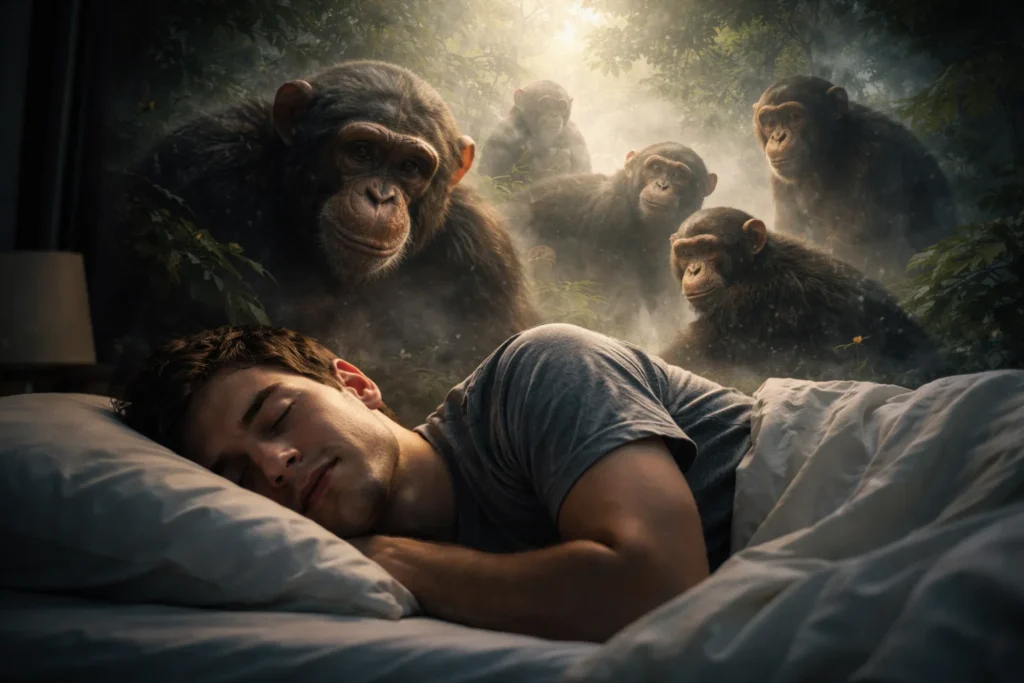
If you are being watched by chimpanzees, you may be processing self-consciousness and evaluation anxiety.
If you become a chimpanzee in the dream, your psyche may be experimenting with a freer identity—less filtered, more alive.
At a broader level, animal dreams often map the relationship between instinct and self-control. When you want that big-picture lens, read Dream About Animals.
Spiritual and Symbolic Perspectives
Even if you interpret dreams psychologically, symbolism can add depth—especially when the dream feels vivid, meaningful, or oddly sacred.
The call to reconnect with natural truth
Chimpanzees can symbolize the part of you that knows what is real beneath performance. Spiritually, this can be an invitation to return to authenticity: honest emotions, simpler needs, and a more grounded sense of self.
If you have been living through constant comparison or image management, the dream may be asking you to stop outsourcing your worth.
The lesson of community
In symbolic terms, chimpanzees can represent your relationship with “the tribe.” Are you trying to belong by shrinking, pleasing, or copying? Or are you learning to belong as yourself?
A recurring chimpanzee dream sometimes appears when someone is ready to choose healthier social environments—and leave dynamics that reward drama or dominance.
Sacred play and life energy
Some chimpanzee dreams are purely playful. Spiritually, play is not trivial. It is life-force. A playful chimpanzee can reflect a soul-level need to feel alive again, especially after periods of stress, grief, or emotional exhaustion.
Common Dream Scenarios and What They Often Mean
Use these interpretations as possibilities, not fixed predictions. The most accurate meaning is the one that matches your emotion and your current life context.
A friendly chimpanzee
A friendly chimpanzee often symbolizes social comfort, emotional openness, and renewed playfulness. It can also represent a supportive friend, ally, or part of you that wants connection.
If you feel warmth, it may be time to lean into community, collaboration, or creative social energy.
If you feel suspicious even when it is friendly, your dream may be revealing trust wounds—expecting rejection even in safe spaces.
A chimpanzee staring at you
Being stared at can symbolize evaluation anxiety: the feeling of being watched, judged, or measured. This often happens when you are under pressure to perform, meet expectations, or prove your worth.
The question here is subtle: who is the real judge in your life—other people, or your inner critic?
A chimpanzee chasing you
Chase dreams tend to be about avoidance. A chimpanzee chasing you can symbolize an emotion you are outrunning because it feels socially dangerous—anger, embarrassment, jealousy, desire, grief.
Often, the thing chasing you is not your enemy. It is your truth, asking to be integrated.
A chimpanzee attacking you
An attack dream can point to boundaries. It may reflect feeling threatened, provoked, or disrespected. It can also reflect a part of you that is tired of being agreeable.
If you want to understand this pattern across animal symbolism, compare it with Dream About Animals Attacking Me.
A chimpanzee in your home
A chimpanzee in your home often symbolizes a personal boundary issue. Someone’s energy may feel invasive, chaotic, or unpredictable. Or you may be dealing with your own impulsive habits entering spaces where you want calm.
If the chimpanzee is playful, you may be inviting more aliveness into your private world.
If it is destructive, you may need stronger boundaries, routines, or emotional regulation.
A chimpanzee stealing something
Stealing can symbolize fear of loss, trust issues, or the sense that your attention is being taken—by drama, distractions, or obligations.
Sometimes, the stolen object is key. If the chimpanzee steals your phone, it can reflect social comparison or digital overload. If it steals food, it can reflect unmet needs. If it steals a bag or wallet, it can reflect insecurity about resources or self-worth.
A baby chimpanzee
Baby chimpanzee dreams often symbolize tender social needs: wanting comfort, belonging, and safe affection. They can also symbolize a new beginning in your confidence—learning social skills, trying something new, allowing yourself to be seen.
If the baby feels fragile, your dream may be asking you to protect your softer side rather than shame it.
You become a chimpanzee
This is a powerful identity dream. Becoming a chimpanzee can symbolize shedding a mask. You may be exploring what it would feel like to live with less self-censorship.
The healthy version of this dream is liberation: more authenticity, more vitality.
The warning version is impulsivity: acting out because you feel constrained.
The question is not whether “civilization” is bad. The question is whether your self-control has become self-erasure.
Relationships and Love
Chimpanzee dreams often show up when relationships activate social instincts: jealousy, loyalty, hierarchy, and the need to feel chosen.
When the dream highlights jealousy or rivalry
If the dream involves fighting chimpanzees, competing for attention, or being excluded, it can reflect jealousy—yours or someone else’s. Jealousy is not only a flaw. Psychologically, it is a signal: something you value feels threatened.
Instead of shaming yourself, ask what you truly need.
Clarity.
Reassurance.
Boundaries.
A more secure bond.
Sometimes the dream is not about a partner at all. It is about your relationship with your own worth.
When the dream highlights loyalty and protection
A chimpanzee protecting you can symbolize an ally or your own protective instincts. You may be learning to defend your emotional space—especially if you have a history of over-giving.
In practical terms, protection can look like saying no, leaving unhealthy dynamics, or choosing relationships that feel calm rather than addictive.
When the dream highlights embarrassment
Chimpanzees can be loud and socially “inappropriate.” If the dream makes you feel embarrassed, it may reflect fear of being seen as too much, too emotional, too needy, or not sophisticated enough.
This can connect to early experiences where you learned to edit yourself to stay safe.
Work, Reputation, and Social Pressure
Chimpanzee dreams can be deeply relevant to work life because workplaces are social ecosystems with status dynamics.
Politics, hierarchy, and the fear of losing face
If your dream includes dominance displays, group tension, or being watched, it may mirror a real environment where reputation feels fragile.
In that case, the dream may be encouraging two things at once.
Be socially intelligent.
Do not abandon yourself to win.
That balance is the real lesson.
Performance pressure and the inner critic
If you feel judged in the dream, your nervous system may be tired of performance. This often happens when you are achieving externally but internally anxious.
Your dream might be saying the quiet truth: you are allowed to be human while you build your life.
The need for playful creativity
Sometimes chimpanzees show up not because you are stressed, but because you are bored. A playful chimpanzee can signal creative hunger: your mind wants novelty, play, and experimentation.
When primate symbolism repeats, comparing across related dream symbols can sharpen meaning. For a different primate tone, read Dream About Orangutans.
Shadow Work and Inner Growth
Chimpanzee dreams are often shadow dreams, meaning they reveal parts of you that you manage carefully in waking life.
The shadow of impulsivity
If the chimpanzee is destructive, loud, or reckless, ask whether you have been over-restricting yourself. Extreme restriction often breeds rebound.
Healthy integration looks like allowing expression in safe channels rather than suppressing it until it explodes.
The shadow of social fear
If the chimpanzee feels mocking or threatening, it can symbolize old humiliation wounds. The dream may be replaying a social fear so you can finally heal it.
A therapeutic approach is to ask.
What age does this feeling belong to.
Who first made me feel unsafe to be seen.
What would I say to that younger self now.
The shadow of aggression as protection
Aggression in dreams is often protective. It can symbolize the part of you that refuses to be disrespected. Many people fear their own anger because they associate it with harm.
But healthy anger is boundary energy. It is the emotional immune system.
If you want a comparison point for “protective strength” energy in dream symbolism, explore Dream About Gorillas.
How to Work With Your Chimpanzee Dream in Daily Life
Dream interpretation is only helpful if it changes something real. Here are grounded steps to integrate the message.
Reconstruct the dream’s social map
Write down.
Who was present.
Who had power.
Who was watching.
Who was excluded.
What you were trying to protect.
Then ask where this map resembles your current life.
Identify the emotion you keep editing
Chimpanzee dreams frequently appear when you are censoring emotion to stay liked. Choose one emotion from the dream—anger, embarrassment, longing, jealousy—and give it a respectful name.
Then ask what that emotion is trying to protect.
Practice social honesty in a small way
Not a dramatic confrontation. A small truth.
A boundary.
A request.
A no.
A clearer message.
The goal is not to win. The goal is to stop leaking self-respect.
Build nervous-system safety
If your dream felt chaotic, your system may be overstimulated. Basic regulation is not optional. Sleep, steady meals, movement, sunlight, and quiet time often change your dream themes within weeks.
Transform play into medicine
If the dream was funny or playful, treat it as permission. Schedule play that is not productive. Creativity that does not need approval. Social time that does not require performance.
Play is not childish when it restores your life-force.
Case Studies
The people-pleaser facing a social fear
A dreamer saw a circle of chimpanzees staring and laughing. They woke with embarrassment and a tight chest. In waking life, they were terrified of being judged at work and overexplained everything. The dream revealed evaluation anxiety. Their healing step was practicing shorter communication and letting discomfort pass without self-attack.
The caretaker discovering hidden anger
A dreamer tried to feed a chimpanzee, but it suddenly snapped and bit. They felt shocked and guilty. In life, they had been caretaking family members while ignoring resentment. The dream framed anger as protection. They began setting boundaries and noticed their dreams became calmer.
The creative person reclaiming play
A dreamer played with a baby chimpanzee and woke up smiling. In waking life, they had been stuck in rigid routines and had not created anything for months. The dream symbolized creative hunger. They started a small daily practice and their mood improved.
The person navigating workplace rivalry
A dreamer watched chimpanzees fight for dominance in a crowded enclosure. They woke anxious. In life, they were in a competitive environment where gossip and status games were intense. The dream validated their stress and encouraged a strategy shift: fewer disclosures, clearer alliances, stronger boundaries.
The socially anxious dreamer learning self-compassion
A dreamer was chased by a chimpanzee through a public space and felt humiliation. In therapy, we linked the feeling to early experiences of being laughed at. The dream became a doorway to self-compassion. Their practice was imagining turning toward the chimpanzee with calm curiosity instead of running.
The person integrating authenticity
A dreamer became a chimpanzee and felt both freedom and fear. In life, they were exhausted from performing a “perfect” identity. The dream symbolized liberation and the need for safe authenticity. They began sharing small truths with trusted people and felt lighter.
FAQs
What does it mean to dream about chimpanzees?
Chimpanzee dreams often symbolize social belonging, emotional expression, playful curiosity, and group dynamics like competition or loyalty. The meaning depends on whether the dream feels safe, chaotic, humiliating, or joyful.
Is a chimpanzee dream a sign of good luck or bad luck?
It is usually neither. Psychologically, it is more like a message about social energy and emotional truth. Friendly chimpanzees often reflect connection and creativity. Aggressive chimpanzees often reflect boundaries, rivalry, or suppressed anger.
Why did I feel embarrassed in the dream?
Embarrassment often points to evaluation anxiety or fear of being judged. Your psyche may be processing pressure to perform, fit in, or maintain an image.
What does it mean if a chimpanzee attacks me?
This commonly relates to boundary stress, feeling provoked, or emotions that have been restrained too long. It can also symbolize a protective anger that needs healthier expression.
What does a baby chimpanzee mean in a dream?
A baby chimpanzee often symbolizes tender social needs, new beginnings in confidence, and the desire for safe affection. It can also represent your softer side asking for protection.
What if the chimpanzee is in my house?
This often points to personal boundaries or unpredictable energy entering your private space. It may reflect a relationship dynamic, a habit, or internal impulsivity that disrupts your sense of calm.
Why do chimpanzees in dreams feel like they are judging me?
This can reflect an internal critic or a real-life environment that feels evaluative. The dream may be highlighting where you outsource your worth to other people’s reactions.
Can chimpanzee dreams relate to work or school?
Yes. They often mirror group hierarchies, reputation pressure, and social comparison. These dreams can encourage strategic boundaries and clearer self-definition.
What should I do after a chimpanzee dream?
Start with the emotional tone. Identify one emotion you have been editing in waking life, then practice a small, honest action such as a boundary, a request, or a moment of play without performance.
Dream Number & Lucky Lottery Meaning
Chimpanzee dreams often connect with themes of social intelligence, quick learning, and boundary awareness. If you enjoy symbolic number play, these sets can be used as reflective cues.
Two-digit options include 19, 31, 47, 83.
Three-digit options include 193, 317, 470, 831.
Four-digit jackpot-style options include 0193, 0317, 0470, 0831, 0123.
Treat these numbers as symbolic prompts for personal meaning, not as prediction.
Conclusion
A dream about chimpanzees is often your psyche speaking about social life, identity, and emotional truth. It can reveal where you crave belonging, where you fear judgment, and where your natural energy wants more play and freedom. Whether the chimpanzee appears friendly or threatening, the deeper message usually points toward integration: expressing yourself with honesty while holding healthy boundaries. When you honor that balance, your relationships often become clearer, your nervous system steadier, and your confidence less dependent on approval.
Dream Dictionary A–Z
If you want to keep exploring symbols that appear in your dreams, visit the Dream Dictionary A–Z and track repeating patterns over time. The most accurate interpretation often emerges when you notice what your dream life returns to again and again—and what your waking life is asking you to heal, claim, or change.
Written and reviewed by the DreamHaha Research Team — a group dedicated to dream psychology and spiritual symbolism, helping readers uncover the true meaning behind every dream.