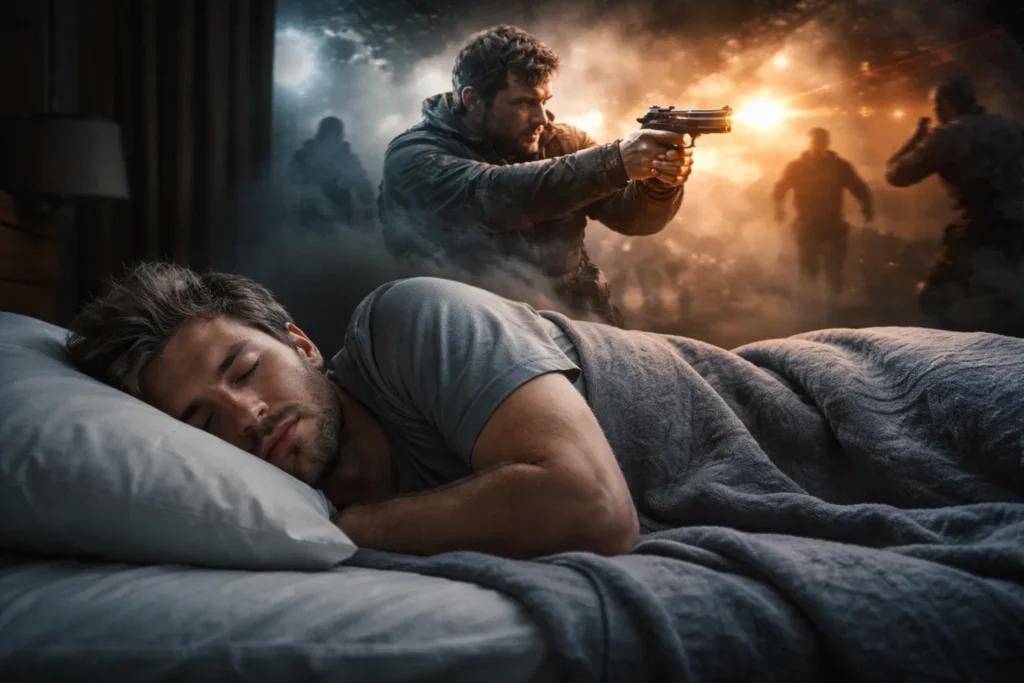
Dreams about shooting can feel intense, frightening, and emotionally exhausting. Even after waking up, the images may stay in your mind because the dream often carries fear, urgency, danger, or shock. Some people dream of hearing gunfire from far away, while others dream of being shot, witnessing a shooting, or even shooting someone themselves. Because this type of dream involves threat, force, and sudden consequence, it usually reflects emotional pressure rather than literal prediction. In many cases, dreaming about shooting points to conflict, fear, vulnerability, anger, emotional attack, or the feeling that something in your life has become too intense to ignore. These dreams can be disturbing, but they often reveal what your inner world is struggling to process under the surface.
Quick Answer
Dream About Shooting meaning often relates to conflict, fear, emotional pressure, anger, vulnerability, or the feeling of being threatened in some area of life. A shooting dream may symbolize emotional attack, sudden stress, unresolved tension, inner aggression, or fear of losing control. Depending on the role you play in the dream, it can reflect feeling powerless, defensive, trapped, overwhelmed, or pushed toward confrontation. In many cases, the dream is not literal, but a strong symbolic expression of inner distress, relationship tension, or psychological conflict.
Core Symbolism of Shooting in Dreams
Shooting is one of the most intense forms of dream symbolism because it involves force, impact, and immediate consequence. Unlike slower symbols of tension, shooting happens suddenly. This makes it a powerful image for emotional rupture, conflict, or the sense that something in your life has crossed into a more serious stage.
At the subconscious level, shooting often symbolizes emotional attack. This does not always mean physical danger. More commonly, it reflects feeling hurt by words, pressure, betrayal, harsh criticism, rejection, or conflict that feels sudden and damaging. The dream uses violent imagery because your emotional system is interpreting something as threatening or overwhelming.
Shooting can also symbolize aggression. If you are the one shooting in the dream, it may represent anger, frustration, a desire to defend yourself, or an urge to end a problem quickly. This symbolism connects naturally with Dream About Gun, where power, control, fear, and threat often become central themes.
From an archetypal perspective, shooting may represent decisive rupture. Something is being broken, rejected, or forced into confrontation. This can reflect the end of denial, a breaking point in a relationship, or the moment when buried tension becomes impossible to avoid.
Culturally, shooting is strongly associated with danger, violence, emergency, and irreversible change. Because of that, dreams involving shootings often carry powerful emotional charge. Even when the dream is symbolic, it may feel deeply real because the imagery activates fear and survival instinct so strongly.
Universally, shooting dreams connect with themes of conflict, vulnerability, anger, survival, panic, defense, trauma, and emotional overwhelm. They often appear when life feels unsafe emotionally, when stress is intense, or when something in your environment feels hostile, unpredictable, or hard to control.
Spiritual Meaning of Dreaming About Shooting
Spiritually, dreaming about shooting often points to rupture, energetic conflict, fear, or the urgent need for protection and healing. This is not usually a soft spiritual symbol. It tends to appear when your inner life feels under pressure or when something in your emotional world has become deeply unsettled.
A shooting dream may symbolize an energetic attack in the broad sense of feeling drained, threatened, emotionally wounded, or overwhelmed by negativity. This does not have to be interpreted in an extreme or mystical way. More often, it means your spirit feels unsafe, overstimulated, or burdened by tension that has not yet been resolved.
The dream can also point to spiritual crisis or awakening through disruption. Sometimes people grow through peaceful insight, but at other times they are forced to pay attention because life feels too intense to ignore. A shooting dream may symbolize the moment you realize that something in your life, environment, or emotional habits is no longer sustainable. In that sense, it can overlap with the symbolism of Dream About Attack, where threat and protection become central spiritual questions.
If the dream repeats, it may suggest that your inner self is trying urgently to get your attention. You may need stronger emotional boundaries, more rest, or a more honest look at conflict that you have been minimizing. Repetition does not mean prediction. It usually means the emotional message is still active.
At a balanced spiritual level, the dream may be asking you to protect your peace, release destructive tension, and heal the parts of yourself that feel wounded, exposed, or constantly on alert.
A Related Bible Verse
A fitting Bible verse for this type of dream is Psalm 34:18: “The Lord is nigh unto them that are of a broken heart; and saveth such as be of a contrite spirit.” This verse connects well with dreams about shooting because such dreams often leave the dreamer feeling shaken, vulnerable, or emotionally wounded.
In the context of dream interpretation, this verse can offer a calm reminder that moments of inner fear or emotional injury still deserve compassion and care. If the dream feels disturbing, the message may not be one of punishment, but of tending to what feels hurt inside you. The verse supports a reflective interpretation centered on healing and closeness rather than fear.
Psychological Interpretation
Psychologically, dreaming about shooting often reflects intense stress, fear, anger, trauma processing, or a nervous system that feels under threat. These dreams can happen during periods of conflict, emotional instability, burnout, or high anxiety.
One common meaning is perceived danger. Even if you are not in actual danger, your mind may feel attacked by circumstances, criticism, pressure, or emotional pain. The shooting image becomes a dramatic symbol for the sense that something is coming at you too fast or too forcefully.
These dreams can also appear when anger is being suppressed. If you feel frustrated, powerless, resentful, or unable to express yourself directly, the subconscious may create an extreme scenario to show how intense those emotions have become internally. If you are the shooter, the dream may reflect the wish to stop, reject, or overpower a painful situation.
If you are being shot, the symbolism often shifts toward vulnerability, injury, and emotional exposure. This emotional position overlaps strongly with Dream About Being Shot, where fear, helplessness, and emotional wounding often shape the core interpretation.
The emotions inside the dream matter greatly:
If you felt fear, the dream may reflect anxiety, insecurity, or survival stress.
If you felt anger, it may point to unresolved resentment or emotional pressure.
If you felt numbness, it may suggest emotional shutdown after overwhelm.
If you felt panic, it may reflect a nervous system under too much strain.
If you felt guilt, it may point to inner conflict about your own anger or reactions.
If you felt relief after the shooting ended, the dream may symbolize release after a period of emotional buildup.
For some people, especially those who have lived through trauma or chronic stress, shooting dreams may also be connected to memory processing, fear conditioning, or a heightened sense of danger. In those cases, the dream may reflect the mind trying to work through emotional intensity rather than send a symbolic message alone.
Common Dream Scenarios About Shooting
Dream of Hearing Shooting
Hearing gunshots from a distance often symbolizes awareness of danger, conflict, or tension without being directly inside it yet. You may sense that something is wrong in your environment or relationships even if it has not fully reached you. The dream can reflect anxiety about what might happen next.
Dream of Being Shot
Dreaming of being shot often symbolizes emotional injury, betrayal, vulnerability, or feeling attacked by life circumstances. This may relate to harsh words, deep disappointment, or sudden stress that left a painful mark. If the dream felt especially frightening, it may also connect to broader themes found in Dream About Fear, where the dreamer feels exposed, threatened, or unable to relax.
Dream of Shooting Someone
If you are the one shooting, the dream may symbolize anger, frustration, defensiveness, or the desire to end a conflict decisively. It does not mean you literally want violence. More often, it reflects the wish to stop a situation, silence a source of pain, or protect yourself in a forceful way.
Dream of Running Away From a Shooting
Running away from a shooting often symbolizes avoidance, survival instinct, or the urgent need to escape pressure. You may be trying to distance yourself from emotional conflict, toxic environments, or situations that feel overwhelming. This meaning overlaps naturally with Dream About Running Away, especially when the dream emphasizes fear and self protection.
Dream of Surviving a Shooting
Surviving a shooting may symbolize resilience after emotional pain, recovery from a crisis, or the realization that something hurt you deeply but did not destroy you. This can be a powerful dream of strength, especially if the emotional tone shifts from terror to relief.
Dream of Witnessing a Shooting
Witnessing a shooting often suggests helplessness, secondary stress, or the feeling of being emotionally affected by conflict happening around you. You may not be at the center of the problem, but it still impacts your sense of safety.
Dream of Police During a Shooting
If police appear in the dream, the symbolism may involve control, authority, justice, or the desire for protection. The presence of law enforcement can suggest a search for safety, order, or intervention when life feels chaotic. This scenario connects naturally to Dream About Police, where rules, protection, fear, and accountability often shape the meaning.
Dream of Dying in a Shooting
Dying in a shooting dream can feel shocking, but symbolically it often represents the end of a painful chapter, the collapse of an old identity, or a deep emotional breaking point. This can connect strongly with Dream About Death, where endings and transformation often matter more than literal harm.
How This Dream Connects to Your Real Life
Love and Relationships
In relationships, shooting dreams often reflect emotional conflict, betrayal, harsh words, fear of rejection, or the sense that a relationship has become too painful or volatile. You may feel attacked emotionally, unable to defend yourself, or pushed into a breaking point. In some cases, the dream reveals how deeply a conflict has affected your emotional safety.
Career and Money
In work and finances, shooting dreams may symbolize pressure, competition, fear of failure, toxic environments, or a sudden problem that feels threatening to your security. You may feel that you are under attack from deadlines, criticism, job instability, or ongoing tension. The dream can reflect professional stress that your nervous system experiences as danger.
Personal Growth
For personal growth, this dream may reveal where you still react from fear, carry unresolved anger, or feel trapped in survival mode. It can also mark a breaking point where you realize something must change. Sometimes the dream is not just about pain, but about the urgent need to stop living in constant defense and begin healing more honestly.
Health and Emotional State
Emotionally, a shooting dream may reflect anxiety, trauma stress, burnout, panic, sleep disturbance, or a body that feels unsafe. If you wake up shaken, the dream may be showing just how much tension you have been carrying. When these dreams repeat often, they can be signs that your emotional system needs care, rest, safety, and more support.
Is Dreaming About Shooting a Positive or Warning Sign?
Dreaming about shooting is more often a warning or stress signal than a traditionally positive symbol, but the meaning still depends on the context.
As a warning sign, the dream may reflect emotional overload, ongoing conflict, suppressed anger, fear, trauma activation, or a life situation that feels too intense. If the dream left you panicked or disturbed, it may be showing that your inner world feels under threat and needs attention.
On the more constructive side, a shooting dream can sometimes symbolize release, survival, or the end of denial. If you survived the shooting, escaped it, or saw the danger clearly, the dream may reveal resilience and the growing awareness that something unhealthy needs to change. In this sense, even a disturbing dream can carry a useful message.
In many cases, the dream is not about future danger. It may simply reflect your inner state. Your mind could be processing conflict, fear, emotional injury, or intense stress. If the dream includes themes of killing or fatality, the symbolism may also overlap with Dream About Killing, where endings, rage, rejection, or inner conflict may take symbolic form.
The most balanced interpretation is that shooting dreams often point to psychological intensity. They ask you to notice where you feel threatened, angry, unsafe, or emotionally exhausted.
Case Studies
A Woman After a Harsh Relationship Argument
A woman dreamed that she was hiding from a shooting in a building after a painful fight with her partner. In waking life, no physical violence was involved, but the argument had left her feeling emotionally shattered and unsafe. The dream reflected how deeply the conflict affected her nervous system. The shooting symbolized emotional attack rather than literal danger.
A Man Under Extreme Work Stress
A man dreamed that shots were being fired around his workplace while everyone tried to escape. He had been under severe pressure, constant criticism, and fear of losing his job. The dream mirrored the feeling that work had become a hostile environment. The shooting represented stress that felt relentless and threatening.
A Student Suppressing Anger
A student dreamed that he shot at someone who kept chasing him, then woke up feeling disturbed and guilty. In real life, he had been suppressing resentment toward a controlling family member. The dream symbolized anger reaching a breaking point. It was less about violence and more about the desperate desire to stop emotional pressure.
A Parent Feeling Powerless
A parent dreamed of witnessing a shooting but being unable to protect the people nearby. In waking life, they were overwhelmed by family problems and felt unable to keep everything together. The dream reflected helplessness, fear, and the emotional pain of feeling responsible without feeling powerful.
A Woman Recovering From Trauma
A woman who had lived through a long period of instability dreamed repeatedly of surviving shootings and finding safe shelter afterward. Over time, the dream changed from panic to relief. In waking life, she was slowly healing and building stability. The dream showed that although her inner world still carried fear, it was also beginning to recognize survival, safety, and recovery.
Dream Numbers
In some folk traditions, shooting dreams are loosely associated with numbers such as 5, 13, 22, or 39 because of themes like sudden impact, fear, urgency, and rupture. These associations are symbolic and cultural rather than factual, so they are best taken lightly.
Lucky Lottery Meaning
Some people connect intense dreams, including shooting dreams, with symbolic numbers in folklore. Still, this should only be seen as cultural belief and not as a promise of luck or prediction. The deeper meaning of the dream usually lies in the emotional warning or psychological message it carries.
FAQ
What does it mean spiritually to dream about shooting?
Spiritually, dreaming about shooting often symbolizes rupture, emotional conflict, fear, and the urgent need for protection or healing. It may reflect an inner world that feels under pressure or emotionally wounded.
What does it mean if I dream of being shot?
Dreaming of being shot often symbolizes emotional injury, betrayal, sudden pain, or feeling attacked by circumstances or other people. It usually reflects vulnerability rather than literal danger.
Why do I keep dreaming about shootings?
Repeated shooting dreams may happen when your subconscious is processing ongoing fear, trauma, unresolved conflict, panic, or severe stress. Repetition often means the emotional message remains active and unresolved.
Is dreaming about shooting a bad omen?
Not necessarily. While it can feel disturbing, the dream is usually symbolic rather than predictive. It often reflects inner distress, conflict, or fear instead of forecasting literal events.
What does it mean if I survive a shooting in a dream?
Surviving a shooting often symbolizes resilience, endurance, and emotional recovery. It may show that something has hurt you deeply, but you are stronger than the fear or stress you have been carrying.
Conclusion
Dreaming about shooting often reflects conflict, fear, emotional injury, and the intense pressure of feeling threatened, overwhelmed, or pushed beyond your limits. These dreams can be disturbing, but they are usually symbolic rather than literal. Sometimes they reveal anger. Sometimes they reveal vulnerability. Often, they show both at the same time. When you reflect on the dream carefully, it can help you understand where in your life you feel unsafe, emotionally attacked, or in urgent need of healing, boundaries, and relief.