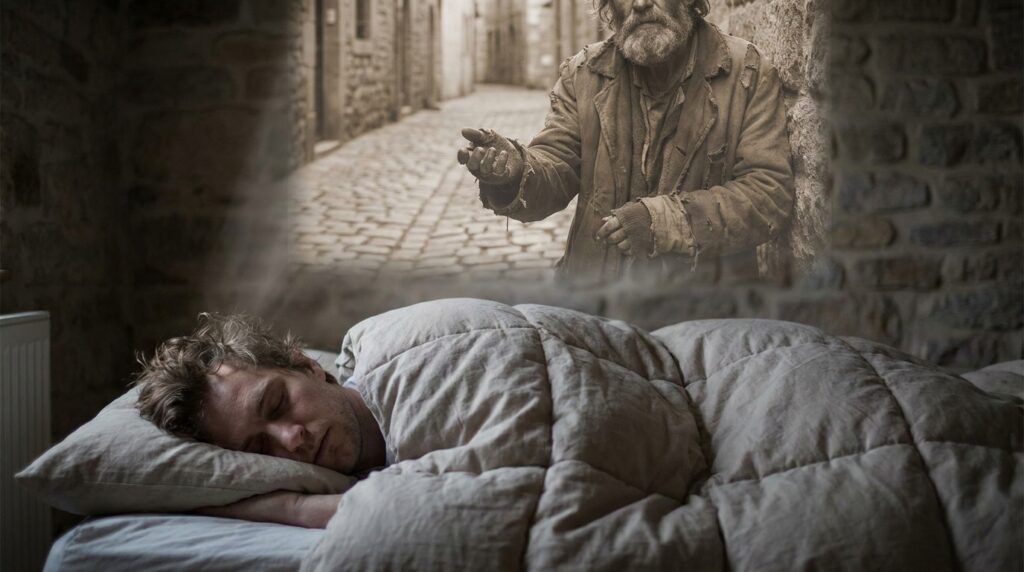
Dreaming about a beggar can stir many emotions at once: pity, discomfort, guilt, sadness, fear, or even confusion about why the image stayed with you after waking. A beggar in a dream may appear on a street, outside your home, near a market, asking for food, asking for money, or simply looking at you silently. This dream is rarely only about poverty in a literal sense. More often, it points to need, vulnerability, compassion, insecurity, emotional hunger, fear of loss, or the part of you that is asking to be seen, helped, and cared for.
Quick Answer
Dream About Beggar meaning often reflects vulnerability, unmet needs, financial worry, compassion, emotional hunger, guilt, humility, or fear of lacking support in waking life. This dream may appear when you are thinking about money, feeling emotionally depleted, noticing inequality around you, or questioning how much help you should give to others. If you helped the beggar in the dream, it may suggest kindness, empathy, generosity, or a desire to respond to someone’s suffering. If you ignored the beggar, it may reveal discomfort, guilt, emotional avoidance, or fear of becoming needy yourself. If you were the beggar, the dream may point to feelings of insecurity, dependence, shame, or the need to ask for help. Dreaming about a beggar does not predict poverty or misfortune. It is better understood as a symbolic invitation to examine need, dignity, compassion, and the difference between material lack and emotional lack.
Core Symbolism of Beggar in Dreams
A beggar in a dream is a strong symbol because it brings together themes of need, survival, dependence, humility, social inequality, and human compassion. The image can be emotionally uncomfortable because it places vulnerability directly in front of you. You may not be able to look away easily, and that is part of the dream’s meaning.
At its core, a beggar symbolizes lack. This lack may be financial, emotional, spiritual, relational, or psychological. The dream may reflect fear of not having enough money, food, support, love, respect, energy, or security. It may also show a part of yourself that feels neglected, unseen, or dependent on the care of others.
This connects naturally with Dream About Poverty, especially when the dream focuses on scarcity, survival, insecurity, or the fear that life may become unstable. Poverty in dreams does not always mean literal financial poverty. It can symbolize emotional poverty, lack of confidence, lack of connection, or feeling deprived of something essential.
A beggar can also represent humility. In waking life, many people struggle to ask for help because they fear appearing weak, needy, or dependent. Dreaming of a beggar may reflect your relationship with receiving. Are you comfortable admitting need? Do you feel ashamed when you cannot handle everything alone? Do you believe you must always be strong, successful, and self-sufficient?
The dream may also symbolize compassion. Seeing a beggar may awaken the question of how you respond to suffering. Do you help, avoid, judge, feel guilty, feel powerless, or feel protective? The dream may not be about the beggar alone. It may be about your emotional response to vulnerability.
A beggar can also represent the shadow side of material success. If you are highly focused on earning, status, stability, or achievement, a beggar may appear as a reminder of fragility. Life can change. Security matters, but identity built only on money or appearance may become emotionally unstable. The dream may invite a more grounded relationship with material life.
From a psychological perspective, the beggar may represent a rejected part of the self. This could be the part that feels needy, lonely, tired, poor in confidence, hungry for love, or ashamed of dependence. If you dream of ignoring a beggar, your subconscious may be showing how you ignore your own vulnerable needs. If you help the beggar, you may be learning to respond to yourself with compassion.
Carl Jung might interpret the beggar as an archetypal figure of humility, dependence, and hidden wisdom. In many stories, the poor stranger or beggar tests the heart of the hero. The person who appears powerless may reveal something important about the dreamer’s values. In practical terms, the beggar may ask: how do you treat what seems weak, poor, or inconvenient within yourself and others?
Sigmund Freud might connect the image with desire, deprivation, guilt, dependency, or early emotional needs. Modern psychology may interpret beggar dreams through financial anxiety, empathy, shame, social awareness, attachment wounds, burnout, or unmet emotional needs.
The beggar’s appearance matters. An old beggar may symbolize wisdom, neglect, aging, or long-term deprivation. A child beggar may symbolize innocence, vulnerability, or your inner child asking for care. A silent beggar may represent unspoken need. An angry beggar may symbolize resentment or frustration around lack. A sick beggar may point to neglected healing. A beggar asking for food may symbolize emotional or physical nourishment. A beggar asking for money may symbolize security, value, or dependence.
Your location in the dream also matters. A beggar on the street may suggest social exposure, public vulnerability, or life outside the safety of home. A beggar at your door may mean need is approaching your private life. A beggar in your house may symbolize an inner lack that can no longer be kept outside. A beggar near a place of worship may connect to moral reflection, charity, or spiritual humility.
The emotional tone is essential. Pity may indicate compassion. Fear may suggest insecurity about becoming vulnerable. Guilt may reveal unresolved responsibility. Anger may show discomfort with dependence. Sadness may point to empathy or your own hidden loneliness. Peace may suggest acceptance and humility. Disgust may reveal a rejected part of yourself that needs gentler attention.
A dream about a beggar should be interpreted with dignity. The symbol is not meant to reduce real poverty to a simple metaphor. Rather, the dream uses a powerful human image to ask how you relate to need, scarcity, generosity, and vulnerability.
Spiritual Meaning of Dreaming About a Beggar
Spiritually, dreaming about a beggar may symbolize humility, compassion, charity, emotional hunger, and the sacred value of seeing humanity in those who are vulnerable. It may invite reflection on how you respond to need, both outside yourself and within your own heart.
A beggar in a dream can represent the spiritual lesson that every person depends on something beyond themselves. No one is completely self-sufficient. Even people with money, status, or strength may still need love, forgiveness, support, meaning, and grace. The dream may be reminding you that need is not shameful; it is part of being human.
If you helped the beggar in the dream, the spiritual meaning may involve kindness in action. You may be called to notice suffering more carefully or to act with generosity where it is wise and possible. This does not mean you must rescue everyone or give beyond your limits. It means that compassion matters.
This spiritual layer connects with Dream About Helping Someone, especially when the dream centers on offering food, money, shelter, listening, or emotional support. Helping in dreams often shows the movement from feeling compassion to expressing it through action.
If you refused to help the beggar, the spiritual meaning may involve avoidance, fear, or emotional guardedness. This does not make you a bad person. It may show that something about vulnerability makes you uncomfortable. Perhaps you fear being used, fear not having enough, or fear facing suffering you cannot fix.
If you were the beggar, the spiritual meaning may be humility and surrender. You may be in a season where you need to ask for help, admit weakness, or accept support. This can be difficult if you are used to being independent. The dream may invite you to understand that receiving help can also be sacred.
A beggar can also symbolize spiritual hunger. You may have material stability but feel empty inside. You may be longing for meaning, prayer, peace, forgiveness, or a deeper sense of connection. The beggar may represent the soul asking for nourishment that ordinary success cannot provide.
If the beggar appeared near a church, temple, shrine, or sacred place, the dream may emphasize moral reflection. It may ask whether your values are being lived out in practical ways. Do you only believe in kindness, or do you practice it? Do you see people beyond their circumstances? Do you also show compassion to your own suffering?
A balanced spiritual interpretation should avoid fear-based claims. Dreaming about a beggar does not mean poverty is coming, and it should not be used to shame the dreamer. It is better understood as a symbolic invitation to humility, compassion, wise generosity, and honest recognition of need.
A Related Bible Verse
A fitting Bible verse for a dream about a beggar is Proverbs 19:17: “Whoever is kind to the poor lends to the Lord, and he will reward them for what they have done.”
This verse connects naturally with the dream symbol because it emphasizes kindness toward people in need. In the context of dream interpretation, it can be understood as a reminder that compassion is not wasted. How you respond to vulnerability matters, whether that vulnerability is in another person or within yourself.
This verse should not be used to pressure yourself into unsafe or unwise giving. It can be read more thoughtfully as an encouragement to cultivate mercy, dignity, and generosity while still practicing discernment and healthy boundaries.
Psychological Interpretation
Psychologically, dreaming about a beggar often reflects insecurity, shame, compassion, financial fear, emotional deprivation, or a need for support. The beggar may be an external figure in the dream, but emotionally they often represent a vulnerable part of the dreamer.
One common meaning is fear of scarcity. If you have been worried about bills, work, income, savings, or future stability, a beggar may appear as a symbol of financial insecurity. The dream may not predict actual poverty. It may show the fear of losing control or not having enough.
This connects strongly with Dream About Money, especially when the beggar asks for coins, cash, debt help, or financial support. Money in dreams often represents security, value, power, freedom, or fear of survival. A beggar asking for money may reveal anxiety about resources or your relationship with giving and receiving.
Another psychological meaning is emotional deprivation. You may feel that you are not receiving enough love, attention, appreciation, rest, encouragement, or understanding. The beggar may symbolize the part of you that is quietly asking for emotional nourishment. This can be especially true if the beggar looks sad, hungry, ignored, or familiar.
A dream about a beggar can also reveal shame. Many people fear being seen as needy. If you were embarrassed by the beggar, afraid others would notice them near you, or uncomfortable when they approached, the dream may reflect your discomfort with weakness. You may reject parts of yourself that need help because you believe need is unacceptable.
If you were the beggar in the dream, the symbolism becomes more direct. You may feel dependent, powerless, unsupported, or afraid of losing dignity. You may also be in a situation where you need to ask for help but are resisting because of pride or fear. This dream can be emotionally difficult, but it may also be healing because it brings vulnerability into awareness.
Beggar dreams can also arise from guilt. You may feel guilty for not helping someone, for having more than others, for ignoring a need, or for being unable to solve someone’s problem. The dream may not be saying the guilt is fully justified. It may simply show that your conscience is active and trying to process moral discomfort.
If the beggar was aggressive or demanding, the dream may reflect fear of being drained by others’ needs. You may feel that people ask too much from you, emotionally or financially. The dream may symbolize compassion fatigue or anxiety about being responsible for someone else’s survival.
If the beggar was gentle and dignified, the dream may invite respect for vulnerability. It may ask you to see need without judgment. It may also show that the vulnerable part of you is not shameful; it is human.
The dream may also involve social awareness. You may have recently seen poverty, homelessness, hunger, economic stress, or social inequality. Your mind may be processing the emotional impact. The dream may reflect empathy, helplessness, or a desire to understand your role in a world where suffering exists.
The emotions in the dream guide the interpretation. Compassion may suggest emotional openness. Fear may point to insecurity. Guilt may reveal unresolved responsibility. Anger may show boundary concerns. Sadness may reflect empathy or personal loneliness. Avoidance may suggest discomfort with need. Relief after helping may indicate moral alignment or inner healing.
Psychologically, the most important question is: what kind of need did the beggar represent? Was it money, food, shelter, kindness, attention, forgiveness, dignity, or support? The answer often reveals what your waking life is asking you to notice.
Common Dream Scenarios About Beggar
Dream About Seeing a Beggar on the Street
Seeing a beggar on the street in a dream often symbolizes public vulnerability, social awareness, and the presence of need in everyday life. The street is a public place, so the dream may show something visible but easy to pass by. You may be noticing suffering around you, or you may be confronting a vulnerable part of yourself that you usually keep at a distance.
This scenario connects naturally with Dream About Street, especially when the dream focuses on public life, movement, exposure, and the people you encounter along the way. A street beggar may represent the unexpected appearance of need while you are trying to move through life.
If you stopped to help, the dream may show compassion and moral awareness. If you walked past, it may reveal avoidance, discomfort, or emotional overload. If the beggar followed you, the dream may suggest that a neglected issue is asking for attention.
A beggar on the street may also symbolize fear of being exposed. You may worry that your own insecurity, lack, or vulnerability will become visible to others.
Dream About Giving Money to a Beggar
Dreaming of giving money to a beggar often reflects generosity, compassion, guilt, or your relationship with material security. Money in the dream may represent not only cash, but also energy, attention, time, emotional support, or personal resources.
If giving money felt peaceful, the dream may suggest that you are open-hearted and willing to share. You may feel aligned with kindness and empathy. If giving money felt stressful, it may suggest fear of not having enough, pressure to help, or uncertainty about whether your giving is wise.
If the beggar accepted the money gratefully, the dream may symbolize emotional exchange and relief. If they demanded more, it may reflect a waking situation where someone’s needs feel endless. If you had no money to give, the dream may point to helplessness or your own sense of lack.
This dream asks you to consider how you give. Are you giving freely, from guilt, from fear, or from love? Healthy generosity includes both compassion and discernment.
Dream About Refusing to Help a Beggar
Refusing to help a beggar in a dream can feel uncomfortable, but it does not automatically mean you lack compassion. The dream may reflect fear, boundary concerns, guilt, emotional exhaustion, or uncertainty about how to respond to need.
If you refused because you were afraid, the dream may show anxiety about vulnerability or being approached by someone in need. If you refused because you felt the request was unfair, it may reflect boundaries. If you refused and then felt guilty, your subconscious may be processing moral conflict.
This dream may also reveal avoidance of your own needs. The beggar may represent a vulnerable part of you asking for care. Refusing help may symbolize the way you dismiss your own hunger, sadness, exhaustion, or need for support.
The dream may invite reflection rather than judgment. It may ask: where am I withholding kindness, and where do I need wiser boundaries?
Dream About Being a Beggar
Dreaming that you are a beggar can be emotionally intense. It may symbolize insecurity, shame, dependence, humility, financial fear, or the need to ask for help. You may feel exposed, powerless, ignored, or desperate in the dream.
This dream does not mean you will become poor. More often, it reflects inner vulnerability. You may feel that you lack something important, such as money, love, confidence, respect, opportunity, or emotional support. You may be afraid of needing others.
If people ignored you in the dream, it may reflect fear of rejection or invisibility. If someone helped you, the dream may suggest that support is possible if you allow yourself to receive it. If you felt ashamed, the dream may reveal a belief that need makes you less worthy.
Being a beggar in a dream can also symbolize humility. It may show that you are being asked to soften pride and accept that every person sometimes needs help.
Dream About a Child Beggar
A child beggar in a dream is a powerful symbol of innocence, vulnerability, emotional neglect, and unmet childhood needs. The child may represent an actual concern about children or poverty, but often they symbolize your inner child.
If the child was hungry, cold, or alone, the dream may suggest that a young, tender part of you still needs care. You may have learned early to be strong, independent, or quiet about your needs. The child beggar may appear to show that those needs did not disappear.
If you helped the child, the dream may indicate self-compassion and healing. If you could not help, it may reflect sadness, guilt, or fear that some wounds are hard to repair. If the child looked like you, the interpretation becomes even more personal.
This dream should be approached gently. It may invite you to care for yourself with the patience and kindness you would offer to a vulnerable child.
Dream About a Hungry Beggar
Dreaming of a hungry beggar often symbolizes unmet needs, emotional hunger, physical care, or the longing to be nourished. Hunger in dreams can represent the desire for food, but it can also symbolize love, comfort, attention, meaning, or support.
This scenario connects closely with Dream About Hunger, especially when the dream focuses on emptiness, craving, deprivation, or the search for something that satisfies. A hungry beggar may represent a part of life that has been deprived for too long.
If you fed the beggar, the dream may symbolize compassion, healing, and the act of meeting a real need. If there was no food available, it may reflect helplessness or fear that you do not have enough to give. If the beggar refused food, the dream may suggest that the need is not only physical; something deeper is being asked for.
This dream may invite you to ask what kind of nourishment is missing in your waking life.
Dream About an Aggressive Beggar
An aggressive beggar in a dream may symbolize fear of need becoming overwhelming. You may feel that someone in waking life is demanding too much from you, emotionally, financially, or practically. The dream may also reflect anxiety about being pressured, manipulated, or unable to protect your boundaries.
If the beggar shouted, chased you, or grabbed you, the dream may suggest that a neglected issue has become urgent. Sometimes what we ignore becomes more forceful in dreams. The aggression may not represent a real person; it may represent your own unmet needs demanding attention.
This dream can also reveal discomfort with dependency. You may fear becoming dependent on others, or you may resent people who seem to depend on you. The dream may ask for a balanced response: compassion without fear, boundaries without cruelty.
If you calmed the beggar, the dream may suggest emotional integration. If you ran away, you may still be avoiding a difficult need or conversation.
Dream About a Beggar at Your Door
A beggar at your door often symbolizes need entering your private life. The door represents boundaries between the outside world and your personal space. When a beggar appears there, the dream may suggest that a vulnerable issue can no longer be kept distant.
If you opened the door, the dream may show willingness to face need, compassion, or self-awareness. If you kept the door closed, it may reflect boundaries, fear, or avoidance. If the beggar entered without permission, it may suggest that someone’s needs feel intrusive or that emotional pressure is crossing your limits.
A beggar at your door may also represent an opportunity to practice compassion close to home. This may involve a family member, neighbor, friend, or your own neglected emotional life.
The dream may ask: what need is asking to be acknowledged, and how can I respond without losing my own sense of safety?
How This Dream Connects to Your Real Life
Love and Relationships
In love and relationships, dreaming about a beggar may reflect emotional need, dependence, imbalance, or the desire for compassion. You may feel that someone in your life needs more support than you know how to give. Or you may feel like you are the one quietly asking for care, affection, reassurance, or attention.
If your partner appeared as a beggar, the dream may suggest that you see them as emotionally needy, unsupported, or vulnerable. It may also reflect your fear that they depend on you too much. If you appeared as a beggar before someone you love, the dream may show your fear of asking for emotional support.
A beggar dream can also reveal unequal giving. One person may be asking while the other gives. This does not always mean the relationship is unhealthy, but it may suggest that emotional resources need to be shared more fairly.
If you helped a beggar with warmth, the dream may show that compassion is important in your relationships. This connects with Dream About Kindness, especially when the dream emphasizes gentle treatment, dignity, and care toward someone in a vulnerable position.
Career and Money
In career and money, a beggar dream may reflect financial anxiety, insecurity, fear of losing stability, or concern about material resources. You may be worried about income, debt, job security, business risk, or the possibility of not having enough.
If the beggar asked you for money, the dream may reveal how you feel about giving, spending, saving, and protecting resources. You may want to be generous, but also fear scarcity. If you were the beggar, it may suggest that you feel undervalued, underpaid, dependent, or insecure about your ability to provide for yourself.
This can connect with Dream About Losing Money, especially when the dream carries fear, instability, or concern that financial security could disappear. The beggar may represent the emotional image of what you fear could happen if resources are not protected.
At the same time, the dream may not be only about money. It may ask whether your work gives you dignity, purpose, and support. A person can have income and still feel emotionally poor if their work drains them completely.
Personal Growth
On a personal growth level, dreaming about a beggar may invite humility, self-awareness, and a deeper understanding of need. You may be learning that vulnerability is not failure. Asking for help does not erase dignity. Being in need does not make someone less valuable.
If you helped the beggar, the dream may show growth in compassion. You may be becoming more open to the suffering of others. If you judged the beggar, the dream may ask whether you judge your own weakness harshly. If you were the beggar, the dream may invite you to accept help and stop hiding your needs.
A beggar can also symbolize the part of you that has been emotionally neglected. Personal growth may require turning toward that part instead of pretending it does not exist. You may need rest, support, nourishment, forgiveness, or encouragement.
The dream may also challenge your relationship with pride. Independence is valuable, but extreme self-reliance can become isolation. A beggar dream may remind you that every person needs others at some point.
Health and Emotional State
Emotionally, a dream about a beggar may point to depletion, loneliness, low self-worth, compassion fatigue, or fear of not being cared for. If the dream felt sad or heavy, your inner world may be asking for gentleness.
If you have been giving too much to others, the beggar may represent your own depleted self. You may be feeding everyone else emotionally while leaving yourself hungry. If you have been avoiding someone else’s need, the dream may show guilt or concern.
This theme connects with Dream About Compassion, especially when the dream invites you to respond to suffering with tenderness rather than judgment. Compassion in this dream may need to move in two directions: toward others and toward yourself.
If the dream involved hunger, cold, or homelessness, your emotional state may feel insecure. You may need comfort, stability, rest, and human connection. The dream may be asking you to notice where you feel unsupported before the feeling becomes heavier.
Is Dreaming About a Beggar a Positive or Warning Sign?
Dreaming about a beggar can be positive, cautionary, or reflective depending on the context. It should not be treated as a literal prediction of poverty or bad luck. More often, the dream reflects your relationship with need, scarcity, compassion, money, humility, and emotional support.
As a positive sign, the dream may show that your heart is becoming more compassionate. If you helped the beggar respectfully, fed them, listened to them, or treated them with dignity, the dream may reflect kindness and emotional maturity. It may suggest that you are learning to see vulnerability without turning away.
The dream may also be positive if you were the beggar and received help. This can symbolize healing, support, and the willingness to accept care. It may show that you do not have to handle everything alone.
As a warning sign, a beggar dream may point to fear of lack, financial worry, emotional hunger, or neglect of your own needs. If the beggar looked desperate, followed you, or appeared repeatedly, the dream may suggest that a need has been ignored too long. The warning is not about future disaster. It is about paying attention now.
The dream may also warn about unhealthy giving. If you helped until you had nothing left, your subconscious may be showing overextension. Compassion is important, but it needs wisdom and boundaries.
Sometimes the dream simply reflects what you have recently seen or thought about. If you encountered a beggar, watched content about poverty, worried about money, or felt guilty about inequality, your mind may process those impressions through a dream. Even then, the emotional response can reveal something valuable.
The best question is: where is there need in my life, and how am I responding to it? The answer may involve another person, your finances, your emotional world, or your own inner self.
Case Studies
A Woman Dreaming of Giving Bread to a Beggar
Maya dreamed that she saw an elderly beggar sitting quietly near a market. Instead of giving money, she gave him warm bread. He smiled and blessed her without many words. In waking life, Maya had been thinking about how to support a struggling friend.
The bread symbolized nourishment, care, and practical kindness. The beggar represented vulnerability, but also dignity. The dream suggested that Maya did not need to solve her friend’s entire life. A simple, sincere act of support could still matter.
For Maya, the dream encouraged compassion without pressure to become a rescuer.
A Man Dreaming That He Became a Beggar
Daniel dreamed that he was sitting on a sidewalk asking people for help, but most walked past without looking at him. He woke up feeling ashamed and sad. In waking life, he had recently lost confidence after a business setback.
The dream did not predict poverty. It reflected Daniel’s fear of losing dignity and being ignored when he needed support. Becoming a beggar symbolized emotional exposure and the shame he felt around failure.
For Daniel, the dream invited him to ask for help and separate temporary struggle from personal worth.
A Student Dreaming of a Child Beggar
Lena dreamed of a small child asking for food outside a school. The child looked familiar, but she could not place them. She felt deeply sad and gave the child her lunch. In waking life, Lena had been pushing herself hard academically while ignoring her emotional needs.
The child beggar represented Lena’s inner child, the part of her that needed nourishment, softness, and care. Giving lunch symbolized self-compassion. The dream suggested that achievement without emotional care was leaving her inner life hungry.
For Lena, the dream became a reminder to rest and treat herself with more kindness.
A Worker Dreaming of an Aggressive Beggar
Arman dreamed that a beggar followed him through a busy street demanding money. No matter how much Arman gave, the beggar asked for more. In waking life, Arman felt drained by relatives who often requested financial help.
The aggressive beggar represented pressure and boundary stress. The dream did not mean his relatives were bad people. It showed that Arman felt trapped between compassion and fear of being used.
For him, the dream suggested the need for clearer limits, honest communication, and giving in a way that did not create resentment.
A Woman Dreaming of Inviting a Beggar Into Her Home
Sophie dreamed that a beggar stood outside her door during a cold night. She hesitated, then invited the woman inside and offered tea. As they spoke, Sophie realized the beggar had the same voice as her younger self.
This dream symbolized inner healing. The beggar at the door represented a neglected part of Sophie’s emotional life asking to be welcomed. The shared voice showed that the need was not outside her; it was part of herself.
For Sophie, the dream encouraged self-acceptance. She needed to bring compassion into the private places where she had felt ashamed or emotionally poor.
Dream Numbers
In some folk dream traditions, a beggar may be symbolically connected with numbers such as 2, 5, 6, 9, and 14. The number 2 can suggest dependence and relationship, 5 may symbolize change and instability, 6 can relate to care and responsibility, 9 may suggest compassion or completion, and 14 can symbolize adjustment and balance after difficulty.
These numbers should be treated as light symbolic associations only. They are not guarantees, predictions, or instructions. The deeper meaning of a beggar dream comes from the emotions, the request being made, and how you responded.
Lucky Lottery Meaning
In some cultural folklore, dreaming about a beggar may be associated with unexpected change, humility, charity, or the reversal of fortune. However, this should be understood only as folk belief, not as a promise of money or winning.
A dream about a beggar is more meaningfully interpreted as a reflection of need, compassion, scarcity, emotional hunger, and dignity. If numbers are considered, they should remain symbolic and light, without encouraging gambling behavior or certainty.
FAQ
What does it mean spiritually to dream about a beggar?
Spiritually, dreaming about a beggar may symbolize humility, compassion, charity, and the need to recognize vulnerability with dignity. It can invite you to consider how you respond to people in need and how you treat the needy parts of yourself. The dream is best understood as a call to reflection, not as a bad omen.
Why do I keep dreaming about beggars?
Repeating dreams about beggars may appear when you are processing financial worry, guilt, emotional deprivation, or the need to help someone. The dream may also show a neglected part of yourself asking for care. If the dream repeats, ask what kind of lack or need keeps returning in your waking life.
Is dreaming about a beggar a bad omen?
No, dreaming about a beggar is not automatically a bad omen. It does not mean poverty is coming. It may reflect fear of scarcity, emotional hunger, compassion, guilt, or the need to examine your relationship with giving and receiving help.
What does it mean if I give money to a beggar in a dream?
Giving money to a beggar may symbolize generosity, guilt, compassion, or your relationship with personal resources. If the act felt peaceful, it may reflect kindness and moral alignment. If it felt stressful, it may reveal fear of not having enough or uncertainty about how much you should give.
What does it mean if I am the beggar in my dream?
Being the beggar in a dream may symbolize vulnerability, insecurity, shame, dependence, or the need to ask for support. It does not predict failure. It may show that a part of you feels emotionally or materially unsupported and needs compassion rather than judgment.
Conclusion
Dreaming about a beggar often points to need, vulnerability, compassion, scarcity, humility, and the emotional relationship between giving and receiving. The beggar may represent someone in waking life, a social concern, a fear about money, or a neglected part of yourself asking for care. The dream can feel uncomfortable because it brings need into direct view, but that discomfort can become meaningful when approached with honesty.
The deeper message is to respond to vulnerability with wisdom and compassion. Some dreams about beggars encourage kindness toward others. Some ask you to notice your own emotional hunger. Some reveal fear of lack or the need for healthier boundaries. When understood calmly, a dream about a beggar can help you reflect on dignity, generosity, and the human need to both give and receive support.