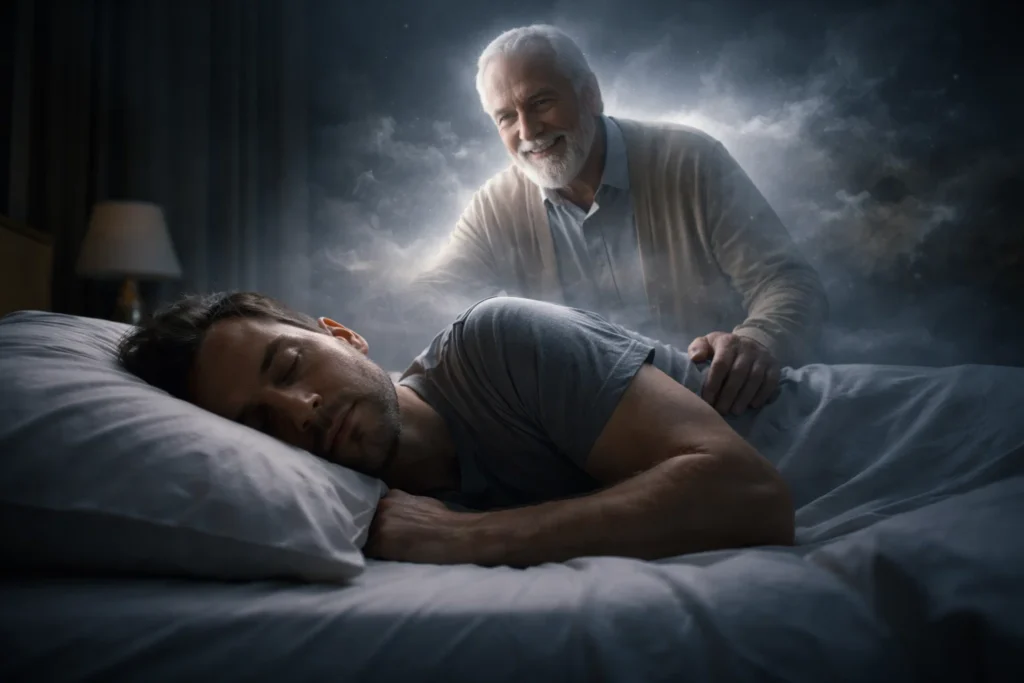
Dreaming about your dead grandfather can feel like a visitation from the past—warm, bittersweet, or profoundly unsettling. Some people wake with comfort, as if they were briefly held by a familiar presence. Others wake with guilt, dread, or a sense of unfinished business. The emotional intensity makes sense: a grandfather often represents lineage, protection, values, authority, guidance, and “the long view” of life. When he appears after death, your psyche is usually not being random. It is working with memory, attachment, identity, and the way grief reshapes your inner world.
As a dream psychologist, I want to offer a grounded perspective that keeps you out of superstition and brings you into meaning. These dreams can sometimes feel spiritual, but even then, the psychological layer matters: what your mind is trying to integrate, what your nervous system is trying to soothe, and what part of you is asking for closure, belonging, or courage. The goal is not to decide whether the dream is “real.” The goal is to understand what it does to you—what it awakens, what it heals, and what it asks you to change.
This guide will help you interpret a dream about a dead grandfather in a clear, practical way. We’ll explore core meanings, common scenarios, cultural and spiritual layers, and daily-life steps that turn the dream into relief and insight.
Quick Summary
Dreaming about a dead grandfather commonly symbolizes guidance, protection, legacy, family values, grief processing, unfinished conversations, and the need to feel supported during a life transition. If your grandfather appears calm or loving, the dream often reflects inner comfort and reassurance. If he appears angry, silent, sick, or distant, the dream often reflects guilt, unresolved conflict, fear of disapproval, or a boundary/authority theme. If he gives you something, the dream often points to inheritance in the psychological sense: wisdom, responsibility, or a value you’re meant to carry forward. If he dies again in the dream, it often reflects renewed grief or a new phase of acceptance.
Why This Dream Happens
Dreams about deceased loved ones commonly intensify during transitions: new relationships, career shifts, moving homes, becoming a parent, ending a chapter, or facing a hard decision. A grandfather symbol tends to appear when your psyche needs a stabilizing force—someone who represents family continuity, lived experience, moral compass, or protection. In many families, grandfathers embody “the rules,” the provider energy, or the person who helped you feel rooted. Even if your relationship was complicated, the grandfather still represents a powerful inner template for authority and belonging.
There are also biological and psychological reasons this dream occurs. Memory networks get activated during sleep; grief processing continues long after a funeral; and your brain naturally pulls up attachment figures when you feel stressed or uncertain. Sometimes your mind uses your grandfather’s image to help you tolerate feelings you otherwise avoid—sadness, fear, longing, regret, even anger. In this sense, the dream isn’t a mystery; it’s a healing mechanism.
If you notice that this dream came after a family conflict, a conversation about inheritance, a major responsibility, or even a health scare, it’s often your psyche asking: what does “family” mean to you now, and what kind of adult do you want to become?
The Grandfather Archetype
In dream psychology, “grandfather” is not only a person; it is also a role-symbol. He can represent:
A protector: safety, reassurance, being watched over.
A teacher: guidance, wisdom, life lessons, tradition.
An authority figure: rules, approval, criticism, standards.
A legacy carrier: family story, name, reputation, intergenerational patterns.
A bridge to your roots: belonging, origin, cultural identity.
A reminder of mortality: time, aging, impermanence, priorities.
Your relationship with this archetype matters. If your grandfather was gentle, the dream may feel soothing. If he was strict, the dream may activate performance anxiety: the fear of disappointing, the fear of being judged, the fear of “not measuring up.” If your relationship was distant or conflicted, the dream may be about unfinished emotional work—mourning what you didn’t get, not only what you lost.
The Emotional Tone Is the Real Message
Two people can dream the same scene—grandfather sitting quietly in a chair—and receive different meanings. Emotion is the compass.
Comfort and warmth often signal reassurance and inner support. Your mind is giving you a safe attachment moment.
Fear often signals authority pressure, unresolved guilt, or a part of you that expects punishment or disapproval.
Sadness often signals grief resurfacing, especially if you haven’t had space to mourn.
Numbness can signal emotional shutdown—your system is protecting you from overload.
Relief can signal closure: an internal permission to move forward.
A practical question is: what did your grandfather represent emotionally in the dream—safety, judgment, longing, approval, or guidance? That emotional function is usually the point.
Core Psychological Meanings of Dreaming About a Dead Grandfather
Grief processing and continuing bonds
Modern grief psychology recognizes that we don’t “get over” loved ones; we build a continuing bond. Dreams are one way that bond evolves. Seeing your grandfather can be your psyche practicing connection without denying loss. This is especially common around anniversaries, birthdays, holidays, or family gatherings when absence becomes louder.
Seeking guidance during a transition
Grandfather dreams often arrive when you need direction. You might be questioning a choice, feeling uncertain, or facing an identity shift. Your mind may use your grandfather as an inner advisor—sometimes literally giving advice in the dream, sometimes simply showing presence to calm you.
Unfinished conversations and guilt release
If you carry guilt—about words unsaid, visits missed, conflicts unresolved—your dream may be creating a second chance. This does not mean you should punish yourself. It means the psyche wants repair. Repair can happen internally: through apology in imagination, ritual, journaling, or speaking to him in your own words.
Authority, approval, and the inner critic
Many people discover that their grandfather in dreams becomes a mirror for their inner critic. If he looks disappointed, it may reflect the part of you that believes love must be earned. If he looks proud, it may reflect the part of you that is finally owning your worth. The dream can be a direct doorway into self-worth work.
Legacy and responsibility
A dead grandfather can symbolize inheritance in the psychological sense: values, resilience, work ethic, and the emotional burden of “carrying the family.” If you feel pressure in the dream, you may be carrying responsibility that isn’t fully yours—or you may need clearer boundaries with family expectations.
Intergenerational patterns
Grandfather dreams can surface family patterns: silence around emotions, conflict avoidance, financial stress, strict gender roles, or the way love was expressed. Sometimes your dream is not only about him. It’s about the family system living inside you.
Common Dream Scenarios and What They Often Mean
Your dead grandfather is alive again
This is one of the most common scenarios. It often symbolizes the desire for support, comfort, and “one more moment.” Psychologically, it can also mean that a value he embodied is returning in you—steadiness, discipline, kindness, humor, courage.
If the dream feels peaceful, it can be an internal reassurance that you’re not alone. If it feels confusing or eerie, it can reflect a struggle to accept the reality of loss.
Your dead grandfather talks to you
When he speaks, pay attention to tone more than literal words. Often the message is symbolic: “Be careful,” “Take care of the family,” “Don’t be afraid,” “Go forward.” Sometimes it’s simply the comfort of being spoken to with familiarity.
If the advice feels wise and calm, treat it as your inner guidance organizing itself. If the advice feels critical or harsh, treat it as inner critic material—something to heal, not obey.
Your dead grandfather is silent
Silence can symbolize unspoken emotion. It can reflect family patterns of emotional repression or the feeling that you never got what you needed from him. Silence can also symbolize acceptance: presence without words.
Ask yourself: did the silence feel cold and withholding, or peaceful and grounded? Those are very different messages.
Your dead grandfather looks sick, weak, or dying again
This scenario often reflects renewed grief. It can also reflect helplessness: a feeling that you can’t protect the people you love, or that you can’t control time. Sometimes it surfaces when you’re worried about another family member’s health or when you’re confronting your own vulnerability.
If the dream repeats, consider whether you’ve been carrying anxiety alone. Grief becomes heavier when it’s private.
Your dead grandfather is angry or disappointed
This often reflects a fear of judgment. It can be connected to family standards, cultural expectations, or a belief that you must live a certain life to be acceptable. It can also reflect unresolved conflict—anger that was never named.
In these dreams, the psychological task is to separate love from performance. Even if your grandfather was strict, your adult self can update the inner relationship: you can respect tradition without sacrificing yourself.
You hug your dead grandfather
Hug dreams can be deeply regulating. They often represent a nervous-system need for safety, soothing, and attachment comfort. If you wake crying, it doesn’t mean you’re “weak.” It often means your body finally found a channel for grief.
Real-life step: allow tenderness. Grief needs softness to move.
Your dead grandfather gives you something
Gifts in dreams often symbolize a lesson, value, or responsibility. The object matters: a ring can symbolize commitment or family bonds; money can symbolize security themes; a watch can symbolize time and priorities; food can symbolize emotional nourishment; a book can symbolize knowledge.
Ask: what do I need to receive right now—permission, courage, boundaries, comfort?
You are searching for your dead grandfather
Searching often symbolizes longing and unresolved closure. It can also reflect the search for guidance: the part of you that wants a stable anchor. If you never find him, it can reflect the pain of acceptance. If you find him, it can reflect inner integration: you can carry his presence internally.
Your dead grandfather appears in your childhood home
Childhood settings often represent early emotional templates. This dream can bring you back to the original sense of family, safety, or fear. It can highlight how much you’ve grown—or how much you still crave what you didn’t receive.
If this dream arrives after family tension, it may be asking you to heal old roles: the responsible one, the peacemaker, the invisible one.
You attend your grandfather’s funeral again
This can reflect a new phase of mourning. Grief moves in waves. A funeral dream can also symbolize closure around a chapter: you’re not only mourning him, you’re mourning an old version of yourself.
If the dream leaves you with clarity rather than despair, it may be your psyche reorganizing priorities: what matters, what doesn’t, what you want to carry forward.
What This Dream Can Reveal About Your Current Life
Dead-grandfather dreams often arrive with a “life mirror” function: they reflect where you are in adulthood.
If you are building stability—career, home, relationships—this dream may ask: what values guide your choices? Are you living from your own values or from inherited expectations?
If you are facing conflict, the dream may ask: are you avoiding a hard truth to keep peace? Many families teach conflict avoidance. Your dream might be inviting mature honesty.
If you are feeling alone, the dream may ask: where can you receive support without shame? Many people internalize the belief that they must carry everything alone, especially if their family praised toughness.
If you are entering a new season—engagement, marriage, parenthood, moving abroad—the dream may represent the longing to have your grandfather witness your growth. This is normal. It doesn’t have to become a wound; it can become a continuing bond.
If your dream strongly involves the broader family system rather than only one person, it can help to connect themes by reading about deceased family symbolism in Dream About Dead Relatives.
Spiritual and Cultural Layers
Many cultures interpret dreams of the dead through a spiritual lens: visits, blessings, warnings, or ancestral guidance. Whether you hold these beliefs or not, there is a psychologically healthy way to approach them: treat the dream as meaningful without demanding certainty.
Spiritually, a dead grandfather can symbolize protection and lineage. The dream may arrive when you need strength—when you’re making a decision that changes the family story, or when you need permission to live differently.
Culturally, elders often represent duty, honor, and reputation. If you feel shame or pressure in the dream, consider the cultural layer: are you carrying rules that no longer fit your life? Sometimes the dream is asking you to keep what is wise and release what is harmful.
A grounded spiritual practice after this dream could be a simple ritual of respect: lighting a candle, visiting a meaningful place, cooking a family recipe, or speaking gratitude out loud. Ritual helps grief become integrated rather than stuck.
When the Dream Is Really About the Father Line and Authority
Grandfather dreams can sometimes be less about grief and more about authority. This is especially true if the dream feels evaluative—like you’re being tested—or if it occurs during times of career pressure, relationship decisions, or family responsibility.
In these cases, your grandfather may represent the “father line” in the psychological sense: standards, discipline, responsibility, and the fear of failing. The dream may be asking you to redefine authority inside yourself. You don’t need to live under old judgment. You can build an inner authority that is firm and kind.
If you notice that this dream connects to themes of approval, masculinity, responsibility, or conflict with authority figures, you may also benefit from the overlapping symbolism in Dream About Dead Father.
When the Dream Is About Unresolved Regret
Regret is one of the strongest triggers for recurring dreams of the dead. If you wake with guilt, the psyche is often asking for repair. Repair doesn’t mean punishing yourself. It means completing something emotionally.
Here are common forms of “unfinished business” that show up in these dreams.
Words not said: “I love you,” “I’m sorry,” “Thank you,” “I forgive you.”
Truth not shared: the life you actually wanted, the pain you carried, the boundaries you needed.
Protection not given: feeling you failed to show up, failed to visit, failed to help.
Conflict not resolved: anger that remained silent, disappointment that was never processed.
A powerful practice is to write a short letter to your grandfather. Say what you wish you had said. Then write a response as him—not what you fantasize, but what your wiser self knows would be healing. This practice often reduces nightmares because the psyche finally gets closure.
Dreams That Feel Like a Message
Some dreams have a different texture. They feel unusually clear, emotionally potent, or “too real.” In therapy, I treat these experiences with respect without forcing an explanation. Whether you believe the dream is spiritual or purely psychological, the action is similar: listen for the message and apply it ethically.
If the dream includes a warning, ask: is it about safety, pacing, health, or boundaries? Often, “warnings” are not supernatural. They are intuitive signals your waking mind has been minimizing.
If the dream includes reassurance, treat it as permission to rest and continue. Many people carry grief with a hidden belief that they must suffer to prove love. Reassurance dreams can gently release that belief.
If the dream includes instructions that feel fearful or harmful, ground yourself. Anxiety can hijack dream meaning. The healthiest approach is to focus on what supports life: rest, clarity, honest communication, and compassionate choices.
How to Work With a Dream About a Dead Grandfather
Dream interpretation becomes transformative when it changes your waking life. Here are practical steps that fit this symbol.
Regulate first if you wake up activated
If you wake with panic, tears, or a racing heart, interpret later. Drink water, sit up, breathe slowly, and orient to the room. The nervous system, when activated, makes dream images feel literal and urgent. When regulated, you can see the symbolism.
Identify the role he played in the dream
Was he protector, judge, teacher, or stranger? That role reveals what you need: safety, self-worth work, guidance, or closure.
Translate the dream into one sentence
Try: “This dream is about ____.” Fill it with a feeling and a life area. For example: “This dream is about feeling alone while carrying responsibility.” Or: “This dream is about needing permission to choose my own path.” One sentence can organize the whole interpretation.
Choose one small action within 24 hours
If the dream felt comforting, honor the bond: gratitude, a family story, a ritual, a gentle conversation with a loved one.
If the dream felt pressuring, set a boundary: one calm no, one schedule limit, one change in access.
If the dream felt guilty, do repair: apology where needed, forgiveness work, or letter writing.
If the dream felt like guidance, take one step: a decision timeline, a plan, or a supportive request.
Small action tells the psyche: I heard you. That often reduces recurring dreams.
Protect your grief from performance
Many people turn grief into a performance of strength. If your grandfather symbol is tied to toughness, you may feel you must “handle it.” But grief needs softness. If you wake emotional, let it move rather than shutting it down. This is not regression. This is integration.
If your dream involves a nurturing elder figure or a softer family bond theme, you may also find resonance in the comfort-and-grief symbolism of Dream About Dead Grandmother.
When to Seek Extra Support
Most dreams about deceased loved ones are normal and even healing. Extra support can help when the dreams are frequent and distressing, when you experience persistent guilt or panic, when the dream activates trauma, or when you’re in a complicated grief season where life feels stuck.
A therapist can help you process grief, update inner critic patterns, and build healthier boundaries with family expectations. Support doesn’t erase love. It helps love become livable.
Case Studies
Case Study: The comforting visit during a major decision
A 28-year-old dreamed her deceased grandfather sat beside her quietly while she cried, then nodded as if approving. In waking life she was deciding whether to move cities for a new job. The dream symbolized inner permission and reassurance. Her practical step was creating a paced decision plan and asking one trusted mentor for guidance; the dream did not “predict” the outcome, but it reduced her anxiety and helped her choose from calm.
Case Study: The disappointed grandfather and the inner critic
A 32-year-old dreamed his grandfather looked angry and refused to speak. He woke ashamed. In waking life he was battling perfectionism and fear of failure. In therapy, we identified the dream as inner-critic imagery rather than literal judgment. He practiced self-compassion, reduced overwork, and challenged inherited beliefs about worth. The dreams shifted from angry silence to neutral presence.
Case Study: Funeral repeating after family conflict
A 35-year-old repeatedly dreamed of her grandfather’s funeral after a major family argument. She had been trying to keep peace by staying silent. The dream symbolized grief not only for her grandfather, but for the family harmony she wished existed. Her healing step was having a calm, honest conversation and setting boundaries around what she would and would not carry. The funeral dreams decreased.
Case Study: Grandfather giving a watch
A 26-year-old dreamed his grandfather handed him an old watch and said nothing. He woke with urgency. He had been procrastinating on health and life planning, telling himself there was time. The watch symbolized mortality and priorities. He scheduled a medical check-up and created a simple routine. The dream functioned like an inner wake-up call.
Case Study: Searching the childhood home
A 30-year-old dreamed she wandered her childhood home looking for her grandfather but couldn’t find him. She woke aching. In waking life she felt lonely and unsupported after becoming a new parent. The dream revealed a need for care and community. Her practical step was reaching out to friends and asking for help without shame. The dreams softened.
Case Study: The grandfather who returned to say goodbye
A 41-year-old dreamed his grandfather hugged him and walked away down a path. He woke crying but calm. He had been avoiding grief for years. The dream symbolized a new phase of acceptance and permission to move forward. He began a simple weekly ritual of remembrance and reported fewer distressing dreams.
FAQs
What does it mean to dream about a dead grandfather?
It often symbolizes guidance, protection, legacy, grief processing, and your relationship with authority and family values. The meaning depends on how he appears and how you feel in the dream.
Is it normal to dream about a grandfather who passed away years ago?
Yes. Grief and memory are not linear. These dreams often return during transitions, anniversaries, family stress, or times when you need support and perspective.
Does dreaming of my dead grandfather mean he is visiting me?
Some people experience it spiritually, others psychologically. Either way, the healthiest approach is to focus on the message and the emotional impact: what comfort, guidance, or closure the dream is offering.
Why did my dead grandfather look angry or disappointed in the dream?
This often reflects fear of judgment, unresolved conflict, or an inner critic shaped by family standards. It can be a cue to separate worth from performance and work on self-compassion and boundaries.
What does it mean if my dead grandfather talks to me?
Pay attention to tone and feeling more than literal words. It can represent inner guidance organizing itself, or it can reveal inner critic themes if the message is harsh.
What does it mean if I hug my dead grandfather and wake up crying?
This often indicates grief moving through the body and a nervous-system need for attachment comfort. Tears after these dreams can be healing rather than harmful.
What if my dead grandfather dies again in the dream?
It often reflects renewed grief or a new stage of acceptance. It can also appear when you’re worried about family health or confronting your own vulnerability.
What does it mean if my dead grandfather gives me something?
Gifts often symbolize values, lessons, or responsibilities. The object matters. Ask what you need to receive right now—permission, courage, protection, or clarity.
Why do I keep having recurring dreams about my dead grandfather?
Recurring dreams often mean the underlying theme is still active: unresolved grief, guilt, a major life transition, or inherited pressure around approval and responsibility.
What should I do after a disturbing dream about my dead grandfather?
Regulate first, then reflect on the emotion and life area it touches. Choose one small repair or boundary action, and consider support if the dream repeats with high distress.
Dream Number & Lucky Lottery Meaning
In symbolic numerology traditions, dreams of deceased elders are often linked with legacy, guidance, and life transitions. If you enjoy using numbers as reflective prompts rather than predictions, common associations include 4 for foundations and family structure, 7 for inner wisdom and spiritual insight, and 9 for closure and transformation. Supporting numbers many readers use include 1 for a new chapter, 6 for care and belonging, and 8 for responsibility and stability.
Suggested picks for playful reflection (not financial advice): 01, 04, 06, 07, 08, 09, 14, 19, 41, 70. Use these as cultural fun or journaling anchors, never as guarantees. Please follow local laws and play responsibly.
Conclusion
Dreaming about a dead grandfather is often your psyche’s way of holding you through change. Sometimes the dream is pure comfort: an inner reminder of protection and belonging. Sometimes it brings pressure, guilt, or fear of judgment, revealing how family standards shaped your inner critic. Sometimes it asks for closure—words unsaid, grief unprocessed, responsibility carried alone. The most helpful response is grounded: regulate your nervous system, name the emotion, translate the dream into one clear sentence, and take one small action that supports healing or boundaries. Over time, these dreams tend to shift from painful reminders into steady guidance.
Dream Dictionary A–Z
If you want to decode every detail that can appear around this dream—family homes, funerals, gifts, watches, conversations, emotions, and the people who show up in the background—use the master index as your map and explore Dream Dictionary A–Z.
Written and reviewed by the DreamHaha Research Team — a group dedicated to dream psychology and spiritual symbolism, helping readers uncover the true meaning behind every dream.