Dreams about dead relatives can feel more emotionally real than almost any other kind of dream. Many people wake up shaken, comforted, confused, or full of tears because the dream does not feel like a random symbol. It feels personal. Seeing a deceased parent, grandparent, sibling, aunt, uncle, or another relative in a dream often stirs memories, unfinished feelings, family identity, and deep emotional bonds that still live inside you long after someone is gone. When you dream about dead relatives, the meaning is usually less about predicting anything supernatural and more about grief, memory, love, unresolved emotion, family influence, inner guidance, or the longing to reconnect with what that person once represented in your life.
Quick Answer
Dream About Dead Relatives meaning usually relates to grief, memory, emotional connection, unresolved feelings, family influence, longing, or the way your subconscious continues processing love and loss over time. These dreams do not usually predict literal events or act as fixed messages from the future. More often, they reflect the emotional bond you still carry, the qualities that relative represented, or a current life situation that is stirring old memories and feelings. Depending on the dream’s tone, it may bring comfort, sadness, guidance, regret, or the simple reminder that some relationships remain emotionally alive within you even after death.
Core Symbolism of Dead Relatives in Dreams
Dead relatives in dreams are powerful because they carry two layers of meaning at once. First, they represent the actual person you knew, loved, missed, feared, admired, or had unfinished feelings with. Second, they symbolize what that person came to mean within your inner world. A grandmother may symbolize warmth, wisdom, tradition, safety, or family history. A father may symbolize authority, protection, distance, standards, or approval. A sibling may symbolize companionship, rivalry, shared identity, or the part of you connected to childhood.
Because of that, a dream about a dead relative is rarely just about death itself. It is often about relationship, memory, emotional continuity, and the enduring psychological presence of family. Even when someone is physically gone, they may still live powerfully in your values, habits, fears, expectations, and emotional reflexes. The dream may be surfacing that living influence.
At a symbolic level, dead relatives often represent the past returning to consciousness. This does not have to mean you are stuck in the past. It may simply mean that something in your present life has awakened an old emotional connection. A stressful decision may make you think of the person who once guided you. A family gathering may revive grief. A personal milestone may bring back the absence of someone you wish were still here.
These dreams also often symbolize inheritance, not only in a material sense but in an emotional and psychological one. Families pass down stories, wounds, strengths, fears, and patterns. A deceased relative in a dream may symbolize something you have inherited emotionally, such as resilience, silence, guilt, tenderness, duty, or the burden of keeping a family role alive.
This symbolic field overlaps naturally with Dream About Family, where dreams often reveal belonging, conflict, identity, emotional roots, and the ways personal life remains shaped by relational bonds.
From a Jungian perspective, relatives can also function as archetypal figures. An elderly relative may embody the wise elder, the keeper of memory, or the voice of tradition. A nurturing relative may symbolize the inner mother or emotional caretaker. In that sense, the dream may be working both personally and symbolically at the same time.
Dead relatives in dreams can also symbolize unresolved emotion. If the relationship was loving, the dream may express longing, comfort, or the wish for continued closeness. If the relationship was painful or complicated, the dream may bring regret, guilt, anger, confusion, or the need for emotional closure. The dream does not force one simple interpretation. It reflects the real emotional truth of the bond.
Spiritual Meaning of Dreaming About Dead Relatives
Spiritually, dreaming about dead relatives often touches the deep human experience of connection beyond physical presence. Even people who are not especially mystical may have dreams like this that feel sacred, intimate, or emotionally profound. The spiritual meaning usually lies less in certainty and more in the sense that love, memory, and influence continue to move through the inner life long after someone has died.
For many people, these dreams symbolize ongoing connection through remembrance. The relative may appear during a time when you need comfort, grounding, wisdom, or emotional reassurance. Spiritually, the dream can feel like a reminder that important bonds do not simply disappear. They may change form, but they still matter.
At times, the dream may also symbolize transition. Death in dreams often marks endings, change, and transformation rather than literal death. So when a dead relative appears, the dream may be connecting your current life transition with an older emotional bond. Perhaps you are becoming a parent and thinking of your own parents. Perhaps you are aging into a role once held by a grandparent. Perhaps you are carrying forward values, traditions, or burdens that once belonged to someone else.
These dreams can also invite spiritual reflection on grief. Grief is not linear. It can soften, return, deepen, and surprise you across many years. A dream about a deceased relative may come when your spirit is ready to revisit a sorrow from a new level of maturity. That does not mean the grief is failing to heal. It may mean healing is continuing in a quieter, deeper way.
When the emotional tone of the dream is strongly tied to loss and remembrance, it can resonate with the wider symbolism of Dream About Mourning, where sorrow, ritual, reflection, and emotional processing often become central.
A balanced spiritual reading avoids extreme claims. Some people personally feel these dreams are visits. Others experience them as powerful memory dreams shaped by the subconscious. The wiser approach is often to honor the emotional truth of the dream without forcing certainty. If the dream brought comfort, insight, or peace, that itself may be spiritually meaningful.
A Related Bible Verse
A fitting verse for this dream is Matthew 5:4: “Blessed are those who mourn, for they will be comforted.”
This verse fits naturally because dreams about dead relatives often stir grief, tenderness, and the longing for comfort. It does not turn the dream into a prediction or a sermon. Instead, it supports the gentle idea that sorrow is not meaningless and that mourning can exist alongside love. In the context of this dream, the verse can remind the reader that missing someone deeply is part of being human, and that comfort may arrive through memory, reflection, prayer, or emotional honesty.
Psychological Interpretation
Psychologically, dreams about dead relatives often reflect ongoing emotional processing. The mind does not store loved ones as finished facts. It stores them as living networks of memory, emotion, attachment, and identity. That is why a deceased relative can appear years later in a dream and still feel immediate.
One of the most common meanings is grief processing. Even when daily life moves forward, the subconscious may continue working through loss. Dreams create a space where the mind can revisit the relationship, replay unfinished emotions, or imagine new forms of contact. This can be comforting or painful depending on the stage of grief and the nature of the bond.
Another major meaning is emotional activation. A current life event may resemble something associated with that relative, and the dream uses their image to express it. If you are feeling unsupported, you may dream of a relative who made you feel safe. If you are struggling with family duty, you may dream of someone who represented responsibility or sacrifice. If you are facing regret, the dream may surface a person connected with things left unsaid.
These dreams can also reflect attachment patterns. People internalize important family figures, especially early caregivers. After death, the physical person is gone, but the internal relationship often remains active. The dream may show how that internal relationship still influences the way you seek comfort, manage pain, or judge yourself.
Emotion within the dream matters tremendously. If you feel peace, the dream may reflect acceptance, inner closeness, or gratitude. If you feel despair, it may point to grief reactivation or loneliness. If you feel guilt, the dream may reveal unresolved emotions about what was said, unsaid, done, or never done. If you feel fear, it may have more to do with anxiety about loss, change, or mortality than with the relative themselves.
Because dead relatives are closely associated with bereavement and emotional aftermath, these dreams often connect symbolically with Dream About Grief, especially when the deeper issue is not the appearance of the person alone but the ache, memory, or unfinished sorrow surrounding them.
Modern psychology would often view these dreams as a normal and meaningful part of emotional life. They do not necessarily indicate pathology or obsession. In many cases, they show that love and memory are still being integrated into the self. In simple terms, the dream asks: what relationship, feeling, or family influence is still alive within you, and why is it surfacing now?
Common Dream Scenarios About Dead Relatives
Dream of Talking With a Dead Relative
Talking with a dead relative is one of the most common and emotionally intense versions of this dream. It often symbolizes the desire for guidance, comfort, closure, or emotional reconnection. The content of the conversation matters, but so does the feeling. If the exchange is calm, it may reflect acceptance or the ongoing inner presence of that person’s wisdom. If the conversation is tense or incomplete, it may reveal unresolved issues or words you wish had been spoken.
Dream of a Dead Relative Smiling at You
A smiling deceased relative often brings feelings of warmth, reassurance, or emotional peace. This kind of dream may symbolize comfort, acceptance, or the sense that a painful memory is softening. Even if the dream cannot be interpreted with certainty as spiritual contact, it can still carry real healing meaning by helping the dreamer feel less alone in their grief.
Dream of a Dead Relative Being Alive Again
When a dead relative appears alive in the dream as though nothing happened, the experience can be both beautiful and painful. Symbolically, this often reflects longing, denial softening into memory, or the mind temporarily returning to a time when the person felt accessible. It can also express how emotionally present that person still feels within you.
Dream of Hugging a Dead Relative
Hugging usually symbolizes the need for comfort, closeness, or emotional reunion. This dream may appear when you are stressed, lonely, or missing the kind of safety that person once represented. The physical gesture in the dream often matters because it expresses an emotional need more directly than words do.
Dream of a Dead Relative Saying Goodbye
This scenario may symbolize closure, acceptance, or a new stage in the grieving process. It does not necessarily mean the final end of grief. Instead, it can show that your relationship with the loss is changing. Sometimes the dream offers the emotional goodbye that waking life never allowed.
Dream of a Dead Relative Looking Sick or Distressed
A distressing image like this often reflects the dreamer’s own unresolved pain, guilt, fear, or trauma surrounding the death. It does not necessarily say anything about the relative. More often, it shows that some part of the loss still feels wounded inside you. The dream may be asking for compassion and emotional processing rather than fear.
Dream of a Dead Relative at a Family Gathering
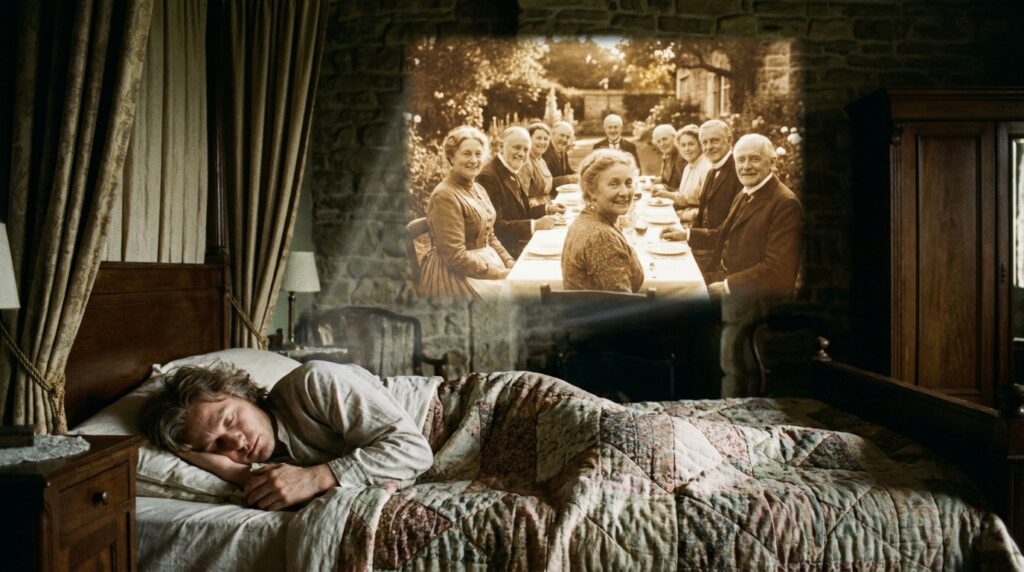
This dream often highlights continuity between past and present. The deceased relative may symbolize family identity, shared memory, tradition, or the feeling that someone’s absence is especially visible in moments that should feel complete. The dream can be tender because it reveals how family systems continue to hold space for those who are gone.
Dream of Seeing a Dead Relative’s Funeral Again
Revisiting the funeral in a dream may suggest that part of the grief remains unfinished or that current stress has reawakened the emotional reality of the loss. The funeral setting often emphasizes finality, ritual, and the mind’s attempt to make sense of irreversible change. In that sense, it can also connect symbolically with Dream About Funeral, where endings, ceremony, and emotional closure often shape the dream’s deeper meaning.
How This Dream Connects to Your Real Life
Love and Relationships
In relationships, dreams about dead relatives can reflect the emotional templates you carry from family into adult love. The deceased person may symbolize the kind of care, protection, criticism, absence, or closeness that shaped your expectations of intimacy. If you dream of a dead relative during relationship stress, the dream may be showing how old family patterns are being activated in current love.
It can also reflect longing for the steady presence of someone who once gave you unconditional love. During times of conflict, loneliness, or emotional uncertainty, your subconscious may reach for the image of someone whose love felt foundational. The dream does not always say something is wrong in your current relationships. Sometimes it simply reveals where your heart still turns for comfort.
Career and Money
At first glance, this dream may not seem connected to practical life, but it often is. Dead relatives can symbolize inherited attitudes toward work, responsibility, sacrifice, ambition, or security. You may be unconsciously measuring your current life against family expectations or the memory of someone who strongly influenced your values.
The dream may also appear at important life milestones such as career success, financial pressure, retirement planning, or family duty. In such cases, the deceased relative may symbolize the family line behind you and the sense of carrying something forward. The emotional question may not be about money itself, but about what it means to live in a way that honors or departs from what you inherited.
Personal Growth
This is one of the strongest areas for understanding the dream. Dead relatives often appear when you are changing in ways that touch family identity. You may be becoming the age they once were, stepping into a role they once held, questioning beliefs they gave you, or discovering strengths that feel connected to them.
The dream can symbolize integration. You are not just missing the person. You are becoming aware of what they left within you. That may be a gift, a wound, a lesson, or a responsibility. Personal growth often involves deciding what to carry forward and what to lay down.
If the dream is emotionally shaped by the idea of mortality, endings, or human fragility, it may naturally overlap with Dream About Death and Dream About Dying, especially when the deeper message is about transition, change, and the way endings alter identity.
Health and Emotional State
Emotionally, this dream often reflects longing, sadness, tenderness, stress, loneliness, or the reactivation of grief. It may come during anniversaries, family events, birthdays, or periods of exhaustion when your emotional defenses are lower and memory surfaces more vividly.
Sometimes the dream appears because you need comfort. At other times, it appears because there is pain you have not fully felt. If you have been staying busy, emotionally numb, or disconnected from your own sorrow, the dream may open a doorway back into feeling.
These dreams can also arise during periods of isolation, when the absence of loved ones feels especially sharp. In that sense, the emotional tone may connect strongly with Dream About Longing, where the core experience is not only sadness but the ache of wanting closeness that cannot be fully restored in ordinary waking life.
Is Dreaming About Dead Relatives a Positive or Warning Sign?
Most of the time, dreaming about dead relatives is neither a bad omen nor a literal warning sign. It is usually an emotional dream, not a predictive one. The meaning depends heavily on the tone. Some of these dreams feel deeply comforting and can be experienced as positive because they bring peace, love, reassurance, or a renewed sense of connection. Others feel painful because they awaken grief, guilt, fear, or loneliness.
A positive dream in this category often involves warmth, calm, meaningful presence, gentle conversation, or the sense that love remains alive in memory. These dreams may support healing by helping you feel close to what mattered. A more difficult dream may highlight unresolved grief, family pain, regret, or emotional burdens that still need attention.
In rare cases, the dream may function as a warning in a psychological sense rather than a supernatural one. For example, if the dream leaves you overwhelmed, terrified, or repeatedly distressed, it may be signaling that grief, trauma, or family tension is affecting your emotional health more than you realize. The warning is then about your inner state, not about external fate.
A useful question is this: did the dream leave you feeling connected, burdened, unsettled, or comforted? The answer often points toward whether the dream is helping process love, highlighting pain, or asking for more healing space.
For some dreamers, the emotional meaning becomes especially strong when the deceased person is an older family figure. In those cases, the dream may also resonate with the symbolism of Dream About Grandparents, where memory, wisdom, lineage, comfort, and generational influence often come to the forefront.
Case Studies
Comfort During a Difficult Family Season
A woman dreamed that her deceased grandmother sat beside her at the kitchen table and simply listened while she cried. Nothing dramatic happened, but she woke feeling calmer than she had in weeks. In waking life, she was going through family conflict and deeply missed the steadiness her grandmother once brought. The dream seemed to reflect an inner need for comfort and the enduring emotional role her grandmother still played within her.
Unresolved Words After a Parent’s Death
A man dreamed that his late father stood at the end of a hallway while he tried to speak but could not get the words out. He woke frustrated and sad. In real life, their relationship had been complicated, and his father died before several important conversations ever happened. The dream reflected unfinished emotional business more than any literal message.
A Family Milestone Reawakens Grief
A woman dreamed of her deceased mother attending her wedding and smiling quietly from the back of the room. She woke up crying, both comforted and heartbroken. She was recently engaged, and the dream seemed to mirror the pain of reaching a major life moment without her mother physically present. The dream showed how joy and grief can exist together.
Stress Brings Back an Old Sense of Safety
A college student dreamed that his late grandfather picked him up in a car after a long stressful day. The dream felt simple and peaceful. At the time, he was under intense academic pressure and felt emotionally alone. His grandfather had been a source of calm during childhood, so the dream appeared to symbolize the mind reaching for an internal image of safety.
Grief Returning Years Later
A middle aged man dreamed that he saw a deceased aunt at a family reunion and felt surprised that everyone else acted as if her presence were normal. He woke up with a quiet sadness he had not felt in years. In waking life, a recent health scare had made him think more deeply about mortality and family history. The dream did not mean he had failed to move on. It showed that older grief can return in new forms when life awakens related emotions.
Dream Numbers
In some dream traditions, dreams related to ancestors, memory, and emotional continuity are loosely associated with numbers such as 4, 7, and 9. Number 4 may symbolize family and roots, 7 is often linked with spiritual reflection, and 9 can point to endings, remembrance, and emotional completion. These are symbolic traditions rather than fixed meanings.
Lucky Lottery Meaning
Some folk traditions attach numbers or luck associations to dreams involving deceased relatives, but this should be treated only as cultural belief rather than certainty. The deeper meaning of the dream usually lies in grief, memory, emotional connection, and the continuing influence of family rather than anything related to gambling or prediction.
FAQ
What does it mean spiritually to dream about dead relatives?
Spiritually, this dream often symbolizes remembrance, enduring connection, emotional comfort, family influence, or the way grief and love continue to live within the heart over time.
Is dreaming about dead relatives a bad omen?
Usually no. Most of these dreams reflect memory, grief, emotional processing, or longing rather than a bad sign about the future.
Why do I keep dreaming about dead relatives?
Repeated dreams may mean that grief, family influence, unresolved emotion, or a current life situation connected to that person is still active in your subconscious.
What does it mean if a dead relative talks to me in a dream?
This often symbolizes the need for comfort, guidance, closure, or emotional contact. The dream may reflect what that person still represents inside your inner life.
Why do I wake up crying after dreaming about a dead relative?
These dreams can touch deep attachment and grief, so waking up emotional is very normal. The dream may be bringing love, sorrow, memory, or longing closer to the surface.
Conclusion
Dreaming about dead relatives usually reflects the emotional truth that love, grief, memory, and family influence do not end in a simple way. These dreams can bring comfort, sadness, guidance, longing, or the return of feelings you thought had gone quiet. Most often, they are not predictions but invitations to reflect on what that person meant, what remains unfinished, and what part of their presence still lives within you. Whether the dream feels peaceful or painful, it often points to the same human reality: some bonds remain deeply alive in the heart, and the inner world continues finding ways to remember, process, and carry them forward.