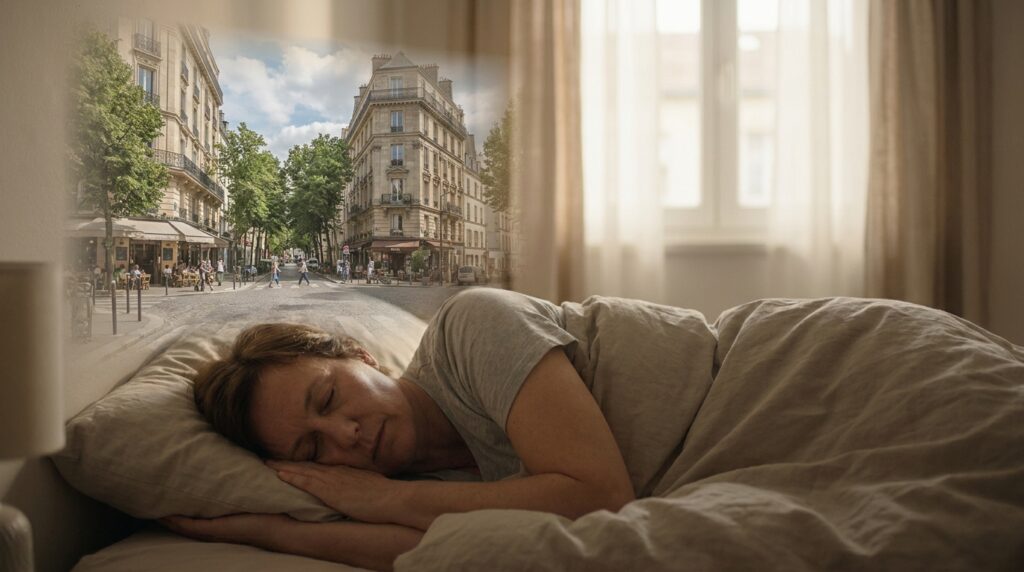
Dreaming about a neighborhood can feel familiar, emotional, or strangely unsettling because a neighborhood is more than a group of streets and houses. It represents the environment around you, the people near you, the social atmosphere you live in, and the feeling of belonging or not belonging. In a dream, a neighborhood may look like the place where you grew up, where you live now, or somewhere completely unknown. It may feel peaceful, crowded, abandoned, unsafe, beautiful, confusing, or full of memories. Because neighborhoods sit between private life and public life, this dream often reflects how you relate to community, identity, relationships, safety, family roots, and your place in the world.
Quick Answer
Dream About Neighborhood meaning often relates to belonging, community, social connection, personal environment, emotional security, memory, identity, and how you feel about the people and places around you. A neighborhood in a dream may symbolize your relationship with your social world, your need for support, your fear of judgment, your connection to family or roots, or your desire to find a place where you feel accepted and safe. If the neighborhood feels peaceful and familiar, the dream may reflect comfort, stability, connection, and emotional grounding. If it feels dark, unsafe, abandoned, or confusing, it may point to isolation, social anxiety, unresolved memories, family tension, or uncertainty about where you fit in life. This dream does not predict what will happen in your actual neighborhood; it usually reflects your inner sense of belonging, boundaries, trust, and the emotional atmosphere surrounding your waking life.
Core Symbolism of Neighborhood in Dreams
A neighborhood is a symbol of shared space. It is not as private as a single room, but it is not as broad as an entire city. It represents the middle ground between personal identity and social belonging. In dreams, this makes a neighborhood a powerful image of how you experience connection, visibility, safety, and participation in the world around you.
When you dream of a neighborhood, your mind may be showing the emotional climate of your life. The houses, roads, yards, people, lights, fences, and sidewalks may all symbolize different aspects of your relationships and environment. A peaceful neighborhood may reflect emotional stability and a sense of being supported. A chaotic neighborhood may reflect social pressure, conflict, or uncertainty. A deserted neighborhood may suggest loneliness or distance from the people who once felt familiar.
A neighborhood can also represent identity shaped by surroundings. People are influenced by where they grow up, who lives nearby, what feels normal around them, and what kind of social expectations surround them. If you dream about an old neighborhood, your mind may be revisiting early influences, childhood memories, family patterns, or past versions of yourself. If you dream about a new neighborhood, it may symbolize transition, adaptation, or the search for a new sense of belonging.
The symbolic meaning depends strongly on whether the neighborhood feels welcoming or alien. A welcoming neighborhood may show that you feel emotionally connected to others. It may suggest that you are building trust, opening yourself to support, or becoming more comfortable within a group. This connects naturally with Dream About Community, especially when the dream focuses on shared life, mutual care, or the feeling that people around you matter.
An unfamiliar neighborhood may symbolize uncertainty. You may be entering a new stage of life where the social rules feel unclear. Perhaps you have started a new job, moved to a new place, joined a new group, changed your relationships, or begun seeing yourself differently. The dream may show your attempt to understand where you belong in this new emotional landscape.
A neighborhood can also symbolize comparison. In waking life, neighborhoods often carry ideas about status, comfort, success, safety, or reputation. A dream of a beautiful neighborhood may reflect aspiration, desire for stability, or a wish for a more peaceful environment. A dream of a poor or neglected neighborhood may reflect insecurity, fear of decline, or concern about parts of life that feel unsupported.
From a psychological perspective, a neighborhood may represent your social self. It shows how you feel among others, how visible you feel, and whether you experience the outside world as safe or threatening. If you are walking through the neighborhood calmly, you may feel able to move through social life with confidence. If you are hiding, running, or lost, you may be dealing with anxiety, shame, pressure, or fear of being judged.
From a Jungian view, a neighborhood may represent the wider field of the psyche. Each house may symbolize a different part of the self, while the streets connect those parts. The dream neighborhood becomes a map of inner life. A familiar house may represent known identity. An abandoned home may represent neglected memory. A stranger’s house may represent unknown qualities within you. The entire neighborhood may show how different parts of your life relate to one another.
Culturally, neighborhoods are tied to belonging, safety, reputation, family, routine, and social observation. People often know who lives nearby, who belongs, who is new, and who stands apart. Because of this, a neighborhood dream may raise questions about acceptance. Do you feel welcomed? Watched? Ignored? Protected? Judged? Supported? These feelings often reveal the dream’s emotional meaning more clearly than the location itself.
Spiritual Meaning of Dreaming About Neighborhood
Spiritually, dreaming about a neighborhood may point to connection, shared responsibility, compassion, and the emotional energy of the people and spaces around you. A neighborhood is not only a physical setting; it is a field of relationships. In a balanced spiritual interpretation, this dream may ask how you are participating in the world around you and whether your environment supports your inner peace.
A peaceful neighborhood may symbolize harmony. You may be entering a period where your inner and outer life feel more aligned. You may be learning to trust people, accept support, or see yourself as part of something larger than your individual concerns. The dream may encourage gratitude for the ordinary connections that make life feel grounded.
A tense or dark neighborhood may suggest that your emotional environment needs attention. This does not mean something bad will happen. It may simply show that you are absorbing stress from people, places, conversations, or social expectations. You may need more spiritual boundaries, more rest, or more discernment about the energy you allow around you.
If neighbors appear in the dream, the meaning may become more personal. Neighbors can symbolize nearby influences, social awareness, casual connection, comparison, or responsibility toward others. A kind neighbor may represent support and friendliness. A hostile neighbor may reflect tension, mistrust, or fear of being judged. This meaning connects strongly with Dream About Neighbors, especially when the dream focuses on people living close to you rather than the neighborhood itself.
Dreaming of helping someone in a neighborhood may symbolize compassion and service. You may be learning that spiritual growth is not only private. It can also appear in how you treat people, how you listen, how you show respect, and how you contribute to the atmosphere around you.
Dreaming of being lost in a neighborhood may suggest spiritual uncertainty. You may be searching for direction, belonging, or a place where your values feel at home. This can happen during life transitions when your old identity no longer feels complete, but your new direction has not fully formed.
A neighborhood at night may symbolize hidden social emotions. You may sense unspoken tension, loneliness, or uncertainty beneath the surface of everyday life. A neighborhood filled with light may suggest awareness, hope, and renewed trust.
Repeating dreams about neighborhoods may suggest that your soul is returning to questions of belonging. Where do you feel at home? Who feels safe? Which environments nourish your spirit? Which surroundings drain you? The dream may gently ask you to become more conscious of the community you are building around your life.
A Related Bible Verse
A fitting Bible verse for a dream about a neighborhood is Mark 12:31: “Thou shalt love thy neighbour as thyself.” This verse connects the idea of neighbor with care, respect, and shared humanity. In relation to a neighborhood dream, it can be understood as a reminder that belonging is shaped not only by where we live, but also by how we treat the people around us.
The verse does not need to be interpreted in a rigid or preachy way. It simply supports the symbolic meaning of neighborhood as a place of relationship. A dream about a neighborhood may invite reflection on kindness, boundaries, compassion, and the balance between caring for others and caring for yourself.
If the dream neighborhood feels peaceful, the verse may reflect harmony and connection. If it feels tense, it may ask where respect, forgiveness, or better communication may be needed. Either way, the dream can encourage a more thoughtful relationship with the people and spaces that surround your life.
Psychological Interpretation
Psychologically, a neighborhood in a dream often reflects your social environment and emotional sense of belonging. It may show how safe you feel around others, how connected you feel to your roots, and how much influence your surroundings have on your current state of mind.
If you dream of a familiar neighborhood, your mind may be processing memory. Familiar streets and houses can bring back emotions from earlier periods of life. You may not be thinking about the past consciously, but some current situation may remind you of old family dynamics, childhood friendships, social roles, or past insecurities.
If you dream of an unfamiliar neighborhood, you may be adjusting to new circumstances. You may be learning new social rules, entering a new workplace, forming new relationships, or trying to understand a different version of yourself. The unfamiliar setting may reflect the feeling of not yet knowing where everything belongs.
A neighborhood also represents the relationship between private life and public life. Each house may symbolize privacy, while the streets symbolize shared visibility. If the dream focuses on a particular house, it may connect with your inner world, family life, or personal identity. This can overlap with Dream About House, especially when one home in the neighborhood feels emotionally important.
Dreaming of walking through a neighborhood may reflect how you move through social life. Are you comfortable being seen? Do you feel watched? Do you know where you are going? Are the streets open or blocked? The answers reveal whether you feel socially confident, uncertain, exposed, or restricted.
A crowded neighborhood may symbolize social pressure. You may feel surrounded by opinions, expectations, family demands, or community judgment. If the crowd feels friendly, it may show support. If it feels intrusive, it may reflect the need for privacy.
An empty neighborhood may symbolize isolation. You may feel disconnected from people who once felt close. You may also be entering a quieter stage of life where old social structures are changing. Emptiness in a neighborhood does not always mean sadness. Sometimes it can symbolize space, reflection, or the need to hear yourself more clearly.
A dangerous neighborhood may reflect anxiety. You may feel unsafe in your emotional environment, worried about conflict, or uncertain whom to trust. This dream may arise during stressful periods when the outside world feels unpredictable. The danger may be symbolic rather than literal, representing emotional threat, social tension, or fear of rejection.
A beautiful neighborhood may reflect aspiration or a desire for peace. You may want more stability, order, or belonging. However, if the beautiful neighborhood feels fake or unreachable, the dream may reveal comparison, pressure, or insecurity about status and success.
The emotions you feel inside the dream matter greatly. Calmness may suggest belonging. Fear may suggest social anxiety or insecurity. Sadness may reflect loss of connection. Confusion may show transition. Joy may show acceptance and harmony. Shame may suggest fear of judgment. Nostalgia may point to unresolved memories or longing for a simpler time.
At its core, the dream asks how you feel in the world around you. Do you feel at home among people? Do you feel like an outsider? Are you seeking deeper connection? Are you carrying old neighborhood memories into your present life? The dream may be showing not only where you live emotionally, but also where you hope to belong.
Common Dream Scenarios About Neighborhood
Dream About Walking Through a Familiar Neighborhood
Walking through a familiar neighborhood often suggests memory, identity, and reflection on your past. The dream may take you back to a place where you once lived, grew up, visited often, or felt emotionally connected. Even if the neighborhood does not look exactly the same, the feeling of familiarity matters.
This dream may appear when something in your current life reminds you of old experiences. You may be comparing who you are now with who you were before. If the walk feels peaceful, the dream may show acceptance of your history. If it feels sad or tense, you may still be processing unresolved emotions from that period.
A familiar neighborhood can also symbolize your comfort zone. You may be moving through known patterns, routines, and beliefs. The dream may ask whether those familiar paths still support you or whether you are ready to explore something new.
Dream About a Strange Neighborhood
A strange neighborhood often represents uncertainty, transition, or unfamiliar social territory. You may be in a new phase of life where the environment feels different from what you are used to. This could involve work, relationships, family roles, location, or personal identity.
If you feel curious, the dream may suggest openness to change. If you feel afraid, you may be anxious about adapting. If you feel lost, you may need more time to understand your direction.
A strange neighborhood does not always mean danger. It may simply show that your life is expanding beyond familiar boundaries. The dream may invite patience as you learn your way through new emotional streets.
Dream About Your Childhood Neighborhood
Dreaming about your childhood neighborhood often points to memory, family roots, early identity, and emotional patterns formed in the past. The dream may bring back feelings of safety, nostalgia, sadness, pressure, innocence, or unfinished longing.
If the childhood neighborhood looks bright and peaceful, the dream may reflect comfort and a desire to reconnect with simpler feelings. If it looks dark, abandoned, or changed, it may suggest that your relationship with the past has shifted.
This dream can connect with Dream About Home, especially when the neighborhood reminds you of where you first learned belonging, security, family roles, and emotional habits.
Dream About Moving to a New Neighborhood
Moving to a new neighborhood in a dream often symbolizes adaptation and new beginnings. You may be entering a new social environment, lifestyle, role, or emotional phase. The dream may reflect excitement, anxiety, or uncertainty about fitting in.
If the new neighborhood feels welcoming, you may be ready for change. If it feels cold or confusing, you may fear not belonging. If you are unpacking or looking for your house, the dream may suggest that your identity is still adjusting to new surroundings.
This dream may appear during real transitions, but it can also symbolize internal change. You may be moving into a new version of yourself.
Dream About a Dangerous Neighborhood
A dangerous neighborhood often reflects anxiety about your environment. You may feel emotionally unsafe, socially exposed, or uncertain about people around you. The danger may symbolize conflict, judgment, pressure, or distrust rather than literal physical danger.
If you are trying to escape, the dream may show that you want distance from a stressful situation. If you are hiding, you may feel vulnerable or afraid of being noticed. If you confront the danger, the dream may suggest growing courage.
This dream may ask you to examine which parts of your waking environment feel tense or unsupportive. It may also encourage stronger boundaries and a clearer sense of where you feel safe.
Dream About a Beautiful Neighborhood
A beautiful neighborhood may symbolize peace, aspiration, order, and the desire for a better emotional environment. You may be imagining a life with more stability, support, and beauty. The dream may reflect hope for a healthier social circle or more secure home life.
If you feel happy there, the dream may show that you are moving toward emotional harmony. If you feel like you do not belong there, it may point to insecurity or comparison. You may feel that peace is possible but not yet fully available to you.
A beautiful neighborhood can also represent your ideal inner environment: calm thoughts, supportive relationships, and a life arranged around values that matter to you.
Dream About an Abandoned Neighborhood
An abandoned neighborhood often symbolizes disconnection, lost memories, loneliness, or neglected parts of your life. You may feel that a former social world has faded. Friendships may have changed, family closeness may have weakened, or a past identity may no longer feel alive.
If you feel sad in the abandoned neighborhood, the dream may reflect grief over what has changed. If you feel calm, it may suggest that you are observing the past without needing to return. If you search through empty houses, you may be trying to recover parts of yourself that were left behind.
An abandoned neighborhood can also represent emotional neglect. It may ask what area of your life needs care, attention, and renewal.
Dream About Getting Lost in a Neighborhood
Getting lost in a neighborhood suggests confusion about belonging, direction, or social identity. You may be surrounded by familiar looking places but still feel unsure where you are. This can happen when waking life feels emotionally complicated.
You may be trying to find your home, a specific street, or a person. Each detail matters. Searching for home may reflect a desire for safety. Searching for a street may reflect direction. Searching for a person may reflect connection.
This scenario connects with Dream About Street, especially when roads, turns, sidewalks, or intersections become central to the dream. Streets often represent paths through life, and being lost among them may show uncertainty about your next step.
Dream About a Crowded Neighborhood
A crowded neighborhood often reflects social pressure, activity, visibility, or emotional noise. You may feel surrounded by people, responsibilities, opinions, or expectations. The crowd may feel supportive or overwhelming depending on the atmosphere.
If the crowd feels friendly, the dream may represent belonging and connection. If it feels intrusive, it may suggest that you need more privacy. If you feel invisible in the crowd, you may be craving recognition.
This dream may appear when your waking life contains many social demands or when you are trying to balance personal needs with group expectations.
Dream About a Quiet Neighborhood at Night
A quiet neighborhood at night may symbolize hidden feelings, introspection, or uncertainty beneath ordinary life. Night can make familiar places feel mysterious, so this dream may show that something familiar in your life now feels emotionally unclear.
If the night feels peaceful, the dream may suggest rest and solitude. If it feels frightening, you may be anxious about what you cannot see or understand. A quiet night neighborhood can also represent private emotions that are not visible to others.
Dream About Talking With People in the Neighborhood
Talking with people in a neighborhood may represent social connection, communication, or the need to understand your role among others. The conversation may reveal how accepted, judged, supported, or misunderstood you feel.
If the conversations are warm, the dream may reflect belonging. If they are tense, the dream may point to gossip, conflict, or concern about reputation. If people ignore you, you may feel unseen or disconnected.
This dream can reveal how comfortable you are within your social world and whether you need more honest connection.
Dream About Watching a Neighborhood From Above
Watching a neighborhood from above may suggest a broader perspective. You may be stepping back from daily concerns to understand the pattern of your relationships, routines, and environment. From above, the neighborhood becomes a map.
If you feel calm, the dream may show clarity. If you feel distant, it may suggest emotional detachment. This dream may help you see how different parts of your life connect, where tension exists, and what areas need more attention.
How This Dream Connects to Your Real Life
Love and Relationships
In love and relationships, a neighborhood dream often reflects the social and emotional environment surrounding your connections. Relationships do not exist in isolation. They are influenced by family, friends, neighbors, routines, shared spaces, and the feeling of being accepted or judged by others.
If you dream of walking with a partner through a peaceful neighborhood, it may suggest shared stability or the desire to build a life together. If the neighborhood feels tense or unfamiliar, you may feel uncertain about where the relationship is going or whether your emotional worlds truly fit.
Family can play a strong role in this dream because neighborhoods often represent roots and belonging. A dream of a neighborhood filled with relatives may point to family expectations, support, pressure, or unresolved history. This meaning connects with Dream About Family, especially when the dream includes parents, siblings, children, or extended family living nearby.
If you feel watched in the neighborhood, you may be worried about judgment from others. If you feel welcomed, you may be craving or experiencing acceptance. The dream may encourage you to examine whether your relationships give you room to be yourself.
Career and Money
In career and money matters, a neighborhood may symbolize your professional environment, social status, or place within a larger network. You may be thinking about where you stand compared with others, whether you are progressing, or whether your current environment supports your goals.
A wealthy or orderly neighborhood may reflect ambition, stability, or desire for improvement. A neglected neighborhood may reflect concern about security or lack of support. A neighborhood under construction may suggest that your professional life is still being built.
If you are moving into a new neighborhood, the dream may symbolize career transition. You may be entering a new workplace, business field, or social circle where you need time to adapt. If you feel lost, you may need clearer direction. If you feel welcomed, you may be ready for growth.
Money can also appear symbolically through the condition of the neighborhood. Safe, cared for spaces may reflect a desire for financial stability. Broken streets, empty homes, or abandoned areas may reflect anxiety about resources, belonging, or long term security.
Personal Growth
For personal growth, a neighborhood dream often asks where you belong and what kind of environment helps you become your best self. Growth is not only internal. It is shaped by surroundings, habits, relationships, and the communities you choose.
If your dream neighborhood is changing, you may be changing too. New houses, new streets, or unfamiliar people may symbolize a new identity forming. Old places may show where you came from. Abandoned areas may show what you have outgrown. Beautiful areas may show what you are moving toward.
This dream may encourage you to consider the emotional neighborhood of your life. Who surrounds you? What conversations shape your thinking? What routines influence your mood? Which spaces help you feel grounded, and which ones make you feel small?
Personal growth may require leaving one inner neighborhood and entering another. This does not always mean physical relocation. It may mean changing your habits, values, friends, mindset, or emotional boundaries.
Health and Emotional State
Emotionally, a neighborhood dream may reflect how safe or supported you feel. A calm neighborhood may show inner stability. A chaotic neighborhood may reveal stress. An abandoned neighborhood may reflect loneliness. A crowded neighborhood may point to overwhelm.
If the dream feels heavy, your emotional environment may need attention. You may be absorbing too much social stress, comparison, family pressure, or community expectation. If the dream feels peaceful, it may suggest that your nervous system is seeking or finding a sense of belonging.
This dream also connects with Dream About Social Life, especially when the neighborhood is filled with gatherings, conversations, familiar faces, or the feeling of being included or excluded. Your social life can strongly affect emotional well being, and the dream may show whether it currently feels nourishing or draining.
A neighborhood dream may gently encourage you to build a healthier emotional environment. This may involve reaching out to supportive people, creating more privacy, improving your routines, or choosing spaces that help you feel calm and connected.
Is Dreaming About Neighborhood a Positive or Warning Sign?
Dreaming about a neighborhood can be positive when the setting feels safe, warm, familiar, beautiful, or welcoming. In this case, the dream may reflect belonging, support, emotional grounding, and a healthy connection to your environment. It may show that you are finding your place or becoming more comfortable with the people and routines around you.
A positive neighborhood dream may also reflect integration. Different parts of your life may be starting to fit together. Your private self, family life, relationships, work, and social identity may feel more connected. The neighborhood becomes a symbol of inner and outer harmony.
The dream may act as a warning sign when the neighborhood feels unsafe, abandoned, chaotic, hostile, or impossible to navigate. These images may suggest social anxiety, emotional disconnection, unresolved memories, fear of judgment, or concern that your environment does not support your well being.
If you feel lost in the neighborhood, the warning may be about direction. If you feel watched, it may be about judgment or lack of privacy. If the neighborhood is dangerous, it may be about emotional safety. If it is abandoned, it may be about loneliness or neglected parts of your life.
Still, this dream should not be treated as a fixed prediction about your real location or relationships. It is usually symbolic. Your subconscious may use the image of a neighborhood to show how you experience belonging, connection, and social space.
The most useful question is not whether the dream is good or bad, but what the neighborhood felt like. Did it feel like home, a memory, a warning, a challenge, or a place you wanted to leave? The answer reveals what your inner world may be processing.
Case Studies
The Woman Walking Through Her Childhood Neighborhood
A woman dreamed that she was walking through the neighborhood where she grew up. The houses looked smaller than she remembered, and some streets had changed. She felt nostalgic but also calm. In waking life, she had recently become a parent and was thinking about how her own childhood shaped her values.
The dream reflected memory and maturity. The changed neighborhood showed that her relationship with the past had changed too. She was no longer only the child who lived there; she was now an adult looking back with perspective. Her reflection focused on keeping what was meaningful from her upbringing while choosing different patterns where needed.
The Man Lost in a New Neighborhood
A man dreamed that he had moved to a new neighborhood but could not find his house. Every street looked similar, and he felt embarrassed asking for help. In waking life, he had started a new job and felt unsure where he fit within the workplace culture.
The dream represented social adjustment and identity uncertainty. The missing house symbolized not yet feeling settled in his new role. The embarrassment showed fear of appearing unprepared. His reflection focused on giving himself time to adapt and asking questions without judging himself.
The Couple in a Peaceful Neighborhood
A couple appeared together in a dream, walking through a quiet neighborhood with warm lights in the windows. The dreamer felt safe and hopeful. In waking life, the relationship had recently become more serious, and they were discussing future plans.
The peaceful neighborhood symbolized shared stability and the desire to build a life together. The lights in the houses represented warmth, emotional security, and possibility. The dream did not guarantee the future, but it reflected the dreamer’s hope for belonging and mutual care.
The Student in a Crowded Neighborhood
A student dreamed of walking through a crowded neighborhood where everyone seemed to know each other, but no one recognized him. He felt invisible. In waking life, he had entered a new school and was struggling to make friends.
The crowded neighborhood symbolized social pressure and exclusion. The dream showed that being surrounded by people did not automatically mean feeling connected. His reflection focused on finding smaller, more genuine points of connection rather than trying to belong everywhere at once.
The Worker Seeing an Abandoned Neighborhood
A worker dreamed of returning to a neighborhood that was once lively but had become empty and quiet. The streets were still there, but no one was outside. In waking life, many of his old friends had moved away, and his routines no longer felt fulfilling.
The abandoned neighborhood represented a social life that had changed. The dream reflected grief over fading connections, but also the need to build new ones. His reflection focused on accepting that old communities can change while still making room for new belonging.
Dream Numbers
In some folk traditions, neighborhood dreams may be lightly associated with numbers such as 4, 6, 8, 12, or 24. These numbers can symbolically connect with homes, streets, groups, shared space, stability, and social connection. They should be treated only as cultural or symbolic references, not as certain signs.
If a number appears directly in the neighborhood dream, such as a house number, street number, apartment number, or address, that number may carry more personal meaning. It may connect to memory, family history, a place you once lived, or a current concern in waking life.
Lucky Lottery Meaning
In folk dream interpretation, dreaming about a neighborhood may sometimes be associated with luck connected to home, social connections, property, movement, or community news. However, this should only be understood as cultural belief, not as a promise of money, luck, or a guaranteed result.
The deeper meaning of a neighborhood dream is usually emotional and relational. It is more likely about belonging, support, safety, memory, and the kind of environment your inner life needs. Any number or lottery association should remain light, non-promissory, and secondary to the dream’s personal meaning.
FAQ
What does it mean spiritually to dream about a neighborhood?
Spiritually, dreaming about a neighborhood may symbolize community, shared energy, belonging, compassion, and your connection to the people and spaces around you. A peaceful neighborhood may reflect harmony, while a tense or dark neighborhood may suggest that your emotional environment needs attention and better boundaries.
Why do I keep dreaming about my old neighborhood?
Repeating dreams about an old neighborhood often point to memory, roots, childhood patterns, or unresolved emotions from the past. Your mind may be revisiting where certain feelings, habits, or beliefs began. The dream may invite reflection on what you have outgrown and what still shapes you.
Is dreaming about a neighborhood a good sign?
Dreaming about a neighborhood can be a good sign if it feels safe, welcoming, peaceful, or familiar. It may reflect belonging, support, and emotional grounding. If the neighborhood feels dangerous, abandoned, or confusing, the dream may point to anxiety, isolation, or uncertainty about your social environment.
What does it mean to dream about being lost in a neighborhood?
Being lost in a neighborhood often means you are uncertain about belonging, direction, or your place in a social setting. You may be adjusting to a new life stage, workplace, relationship, or identity. The dream suggests that you are searching for emotional orientation and a stronger sense of where you fit.
What does it mean to dream about a dangerous neighborhood?
A dangerous neighborhood in a dream usually reflects emotional insecurity, social anxiety, mistrust, or stress in your environment. It does not necessarily mean your real neighborhood is unsafe. More often, it symbolizes a situation or relationship where you do not feel fully comfortable, protected, or supported.
Conclusion
Dreaming about a neighborhood often reflects belonging, memory, community, emotional safety, and your relationship with the world around you. A neighborhood in a dream can show where you feel at home, where you feel lost, where you feel judged, and where you are searching for connection. Whether the setting is familiar, strange, peaceful, crowded, abandoned, or unsafe, it usually mirrors the emotional atmosphere surrounding your current life.
The most helpful way to interpret this dream is to notice the condition of the neighborhood, the people present, whether you felt welcomed or excluded, and whether the place reminded you of your past or pointed toward a new chapter. A peaceful neighborhood may reflect support and stability, while a confusing one may reveal transition or social uncertainty. At its heart, this dream invites you to reflect on where you belong, what kind of environment helps you grow, and how you can build a life that feels more connected, safe, and emotionally true.